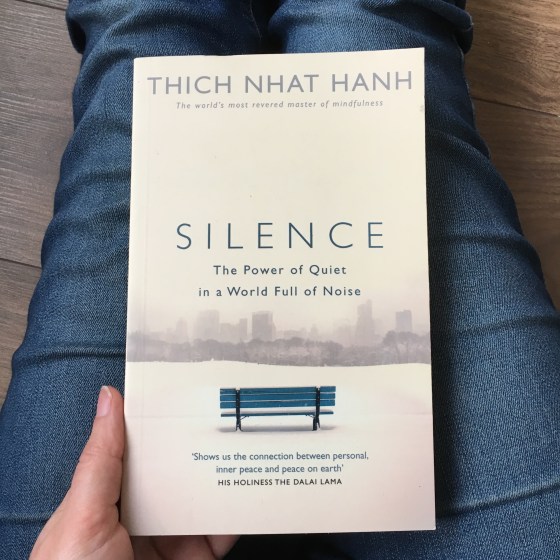
Review of ‘Silence’ by Thich Nhat Hanh

Silence

In Silence, Thich Nhat Hanh suggests that many of us are sleepwalking through life barely aware of the world around us because we are so lost in our own thoughts and distracted by the constant stream of information drip-fed to us by our phones, computers, TV and radio everyday.

Having said that, Silence does not read like it was written by someone out of touch with the modern world and living in a monastery in rural France, but by someone who understands just how busy, stressful and distracting modern life can be. Thich Nhat Hanh argues that there is no need to lock ourselves away in a quiet room or move to a monastery to spend our days meditating, but that everyone can achieve a sense of calm and inner peace whatever their circumstances by practising mindfulness during their daily activities.

In many ways, Silence is not dissimilar to Peace Is Every Step published in 1991, yet the message Thich Nhat Hanh delivered then seems even more relevant for readers today.

Although written by a Buddhist monk, Silence is not a religious text and is aimed at readers of all faiths and none. The tone of Silence is patient and understanding, and the mindfulness exercises in the book are simple to follow.

Winter seemed to arrive a little early this year with the last day of a frosty November bringing a light snowfall to our part of the country, and with our calendar rapidly filling up with festive fun, this short book is a timely reminder that we can still make time for silence and mindfulness regardless of what else is going on in our lives or the world around us.
Review of ‘The Little Book of Hygge’ by Meik Wiking

FullSizeRender (2)

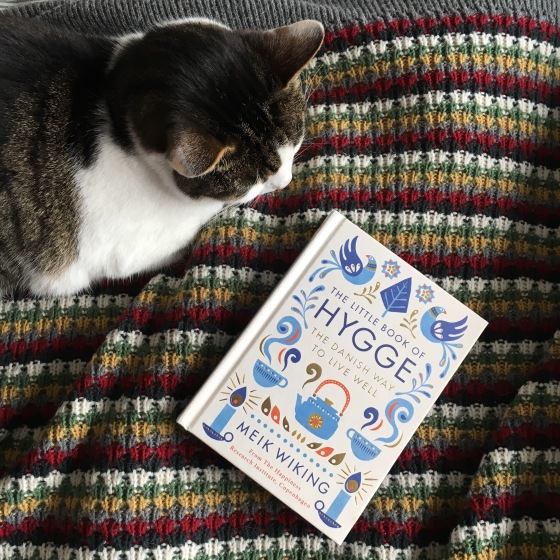
We are in the midst of fairly significant renovations in our house at the moment, and with tradesmen unblocking the fireplace in the living room and scrambling over the roof to fit a chimney, I’ve retreated upstairs and out of the way with my cat and The Little Book of Hygge for company.

Over the last couple of years, the Danish concept of hygge has taken the world by storm. Yet there has also been something of a backlash against it, with some criticizing it as xenophobic and the latest marketing ploy to sell mugs, rugs, all manner of knitwear and books on the subject.

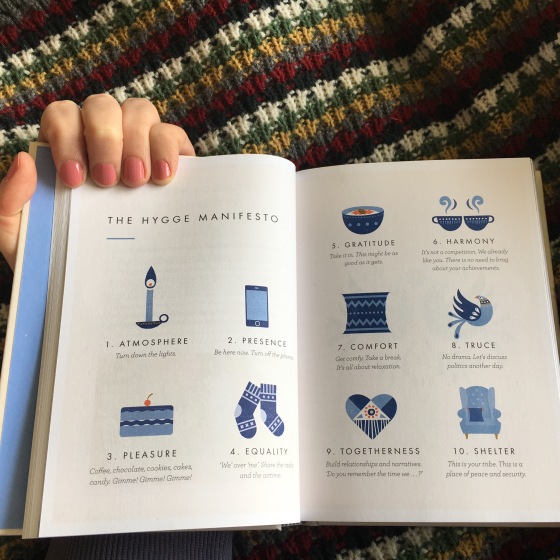
While hygge is often synonymous with cosiness, especially during the colder and darker months of the year, Meik Wiking defines hygge as a feeling of safety, relaxation and contentment that can be found in any weather or season. For many of us who lead busy lives, part of the appeal of hygge is the chance to slow down, set aside our worries for a while and indulge in simple pleasures.

FullSizeRender (3)

The Little Book of Hygge is packed with a mix of research and personal anecdotes, which makes this book better suited to dipping into every now and again than binge-reading. There are whole chapters devoted to candles and lighting, Christmas (the most hygge time of the year), a dictionary to help you work out your hygge from your hyggeligt, a few Danish recipes (though I was a little disappointed there were more recipes for meat than cake), and various other aspects of a hygge lifestyle. The presentation of the book is lovely with beautiful photos and illustrations generously scattered throughout.

With tradesmen thudding and thumping around above and below, it’s been hard to concentrate on reading, but The Little Book of Hygge left me imagining – and looking forward to – lots of hyggeligt moments once the renovations are complete, like sitting in the garden in the sunshine over the summer, huddling around board games with friends on rainy days, and reading in front of the fire on cold, winter nights. Have a lovely week.