Review of ‘A Street Cat Named Bob’ by James Bowen

img_4177

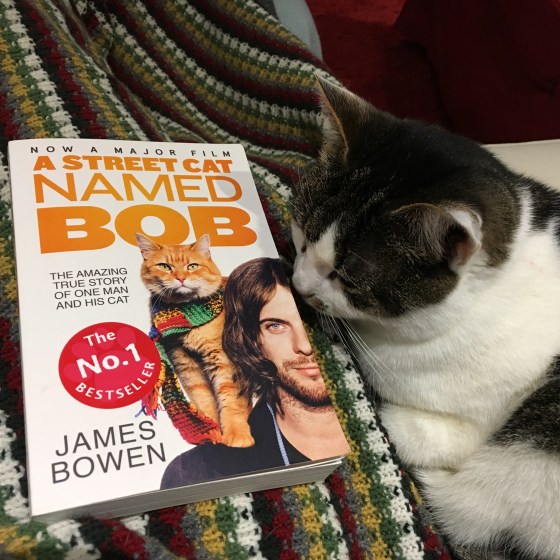
I saw the film of this at the cinema last year and was so moved by it that I read the book soon after. James Bowen was a busker and recovering heroin addict living in sheltered accommodation in London when he encountered an injured but friendly stray cat (whom he names Bob) that found its way into his block of flats. The two quickly become inseparable companions and the book follows all the highs and lows they share together, it is their loyalty and devotion to each other that drives the book forward.

James is living a hand to mouth existence for most of the book, but spends the little money he earns busking and selling the Big Issue magazine on cat food and vet’s bills. From the offset, James is a responsible pet-owner, taking Bob to the vet, getting him neutered and micro-chipped. Taking care of Bob gives James a purpose, and it seems like the simple routine of caring for the cat keeps him tethered to normality, and he is rewarded with Bob’s affection and trust.

Having adopted a rescue-cat of my own from the Scottish SPCA, I could relate to James’ speculation about Bob’s past, as he tries to understand the quirks and behaviour that might offer clues about Bob’s life before they became companions.

Throughout A Street Cat Named Bob, James shows humbling insight into how society regards homeless people and addicts, drawing attention to the deliberate blindness of passers-by and how it felt to be invisible. He also describes the vulnerability of working on the streets of London, trying to eke out a living from busking and selling the Big Issue, as well as the numerous barriers facing those trying to turn their lives around.

This is a rags-to-riches autobiography in a sense, yet this is a also a tale of recovery, second chances and above all the friendship that develops between a recovering addict and a stray cat.

Review of ‘The Gratitude Diaries’ by Janice Kaplan

img_3739

The Gratitude Diaries starts at a party on New Year’s Eve when Janice Kaplan sets herself a resolution to try being more grateful for a year to see if it can improve her life and outlook.

Janice is a journalist, who has an apartment in Manhattan and a house in the country, happily married with kids, she has a lot to be grateful for, yet like many people she compares herself to others who have it better than her, struggles to look beyond the imperfections and takes what she has for granted.

I found it easy to relate to Janice throughout her gratitude experiment because she’s honest about how she had to retrain herself to be grateful instead of complaining, criticising and focusing on the negatives. Above all, Janice demonstrates that while gratitude, optimism and positivity may come more naturally to some people than others, gratitude is a habit that anyone can cultivate.

Janice also recognises that it’s easy to feel grateful when life is good, but gratitude is not a panacea shielding us from all of life’s disappointments, sorrows and frustrations instead gratitude is a way of steadying ourselves in the storms, setbacks and struggles by adjusting what we focus on.

The Gratitude Diaries is split into four parts, corresponding with the seasons of the year, where she concentrates on different areas of her life, including marriage and family, career, money and health, and shows how gratitude improves each aspect of her life. The book is peppered with quotes from philosophers such as Epicurus and Marcus Aurelius whose wisdom is as relevant today as it was in their own lifetimes, as well as research and interviews from more contemporary sources like the psychologist Martin Seligman and actor Matt Damon.

I really enjoyed this book, it’s full of ideas on how to develop an “attitude of gratitude” and I can see myself re-reading it for inspiration and motivation as I try to live gratefully.

Review of ‘Northanger Abbey’ by Jane Austen

image1-4

I feel unworthy of reviewing Jane Austen as I’m embarrassed to admit that until now I had only read one of her novels (Persuasion at school) but determined to fill in some of the more obvious gaps in my literary knowledge, I picked up a copy of Northanger Abbey.

Northanger Abbey was the first novel Jane Austen completed, but it languished with a publisher for over a decade before being returned to the author, and sadly it was published just a few months after her dealth.

Northanger Abbey follows Catherine Morland, an unlikely but likeable heroine with a weakness for gothic horror novels such as Ann Radcliffe’s Mysteries of Udopho. The plot trots along, though Northanger Abbey itself doesn’t feature until halfway through the story. The first half of the novel is set in Bath where Catherine meets her charming and witty hero, Henry Tilney, and the antagonists, Isabella and John Thorpe, before she is invited to visit the Tilney family’s home, Northanger Abbey.

I won’t give too much away, Northanger Abbey is not the haunted, gothic ruin that Catherine expects but that doesn’t stop her imagination from getting the better of her, and Austen creates an air of mystery and suspense during parts of the story.

This is a novel that doesn’t take itself too seriously, it’s satirical and unpretentious, but still manages to elicit sympathy for the characters when misfortunes befall them. If this novel has a fault, it is that Catherine is too sweet-natured, naïve and forgiving, while the antagonists are in contrast too selfish, conceited and devious.

Northanger Abbey seems to be often overlooked compared to Austen’s other novels but it’s easy to read and thoroughly enjoyable. I thought it was perfect reading material for a cosy night in and a lovely introduction to Jane Austen’s works.

Review of ‘Simple Matters’ by Erin Boyle

IMG_2290[1]

Erin Boyle lives in a tiny apartment in New York with her husband and daughter, and writes a blog called Reading My Tea Leaves about simple, sustainable living.

Erin’s book, Simple Matters, covers similar themes to her blog and provides practical advice on how to declutter your home, change your purchasing habits by buying less, as well as investing in items which are durable or recyclable, and other ways to reduce waste and protect the environment.

This book is full of ideas on how to simplify and style your home, how to choose natural beauty products or make your own to reduce the chemicals that we put on our bodies, as well as DIY cleaning products (white vinegar, lemon juice and bicarbonate of soda have a multitude of cleaning uses) instead of the harmful detergents and bleaches available in the shops to reduce the toxins in our homes and our impact on the world. My favourite piece of advice (which I adopted before I’d finished reading the book) was keeping food waste to be composted in a sealed box in the freezer which prevents it from going off, smelling or in our case our cat from getting into it.

The writing can be a little dry and instructional in places, but comes to life when she describes her personal experiences of moving home, travelling, parenting and living simply. I appreciated that while Erin is dedicated to reducing her impact on the planet as much as possible, her personal brand of minimalism and sustainable living is both aspirational and pragmatic, she advocates conscious consumption but she doesn’t beat herself up for eating her favourite fruit out of season once in a while.

The presentation of this book is lovely, it’s packed with photos of her home and its contents to show that simplicity and minimalism can be stylish as well as functional. This was an easy book to read which made me think about ways I could live more sustainably and simplify my home.


Review of ‘You Can Buy Happiness (and It’s Cheap)’ by Tammy Strobel

FullSizeRender

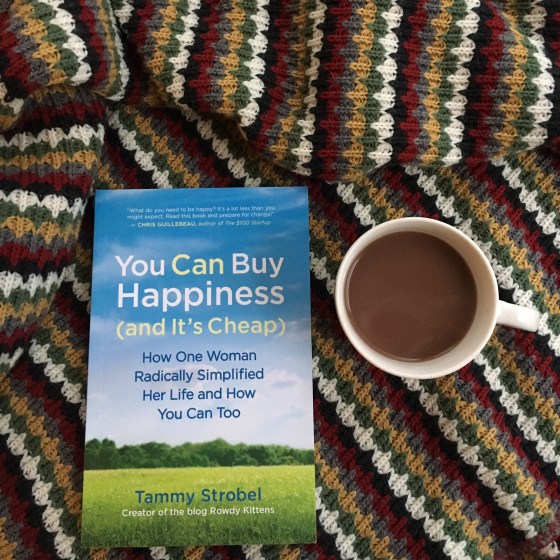
I’m only taking my first tentative steps towards minimalism and simple living, and found Tammy Strobel’s blog RowdyKittens while looking for de-cluttering advice. Tammy’s disillusionment with consumerism and desire to simplify her life resonated with me.

You Can Buy Happiness (and It’s Cheap) follows Tammy’s journey to downsize her possessions, clear her debts, find rewarding work and to design and live in a mobile tiny home with her husband and their cats. This is a short book, just over 200 pages, but it doesn’t read like a collection of blog posts, instead each chapter is fully-fleshed with research, references, interviews and personal anecdotes into a cohesive, stand alone book.

While I don’t see myself moving into a tiny home of my own anytime soon, I found Tammy’s book easy and enjoyable to read and full of inspiring interviews with other minimalists and practical advice about how to downsize and simplify your home and life. Tammy’s tone is conversational, her enthusiasm and gratitude seep through the whole book, but she avoids preaching to the reader about her lifestyle choices. I appreciated Tammy’s honesty throughout the book, she never makes the significant lifestyle changes she adopted sound too easy and she doesn’t shy away from describing her former materialistic self or the arguments and reservations she and her husband had about getting rid of the TV or exchanging their cars for bicycles.

Tammy provides a holistic approach to simplifying that goes beyond downsizing possessions and includes sections on changing our spending habits, investing in relationships, building communities, meaningful work and practicing gratitude. My only disappointment is that Tammy, a prolific Instagrammer and photographer, did not include any of her photos in this book, though she has published another book on iPhone photography. Overall, I thoroughly enjoyed this book and can see myself re-reading sections for inspiration and advice as I try to simplify my own life and de-clutter my home.