Before the Coffee Gets Cold by Toshikazu Kawaguchi

Before the Coffee Gets Cold

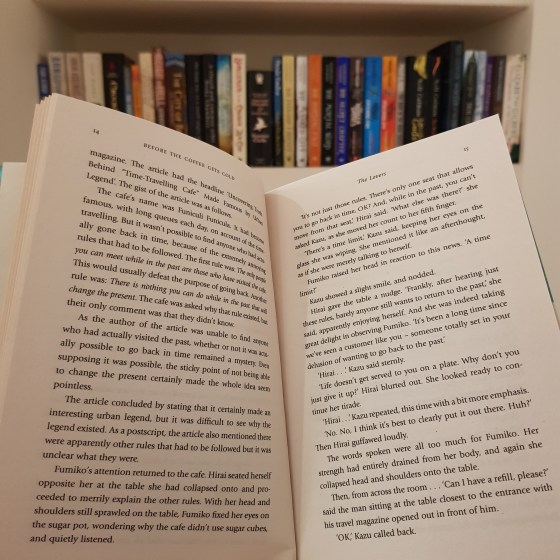
Set in an old-fashioned cafe off the beaten path in Tokyo, Before the Coffee Gets Cold is a quirky, Japanese novel about time travel. In the Funiculi Funicula Cafe, there is a particular chair that allows the person sitting in it the once in a lifetime chance to travel back or forward in time to speak to someone they know who has visited the cafe. There are several rules regarding time-travel, the most important of which is that the traveller must return to the present before their cup of coffee gets cold.

Before the Coffee Gets Cold is split into four parts, each following a different relationship from a broken-hearted woman whose lover moved to the U.S.A., a nurse whose husband has forgotten her due to Alzheimer’s Disease, a grieving sister who ran away from her family to escape her obligations and responsibilities, and a mother and daughter who never had the chance to know each other. There’s also a ghostly woman who haunts the cafe and failed to return to the present in time, but regrettably her story isn’t elaborated on. Visiting the past and future helps the time travelers to make sense of events and find a way forward in the present.

Before the Coffee Gets Cold is a short but thought-provoking and poignant story of regret and hope. Have a lovely week. X
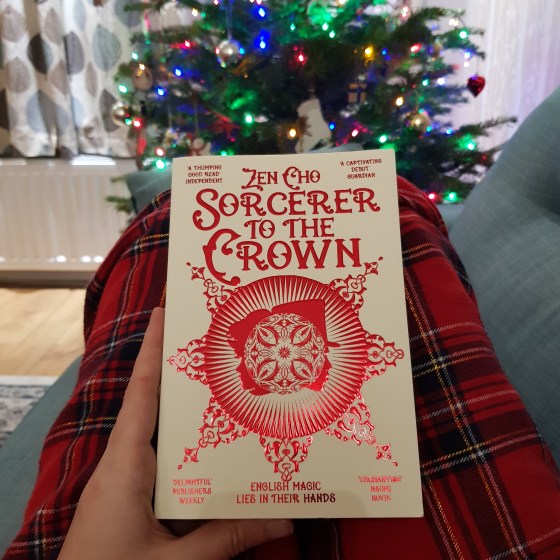
Sorcerer to the Crown by Zen Cho

Sorcerer to the Crown

Sorcerer to the Crown follows Zacharias Wythe, who has recently been appointed Sorcerer Royal after the sudden death of his foster father who previously held the position, and Prunella Gentleman, a mysterious servant girl with great magical potential whom he agrees to take on as his apprentice. Along the way, they become mired in political turmoil and have to fend off several assassination attempts.

Magic is waning in England, but much to the displeasure of the highly stratified English society, magic does not discriminate and is as likely to manifest in the working classes and women as it is well-educated, English gentlemen from the aristocracy. Racism and sexism are at the forefront of this story as Zacharias is a freed African slave, while Prunella is mixed-race.

It took me a while to get into this as there’s a lot of exposition, it’s written in the style of Regency-era novels, and the plot didn’t really get going until about halfway through. This had some interesting ideas, likable characters and good dose of humour but it wasn’t what I expected and overall I found it disappointing.

Have a lovely week. X

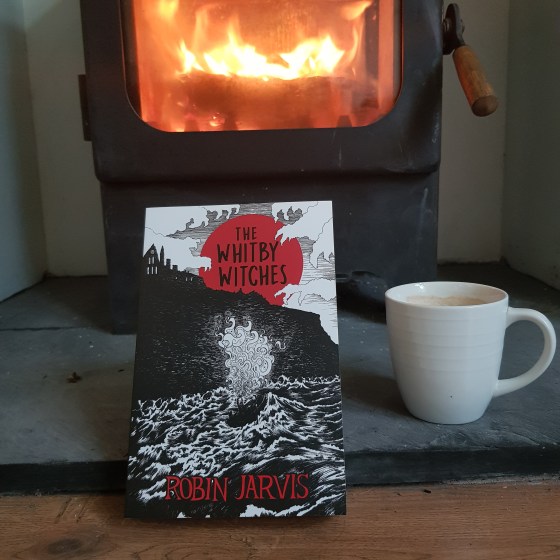
The Whitby Witches by Robin Jarvis

The Whitby Witches

Jennet and Ben are orphaned siblings who have been shunted from one foster home to another since their parents died because of Ben’s ability to see ghosts, until they’re taken in by an eccentric, old lady, Alice Boston, who lives in the Yorkshire town of Whitby. Not long after the children arrive, the mysterious Rowena Cooper moves into a dilapidated old house nearby and strange, sinister events start to occur.

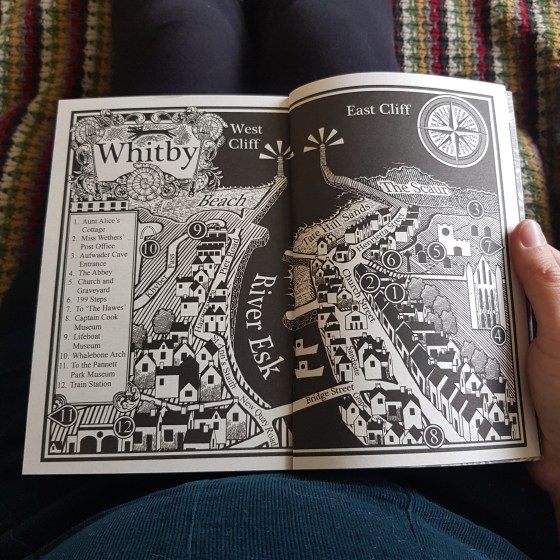
Whitby is a wonderful setting with descriptions of the ruined abbey overlooking the town and the infamous 199 steps featuring prominently in the story, and I really appreciated how well Robin Jarvis foreshadowed events and cleverly interspersed local history and folklore from the Barguest from Bram Stoker’s Dracula and St Hilda to the collapse of the central tower of the abbey in 1830 into the story.

The Whitby Witches2

The Whitby Witches is full of supernatural elements from witches and ghosts to demonic hounds and other fantastic creatures, and this was a lot more thrilling, atmospheric and scary than I expected a children’s book to be – it managed to give me goosebumps and it’s a perfect tale for a dark and stormy night. My only criticism is that the story never fully explained who Rowena Cooper (or her husband) was or where she came from.

The story works well as a standalone but The Whitby Witches is actually the first in a trilogy following Miss Boston, Jennet and Ben, though only the first book seems to have been re-issued so I’ll have to track down second hand copies of the sequels because I enjoyed this so much. Have a lovely week. X

Anne of Green Gables by L.M. Montgomery

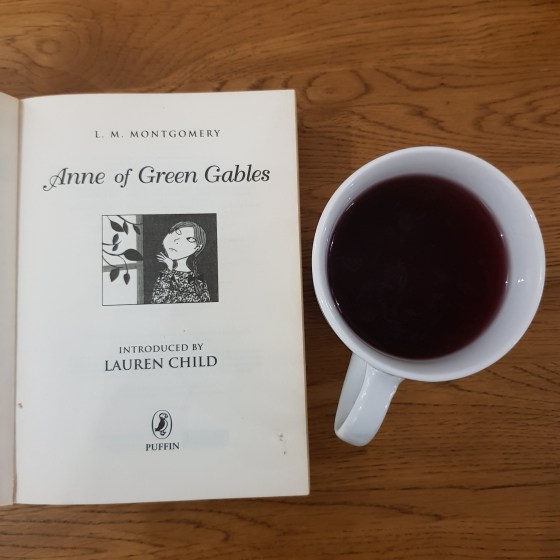
It’s always slightly intimidating to review a well-known and well-loved story but Anne of Green Gables is one of those books I’ve been meaning to read for ages, having somehow skipped over it as a child, and I recently borrowed a copy from the library.

Anne of Green Gables

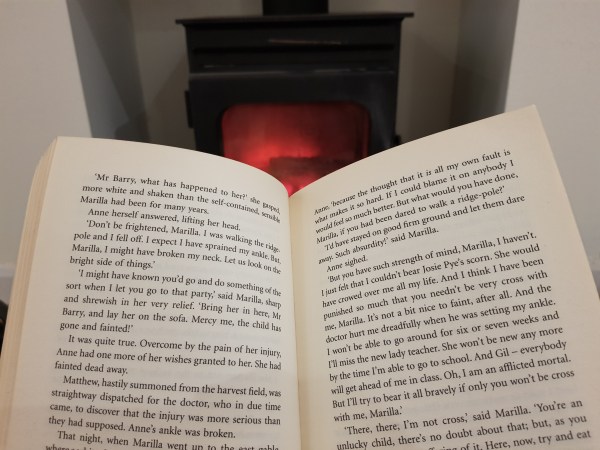
Anne of Green Gables is the story of a young orphan who goes to live on a farm with the aging siblings, Matthew and Marilla Cuthbert, after a mix-up at the orphanage. Written as a series of chronological vignettes, the story follows Anne settling into life at Green Gables, through her school days, all her adventures, hijinks and (many, many) mishaps, making friends and finding “kindred spirits” along the way.

Anne is imaginative, absent-minded, fiery-tempered, relentlessly optimistic and prone to fits of melodrama, but it’s hard not to feel sympathy for her when her background of loneliness and domestic drudgery is revealed, with only her daydreams to keep her company until she moved to Green Gables. One aspect of Anne’s character that resonated with me was her reverence for nature, and how she always noticed the beauty of the changing seasons that so many of us take for granted. I also have a soft-spot for sensible, dry-humoured, calm and collected Marilla, and I loved the exchanges between Anne and Marilla, who seem like such opposites most of the time but are fiercely devoted to each other.

Anne of Green Gables2

This is such a gentle, comfort-read and reminded me of other childhood favourites like Heidi, The Secret Garden and Little Women that transport the reader to simpler times and capture all the trials, tribulations and triumphs of childhood and growing up. Have a lovely week. X

The City of Brass by S.A. Chakraborty

CityofBrass

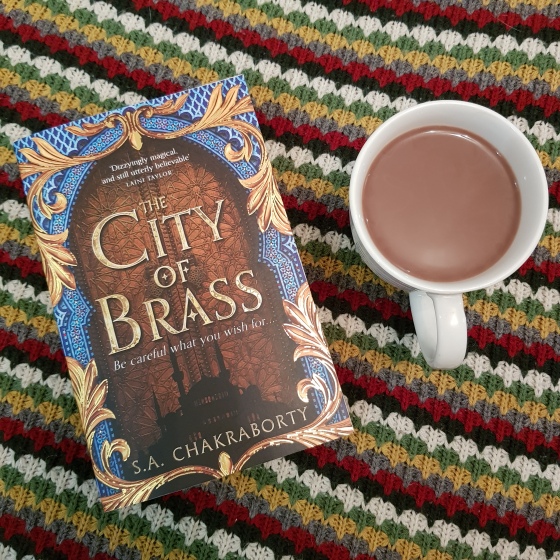
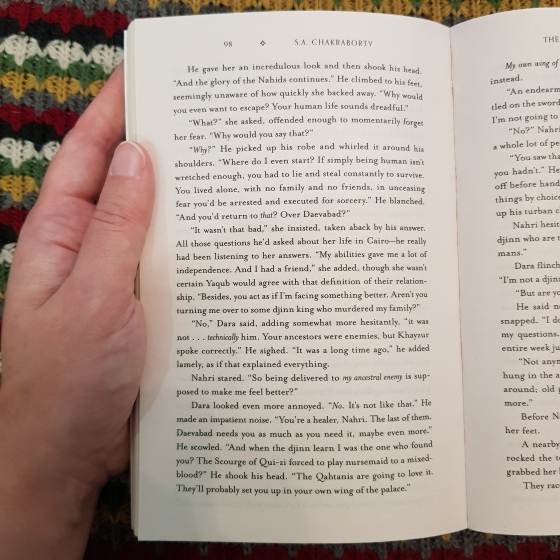
The story begins in Cairo where a young woman called Nahri is working as a thief and con-artist, though she dreams of becoming a physician. During a ceremony to exorcise a demon possessing a young girl, she accidentally summons a warrior Djinn (or rather a Daeva) called Dara, and is pulled into a world of flying carpets, mythical beasts and simmering tensions between the different races of Ifrit, Djinn, Daeva and half-human Shafit. One of the things I loved most about The City of Brass was that it drew from Arabian folklore and mythology which was such a refreshing contrast to the countless medieval European inspired fantasy stories that dominate the genre.

The narrative switches between two perspectives, Nahri, and Ali, a Djinn Prince in the city of Daevabad. The three main characters, Nahri, Dara and Ali are all flawed and victims of circumstance in their own way: Independent and used to fending for herself, Nahri finds herself caught between feuding factions all plotting her future with little consideration for what she wants; Dara was enslaved by the Ifrit to serve human masters and is weighed down by the guilt and shame of all the lives he’s taken and the things he did while enthralled; while Ali – as the second son of King Ghassan – has been trained as a warrior, when he longs to become a scholar and end the injustice and hypocrisy he witnesses.

CityofBrass2

The City of Brass is probably the best book I’ve read this year, though it’s not perfect as there are some pacing issues and a few slightly predictable twists, but I was still captivated by this tense, political and character-driven drama as Nahri and Ali discover just how ruthless King Ghassan is and how far he has gone to hold on to his throne and maintain order in the city of Daevabad. This is the first book in The Daevabad Trilogy and I’m looking forward to finding what happens next. Have a lovely week. X

A Gathering of Shadows by V.E. Schwab

AGathering OfShadows

Set four months after A Darker Shade of Magic (reviewed here), Kell and Lila have parted ways, as Kell tries to return to his duties as Prince of Red London while the delightfully rogueish Lila has chosen to make a fresh start in Kell’s world and has almost fulfilled her dreams of becoming a pirate (technically a privateer) on board the Night Spire under the charming Captain Alucard Emery. Meanwhile a new King rules White London, waiting and plotting revenge against our heroes.

Kell, who was never completely comfortable with his notoriety and privileges as both Prince and one of the last of the magical race of Antari, is now also struggling with the distrust and suspicion of his family and subjects alike in the aftermath of the night black magic ran through Red London consuming and killing those who came into contact with it.

AGathering OfShadows2

A Gathering of Shadows follows Kell, Lila and Alucard as they compete in the Element Games against magicians from across the world to find out who is the greatest, though the tournament at times feels entirely secondary to the slow-burn romance as Kell and Lila try to resist their attraction to one another, yet their eventual reunion is worth the wait and I just love the chemistry between them, like a pair of magnets constantly attracting and repelling each other.

The middle book in a trilogy often has a hard time defining itself but A Gathering of Shadows finds a balance between giving us greater insight into the characters and developing their relationships while setting the scene for the final book, and when the White King finally makes their move, this ends on a cliffhanger that left me desperate to know what happens next. Have a lovely week! X

The Burning Page by Genevieve Cogman

TheBurningPage

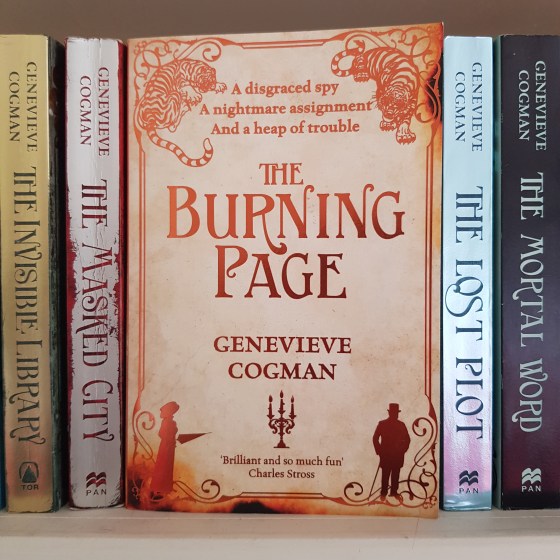
The Burning Page is the third book in The Invisible Library series and picks up shortly after the events of The Masked City (reviewed here); Irene is still on probation for leaving her post as Librarian-in-Residence to rescue her apprentice Kai (preventing a war between the Fae and Dragons in the process), and they’re still recovering from their traumatic experiences in Venice.

The arch-villain of the series, Alberich, is back and openly threatening the Library; Librarians are being hunted and killed, and portals to the Library are being destroyed trapping Librarians in alternative versions of reality.

TheBurningPage2

Though these stories are delightfully fun, there is a moral dilemma at the heart of The Burning Page as Irene is forced to contemplate just how far she’s willing to go to save the Library – all the while being haunted by the seeds of doubt Alberich sowed that the Invisible Library might not be the force for good she believes but a self-serving organisation that does little to help the alternate worlds it meddles in.

Irene is as self-deprecating, harassed and resourceful as ever, and it’s genuinely entertaining to see how she uses the Language (a refreshing alternative to magic) and her other skills to get herself out of traps, ambushes and face Alberich in a thrilling duel. Have a lovely week! X

21 Miles by Jessica Hepburn

21 Miles

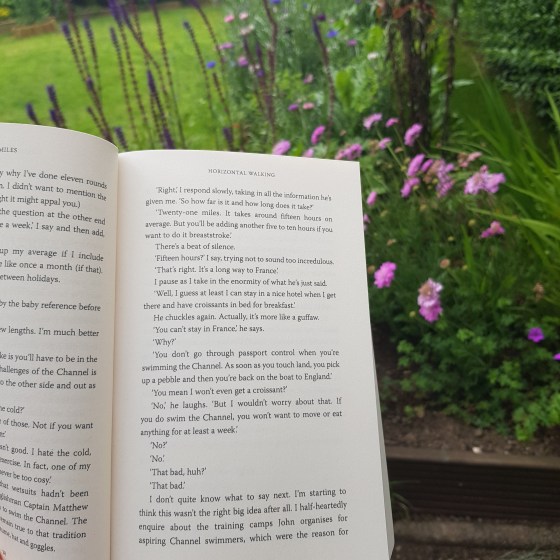
At the age of 43, after ten years and eleven cycles of IVF, Jessica Hepburn decides it’s time to give up on her dream of motherhood and get on with her life. Hepburn remembers an old childhood ambition and starts investigating whether or not she can actually achieve it. At first her dream of swimming across the English Channel seems as impossible and out of reach as motherhood, but Jessica turns the same dogged tenacity she put into a decade of fertility treatments into swimming. In terms of difficulty, she points out, more people have climbed Mount Everest than swam across the Channel.

One unexpected benefit of her ambition is that following the example set by Captain Matthew Webb in 1875, she won’t be able to wear a wet-suit and is encouraged by her swimming coaches to put on body fat to help her keep warm in the water. In order to help her put on weight, Jessica decides to have lunch with a list of 21 inspirational women (only some of whom are mothers) from neuroscientists and polar explorers to the founder of Mumsnet, an MP and a ballerina to discuss whether motherhood makes women happy.

21 Miles2

Over the course of her training, Jessica has to overcome her doubters and her own self-doubt, as well as her aversion to cold water and fear of jellyfish. Working her way slowly from swimming in the Serpentine lake in Hyde Park to open water, and finally her solo voyage across the Channel, I found myself rooting for Jessica and welling up during the description of her crossing.

Written with self-deprecating humour that had me chuckling out loud, this is also a thought-provoking and poignant book as Jessica doesn’t shy away from describing her disappointment and grief at not being able to have children, the shame and isolation of infertility, and the strain it put on her relationship. Unlike a lot of other books written about infertility, 21 Miles doesn’t end with Jessica having a baby, and yet it is life-affirming and inspiring. Throughout this book, Jessica considers the complex relationship women have with food, as well as the difficulties in her relationship with her partner, her relationship with her own parents, the social pressure to have children and the tension that sometimes exists between mothers and childfree or childless women, and in many ways, 21 Miles is as much about the modern experience of being a woman as it is about swimming or motherhood. Have a lovely week! X

The Long Way to A Small Angry Planet by Becky Chambers

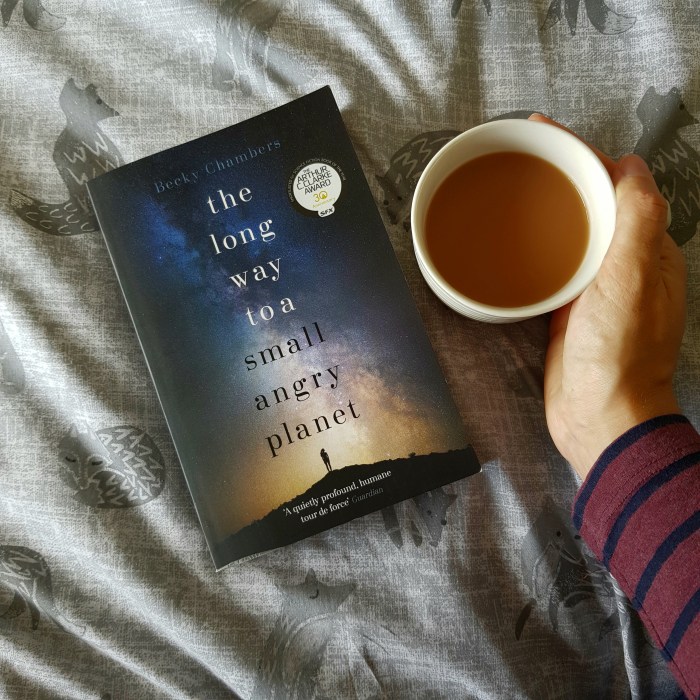
The Long Way to A Small Angry Planet is set in our galaxy but far in the future, when other planets have been colonized and various other sentient species have invited humans to join the Galactic Commons.

The story follows the crew of a ship called the Wayfarer, who make their way in the galaxy by creating hyperspace tunnels that allow other ships to travel from one planet to another. Perpetually struggling to make ends meet, the crew accept a high-risk, high reward job to connect a planet inhabited by a belligerent race of aliens who have only recently ceased sending messengers and ambassadors from other planets home in bits and begun communicating and trading with the Galactic Commons instead.

The Long Way to A Small Angry Planet is a slice-of-life space-opera, and it’s hard to describe the plot because not much actually happens yet is far from slow or boring. The Wayfarer’s crew is made up a multi-species cast, and the human, alien and A.I. characters are all vividly realised, and their relationships allow the story to explore the romances, taboos, prejudices and politics that would invariably exist between so many different species. The writing is also deliciously atmospheric, and right from the offset I felt like I was on board the Wayfarer, and could hear every clunk in the ship, the hum of the engine and imagine staring out of the viewport into endless space.

I don’t read much science-fiction but I’m so glad I took a chance on this, and I look forward to reading the rest in the series. Have a lovely week! X

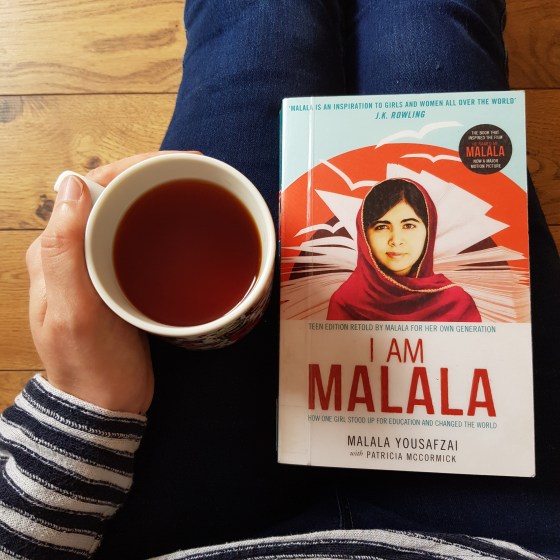
I am Malala by Malala Yousafzai

I_Am_Malala

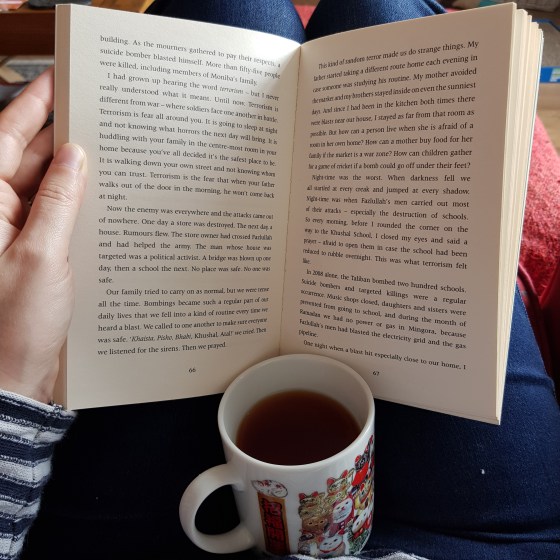
I Am Malala is one of those books that I’ve been meaning to read forever and I ended up borrowing a copy from the local library. In many ways, Malala comes across as a very ordinary teenager who bickers with her little brothers and worries about her exams, and I really enjoyed her vivid descriptions of her life in Pakistan, playing with the little girl next door, listening to her father and his friends chat about politics, visiting relatives in the mountain village where her parents came from, the sense of family and community, and her dawning awareness of living in a patriarchal society.

Malala recalls being vaguely aware of the Taliban and Al-Qaeda in neighbouring Afghanistan but – as I’m sure many people reading can relate – that was something happening somewhere else, until their influence slowly started spreading. Malala describes how a militant group of fundamentalists seized upon the chaos and destruction created by a devastating earthquake to extend their influence and occupy North West Pakistan where she lived, bringing terror, torture, murder and civil war to her home.

I_Am_Malala2

The day that Malala was shot by a Taliban terrorist was just another day up until that event, and she recalls the confusion and disorientation of waking up in an unfamiliar place with no memory of what happened and feeling desperately worried about her family. Malala clearly expresses her humility and gratitude at being alive, reunited with her family and their new life in the U.K. with all the freedom and safety it provides, but it is also tinged with homesickness for Pakistan and all her friends there.

Malala comes across as a young woman shaped by her circumstances, she recognizes how fortunate she was that her parents supported and encouraged her education, and how her family were ordinary people caught up in the conflict between the Pakistani government and terrorists, yet instead of being cowed and frightened into submission, Malala developed a sense of purpose and her determination and courageousness shine throughout this biography. I Am Malala is every bit as powerful and thought-provoking as I expected, and ultimately Malala chooses to define herself not as the girl who was shot by the Taliban but as an advocate for education. Have a lovely week! X