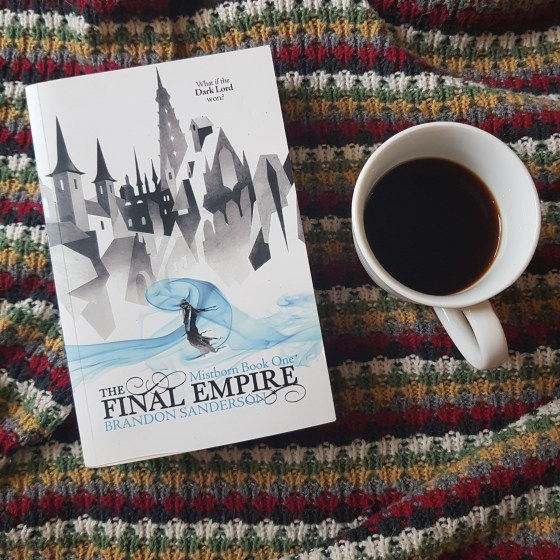
The Final Empire by Brandon Sanderson

TheFinalEmpire

Dark and stormy evenings in our corner of the world have given me a lovely excuse to stay at home snuggled under a blanket on the couch with candles lit and books to read. I’ve had a few false starts this year – books that I’ve started but lost interest in – and I decided to re-read The Final Empire by Brandon Sanderson to refresh my memory before picking up the other books in the Mistborn trilogy, which have been on my TBR list for a long time.

The plot of The Final Empire follows a fairly typical hero’s journey as the charismatic Kelsier leads a daring group of rebels from a subjugated race in an attempt to overthrow the tyranical Lord Ruler and his oppressive empire. Along the way, Kelsier takes a thief called Vin as his apprentice and trains her in allomancy, the magic system Sanderson created and it’s easily one of the most original and well-integrated systems I’ve come across in a long time.
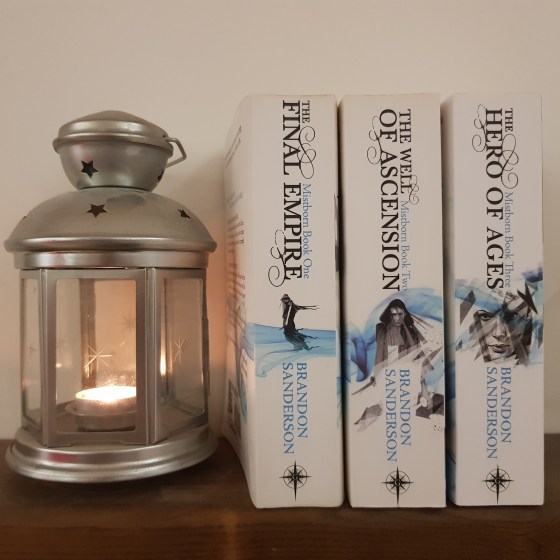
The Mistborn Trilogy

I suspect fantasy novels are often dismissed by many readers because they require too much suspension of disbelief and yet beyond the magic and battles, The Final Empire explores some universal and pertinent themes such as prejudice, persecution and even the injustices and atrocities that ordinary people ignore or accept every day, as well as the redeeming qualities of courage, resilience, loyalty and hope.

The biggest criticism I have of this story is that Sanderson doesn’t so much foreshadow the two major plot twists as shine a spotlight on them, and many readers will probably guess the Lord Ruler’s identity and the source of his power long before any of the characters do, while another character’s death carries a certain sense of inevitability. Despite this though, it’s still a gripping tale and I enjoyed re-reading The Final Empire just as much as I did the first time around, and I’m looking forward to finding out what happens next in the series. Have a lovely week! X
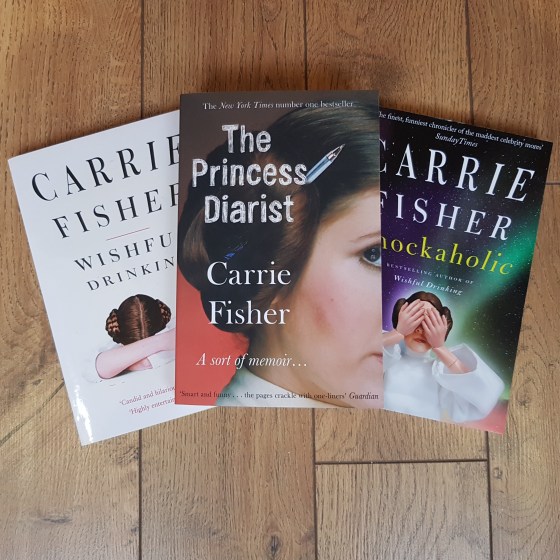
The Princess Diarist by Carrie Fisher

PrincessDiarist

For almost as long as I can remember I’ve been a Star Wars fan, and my affection for the franchise is in no small part due to the sassy, blaster-wielding Princess who bossed her male counterparts around and was always at the forefront of the action.

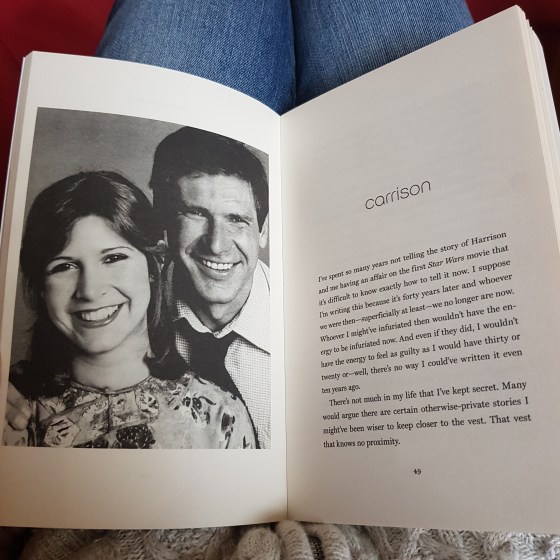
Carrie was apparently inspired to write The Princess Diarist when she stumbled upon the diaries she wrote while filming Star Wars: A New Hope, and decided that forty years after the event, the public revelation of her affair with Harrison Ford would cause minimal damage to those involved.

The Princess Diarist starts with Carrie recounting her decision to step out of her celebrity parents’ shadows, and how at the age of nineteen she was cast as Princess Leia in a low-budget “space fantasy” simply called Star Wars. I sometimes wonder how faithful her recollection of events is but I can’t deny it’s entertaining to read about some of the changes in the original script, the process of finding that iconic hairstyle and various other behind the scenes moments between the cast and crew. However, for what is ostensibly a kiss-and-tell memoir, Carrie Fisher is remarkably tight-lipped about the details of her love affair with Harrison Ford.

PrincessDiarist2

The mid-section contains poems and direct extracts from the diaries she wrote in 1976, and this part lags a little as the diary entries are rambling, self-indulgent and laced with Carrie’s teenage insecurities.

The final part explores the cultural phenomenon Star Wars became, and some readers might be offended by the way she describes the rabid fans and their sense of entitlement for autographs and selfies, yet I suspect she probably understood why the Star Wars characters are so beloved because she admitted that there were times throughout her own life when she wished she was more like Leia. I also found it interesting reading about the different ways male and female fans respond to her character, and she doesn’t shy away from sharing details of some of her experiences and observations about Hollywood sexism (and ageism).

I suspect that Star Wars fans may be disappointed that she doesn’t share more behind the scenes secrets and people expecting a more linear biography may also be disappointed, but Carrie’s inimitable style, humour and candour still make The Princess Diarist an easy and enjoyable read. Have a lovely week! X

Kitchen by Banana Yoshimoto

Kitchen_Banana Yoshimoto

Let me preface this review by saying that Kitchen is a book that shouldn’t be judged by the cover, as aside from the garish colours, the description and synopsis on the back cover are downright misleading. This slim book compromises of two standalone stories covering similar themes of grief and loss, Kitchen and Moonlight Shadow.

The first story, Kitchen, is narrated by a young woman, Mikage Sakurai, following the death of her grandmother – and last remaining blood relative. After her grandmother’s funeral, Yuichi Tanabe, a young man who knew her grandmother invites Mikage to live with him and his transgender parent, Eriko; feeling cast adrift and at something of a crossroads in her life, Mikage gratefully accepts. The title of the story refers to Mikage’s favourite room in the home, where she finds a sense of comfort and purpose preparing food for the people she cares about or even just cleaning and setting things in order in the midst of her own turmoil and upheaval.

Kitchen_Banana Yoshimoto2

Kitchen explores the different ways that the three characters, Mikage, Yuichi and Eriko experience and react to grief. Rather than seeming macabre and depressing, Kitchen is an inspiring and thought-provoking reminder not to sleepwalk through life lost in our daily routines because our time is finite and every moment is precious. As the narrator wrestles with her own highs and lows, she also ponders if we can really appreciate joy and triumph without also experiencing sorrow and disappointment, and it is Mikage’s acceptance of her own loneliness and mortality that encourages her to consider new paths and possibilities.

Unfortunately, Moonlight Shadow is a bittersweet story with similar themes but it just didn’t resonate with me the way that Kitchen did.

This is a short book and so easy to slip into, yet it is one I savoured and will likely re-read. Have a lovely week. X

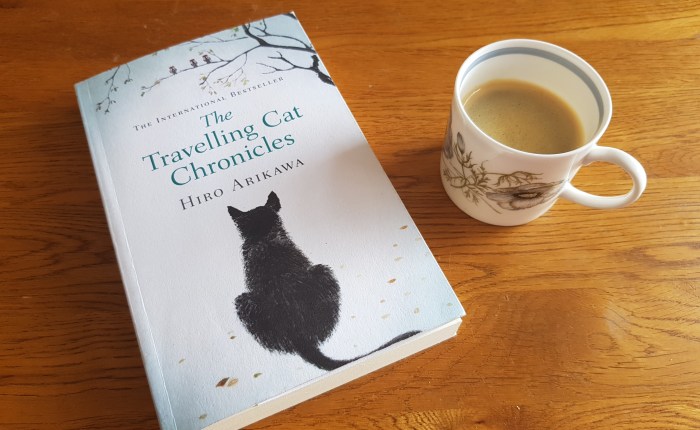
‘The Travelling Cat Chronicles’ by Hiro Arikawa

‘The Travelling Cat Chronicles’ by Hiro Arikawa

The Travelling Cat Chronicles is a Japanese novel that tells the tale of Satoru and a stray cat he rescues and names Nana. Satoru is kind, easy going and whimsical with a deep affinity for misfits and strays of both the human and feline variety, while Nana is proud and independent but the pair quickly become devoted to each other. A few years after adopting Nana, however, Satoru begins to contact old friends and relatives to ask if any of them could re-home his beloved cat.

The Travelling Cat Chronicles is as much about friendship and families as it is about cats, and each chapter focuses on one of Satoru’s closest friends and relatives, and through each chapter the reader learns more about Satoru and the lives he has touched. In a way, this story explores the regrets and hidden hurts that people often carry through life, and what happens when life seems to give us another chance to atone for our past mistakes and heal some of our old wounds.

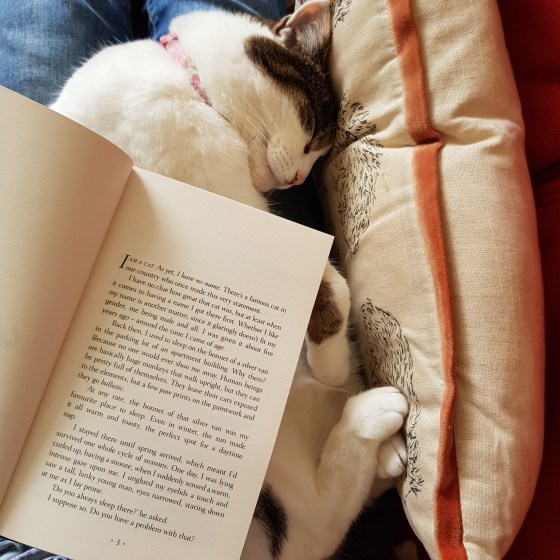
Mara_and_TTCC

The Travelling Cat Chronicles is a bit predictable, and yet it is such a poignant story that I still enjoyed it and was moved by the ending. Have a lovely week. X

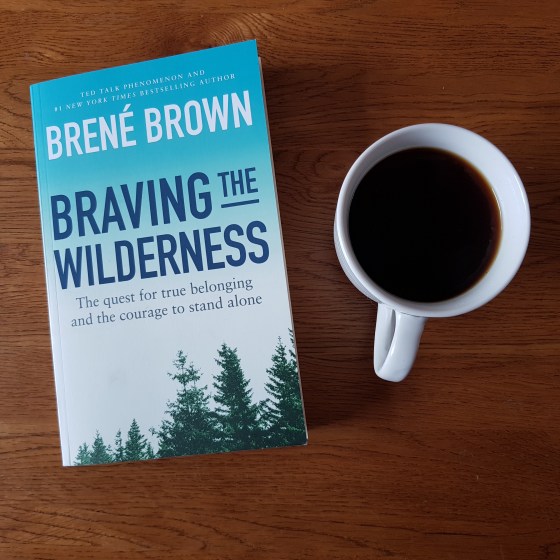
‘Braving the Wilderness’ by Brene Brown

Braving theWilderness1

I often read books with themes that mirror something I’m going through in real life at the time, and I recently found myself picking Braving the Wilderness by Brene Brown off the shelf. I first learned about Brene Brown’s research through her TED talks on vulnerability and shame, and over the last few years I’ve drawn so much comfort and inspiration from her books that have helped me to navigate difficult transitions and encouraged me to be more authentic, vulnerable and courageous in my personal life and career.

Braving the Wilderness builds on Brene Brown’s previous books but has a distinctly political edge as she explores how we hide who we really are in order to fit in, and how political rhetoric has become increasingly intolerant, dehumanizing and divisive as leaders call upon their followers to oppose anyone who disagrees with their opinions or values. This book is very much about being curious and listening to other perspectives, as well as being honest about our own, but it’s also about having the moral courage to stand up for what we believe is right even if it means standing alone.

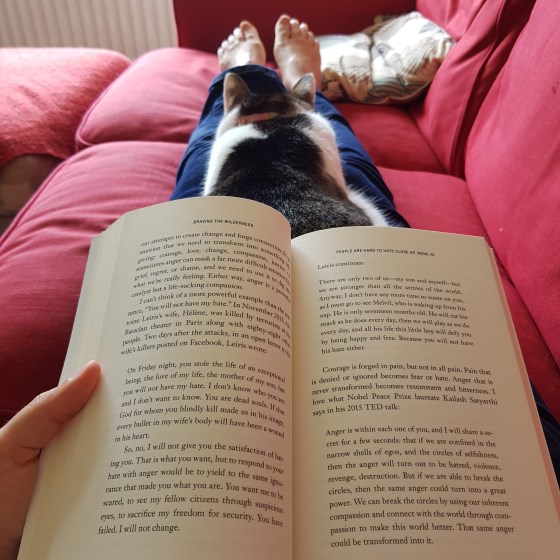
Braving theWilderness2

I find it so easy to relate to Brene Brown, and this is written with the same honesty, humility and humour as her other books, yet it’s not an easy read as it challenged me to reflect on the times when my own fear of criticism, conflict, loneliness and rejection lead me to settle for fitting in instead of belonging, and how sometimes the things we do to avoid feeling pain end up causing us more heartache and suffering in the long run.

Braving the Wilderness didn’t have the profound impact on me that I Thought It Was Just Me or Rising Strong did, but it still feels like a pertinent discussion on how to overcome some of the barriers to communication, understanding and connections in the current socio-political climate. Have a lovely week. X

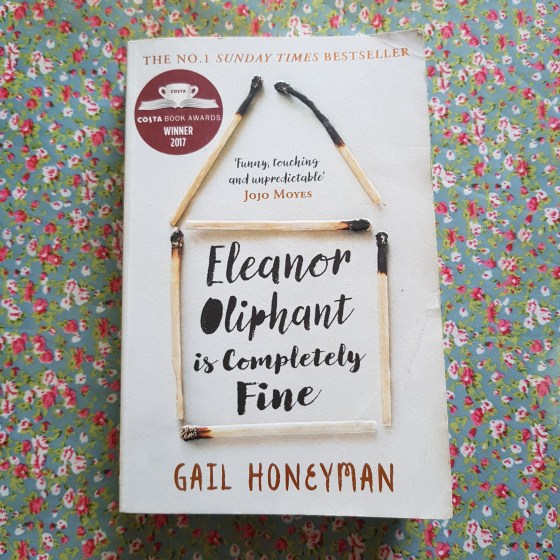
Review of ‘Eleanor Oliphant is Completely Fine’ by Gail Honeyman

Eleanor Oliphant is Completely Fine is the story of a woman in her thirties who has managed to drift through life without forming any close connections, and describes what happens when she develops a crush on an aspiring musician, and when she and a colleague help a stranger in need. It’s hard to describe the plot without giving too much away, but this is an engaging story of loneliness, resilience, friendship and how the smallest acts of kindness can have the most profound impact.

Written in the first person, we see the world through Eleanor’s eyes, her awkward social interactions, the weight of her sinister mother’s influence, and little by little the mystery of her past is revealed. Eleanor is so peculiar at times, yet most readers will be able to relate to the themes of loneliness, rejection and the feeling of not fitting in, and I quickly found myself rooting for Eleanor.

EleanorOliphant1.jpg

Loneliness is often considered to be a problem for the older generations, yet this novel shows just how easy it is for someone to muddle through life without making any close or lasting connections, and why someone might even choose solitude to avoid difficult personal questions, the risk of rejection or the fear of the past repeating itself.

Eleanor Oliphant is Completely Fine tackles some pretty heavy topics from child abuse to domestic violence, depression and social isolation, yet it also shows how people can survive the most traumatic events and blossom when shown kindness and understanding. I found this story to be poignant, funny, uplifting and thoroughly engaging. Have a lovely week. X

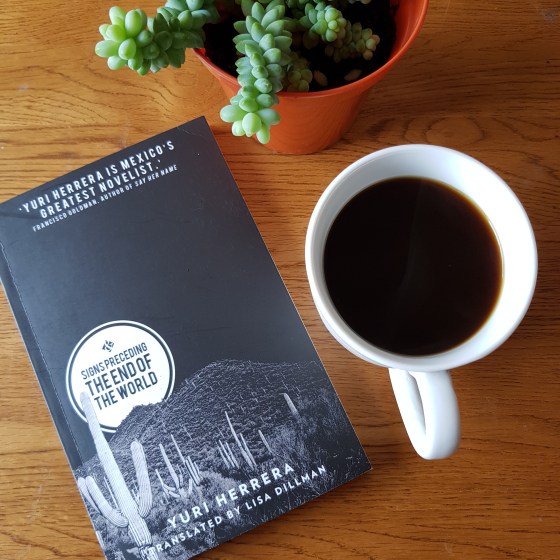
Review of ‘Signs Preceding the End of the World’ by Yuri Herrera

Review of ‘Signs Preceding the End of the World’ by Yuri Herrera

Inspired by Ann Morgan’s TED talk My Year Reading a Book from Every Country in the World, I’ve been trying to read more translated fiction over the last few years, and I picked up Signs Preceding the End of the World on a cold day while day-dreaming about sunnier climes.

Signs Preceding the End of the World is the tale of a young Mexican woman called Makina who embarks on a quest to deliver a message to her brother who crossed the border to make a new life for himself in the United States.

In some ways, this is a modern retelling of the hero’s quest, reminiscent of Orpheus’ journey through the underworld, except Makina’s underworld is one full of crimelords, thugs, border patrols, police officers and illegal immigrants. The writing is sparse and poetic, and at times the plot trots along so quickly that whole chapters pass in a blur adding to the surreal and sometimes nightmarish quality of the story.

YuriHerrera2

Makina is quite literally a messenger, working at a telephone exchange connecting people from “Little Town” where she lives to “the Big Chilango” (Mexico city) and beyond; Makina is resourceful, capable of crossing borders and languages, and able to defend herself in a machismo culture.

Signs Preceding the End of the World is a topical story concerning someone crossing the Mexico-US border illegally, describing how dangerous the crossing itself is as she relies on crimelords and smugglers to help her, evading border patrols and police along the way. Reaching the U.S.A she finds immigrants everywhere, and notices their influence on the culture from food to music and language, as well witnessing the daily prejudice and discrimination they face.

This is a short book – barely more than 100 pages – it ends almost as abruptly as it starts, but leaves the reader with much to ponder. Have a lovely week. X

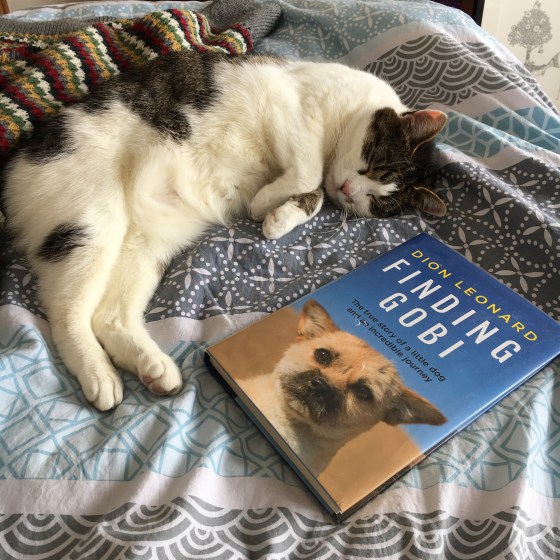
Review of ‘Finding Gobi’ by Dion Leonard

Finding_Gobi

I can’t remember when I first heard about the ultra-marathon runner from Edinburgh who bonded with a stray dog he found while competing in a race across the Gobi desert in China, but I was delighted when I found out he’d written a book about their story.

Something that struck me right from the start is that it was the little dog who chose Dion out of a hundred other runners, not the other way around. Mile after mile, the scruffy stray he names Gobi keeps pace with Dion, and little by little he starts to enjoy her company as she gallops along beside him, at times Gobi’s presence helps him push through the pain, exhaustion and boredom of long distance running. A real turning point in their relationship comes when Dion stops to carry Gobi across a river that is too deep and fast flowing for her to cross, even though he knows it will cost him time and probably his position in the race too. By the time he crosses the finish line, seven days and 155 miles later, Dion has resolved to bring her back to the UK with him.

Roughly the first third of Finding Gobi focuses on the ultra-marathon, and the rest describes all the challenges of trying to bring Gobi back to the UK. I don’t want to spoil it, but this story ends happily and their reunion and eventual return to the UK is that much sweeter for all the obstacles and setbacks they faced along the way.

Dion, a bit of a loner by nature with a fair bit of emotional baggage from his childhood and adolescence, is humbled by the outpouring of generosity and support from friends and strangers alike who donate money to the crowd-funding campaign he starts or give up their time to help him directly. It is Dion’s commitment to bringing Gobi home that drives the campaign, but it’s the kindness of people from all over the world who make it possible, and in turn make this story so heart-warming and memorable.

Although my own furry, four-legged companion is of the feline variety, there were so many aspects of this story that resonated with me. Human relationships can often be complex, yet our animal companions offer us their love and trust unconditionally, and no matter how we may see ourselves they accept us just as we are. Yet even more than that, Finding Gobi demonstrates that somehow animals also have the ability to bring out our very best qualities – from commitment and co-operation to kindness and compassion.

Have a lovely week. X

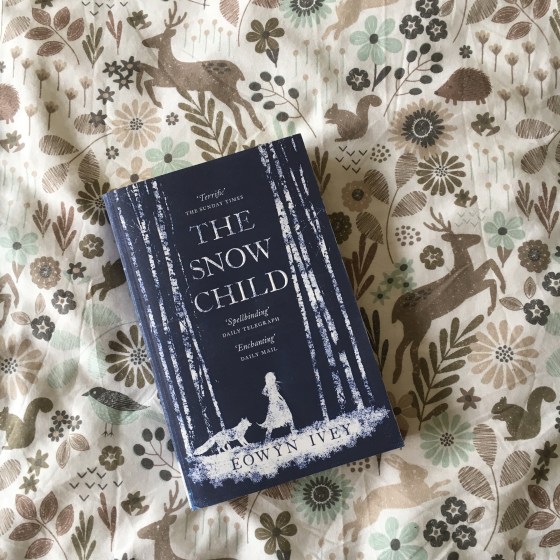
Review of ‘The Snow Child’ by Eowyn Ivey

TheSnowChild

Over the last few weeks, the long, dark midwinter evenings have given me the perfect excuse to sit by the fire and make a start on the pile of new books waiting to be read. It has been snowing on and off all week in our part of the country, making Eowyn Ivey’s The Snow Child seem like an appropriate story to start with.

Set in 1920, The Snow Child centres around Jack and Mabel, a married couple in their mid-forties from Pennsylvania grieving the stillbirth of their baby, and attempting to make a new life for themselves on a homestead in Alaska. Both lost in their own grief, Jack and Mabel hope it will be a fresh start away from all the reminders of their loss, but the reality proves quite different from their expectations as Alaska turns out to be a beautiful but harsh and unforgiving landscape.

One winter night, caught up in the magic of the first snowfall, they build a child in the snow – a little girl – but the very next day they find their snow child smashed and foot prints leading away from it. Not long after, they begin to see a little girl around their homestead and wandering in the wilderness. As the seasons and years pass, the reader is left wondering whether the snow child is just a feral orphan left to fend for herself or a fairy-tale brought to life by the couple’s desperate longing.

The Snow Child is split into three parts, and I found the final part – which jumps ahead several years – the weakest section as it seemed disjointed as it rushed towards the end. Despite this, I loved the descriptions of life on the homestead and the struggle to cultivate the land, making friends with their coarse-mannered but kind-hearted neighbours, the beautiful Alaskan winters and the mysterious snow child who seemed to haunt the land. The Snow Child is an ideal story to read under a cosy blanket with a cup of hot chocolate while the wind howls and the snowflakes fall outside.

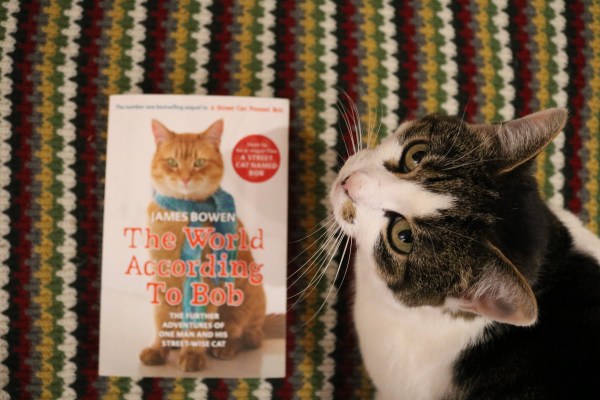
Review of ‘The World According to Bob’ by James Bowen

TheWorldAccordingtoBobandMara

A Street Cat Named Bob was the first book I reviewed this year, and it seems fitting that the sequel The World According to Bob should be the last. This picks up where the first book finished, James is a recovering addict, struggling to make ends meet by selling the Big Issue magazine and living in a London tower-block with Bob, the stray cat he adopted in the previous book.

Both books really capture the unconditional love, trust, loyalty and affection that can exist between people and animals, and how healing and transformative those bonds can be. Taking care of Bob gives James a sense of purpose, routine and responsibility, it’s his reason to get out of bed in the morning, to work hard and stay sober.

James isn’t proud of his past, and although he describes his difficult childhood shuttling between divorced parents in England and Australia, and his failed attempts to become a musician that ultimately resulted in him becoming homeless and addicted to heroin in London, he doesn’t blame anyone else for his choices.

James’ humanity comes across throughout the book as he understands the desperation that leads people in a similar situation to his own resorting to intimidation, violence, theft and addiction to numb their pain and shame. When his own fortunes start to change, James sees it as part of his duty and purpose to raise awareness of the harsh realities of those rough-sleeping, battling addictions and trying to eke out a living working on the streets.

James doesn’t have much by most people’s standards, and yet he is grateful for everything he does have, and his gratitude extends to all the people that believed in him and helped him when he needed it most from the Blue Cross vets who treated Bob whenever he was sick or injured to the Big Issue organisation, his parents, friends and the publishers who gave him the opportunity to share his story. Above all, James is grateful to the little cat that changed his life and inspired him to become the very best version of himself. I don’t usually read autobiographies but I found both of James Bowen’s books thoroughly heart-warming and inspiring. Have a lovely week. X