Review of ‘Close Encounters of the Furred Kind’ by Tom Cox

CEotFK1

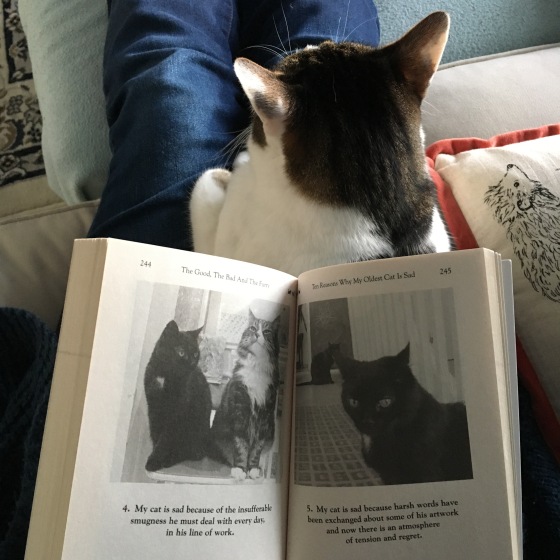
Close Encounters of the Furred Kind starts not long after where The Good, The Bad and The Furry (reviewed here) left off, with Tom Cox and his partner contemplating moving their lives and their four cats from Norfolk to rural Devon.

Much like his blog and other books about cats, Close Encounters of the Furred Kind is laugh-out-loud funny in places as Tom describes the upheaval and stress of moving across the country with his four beloved felines, his attempts to domesticate and adopt a local feral cat, taking up dog-walking as a hobby, conversations with his parents and interactions between his feline friends. Yet I find Tom is at his most eloquent when contemplating the ageing and mortality of the cats with whom he shares his home and around which his life revolves, it is perhaps the knowledge that most of us will outlive our pets that makes us love them all the more fiercely.

Sadly since this book was published, two of Tom’s cats, The Bear (a soulful philosopher) and Shipley (a cantankerous chatterbox) have passed away, but they will live on through these books in his vividly captured descriptions of their personalities and mannerisms.

CEotFK2

It was about six months ago that we found a mast cell tumour on our own cat’s tail, and although it was removed before it spread, she is still at a higher risk of developing another tumour than other cats and is currently in a period of monitoring. As grateful as I am to all the vets who have treated Mara, I always feel anxious whenever she goes for check-ups and tests (which are not without risks), and about what the results might reveal, but I’ve drawn comfort from reading books like this from other animal lovers who understand just how much our lives are enriched by the affections and companionship of our pets.

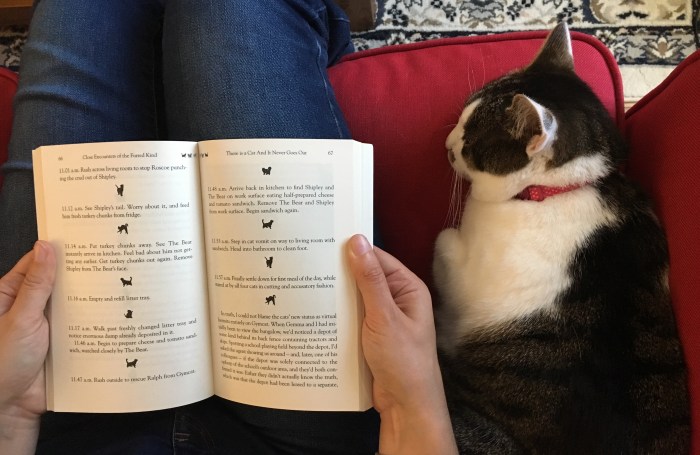
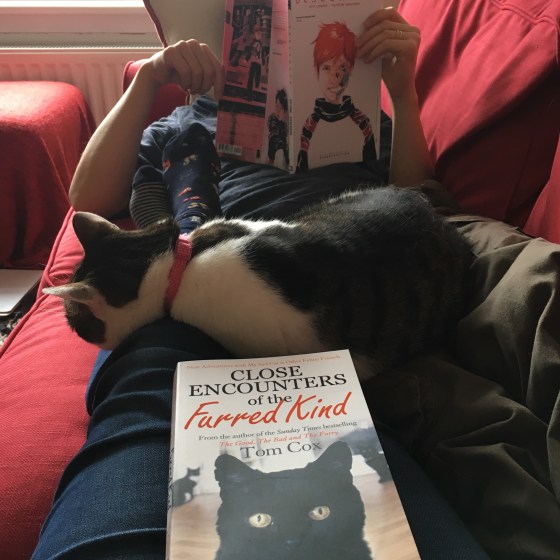
After a busy week I’ve enjoyed spending a lazy weekend at home curled up on the couch with my husband, Mara snoozing across our laps and Close Encounters of the Furred Kind to amuse me. Have a lovely week.

Review of ‘The Silmarillion’ by J.R.R. Tolkien

Silmarillion1

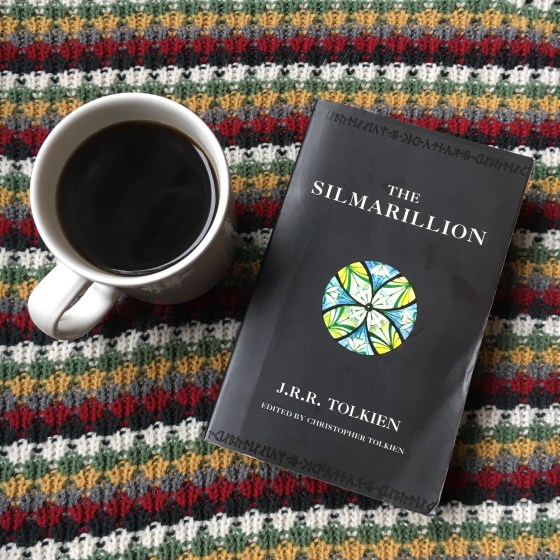
As a child both of my parents took turns to read stories to me, yet my dad was never much of a reader himself. The exceptions, however, were J.R.R. Tolkien’s tales of elves, dwarves and hobbits in Middle-Earth, which captured his imagination as a teenager and have continued to fascinate him over the years. My dad and I have spent countless hours discussing the books and film adaptations of The Hobbit and The Lord of the Rings, but I have always struggled to get into The Silmarillion, which happens to be his favourite book.

I recently learned that my dad, who has suffered from backache all of his adult life, requires surgery as the underlying condition has been steadily deteriorating and has now reached a level of severity where the risks of doing nothing outweigh the risks of operating. After spending some time with him recently, I became determined to attempt The Silmarillion once more.

Published posthumously, The Silmarillion is a compendium of stories starting with the creation of Middle-Earth and ending when the elves depart after the events of The Lord of the Rings.

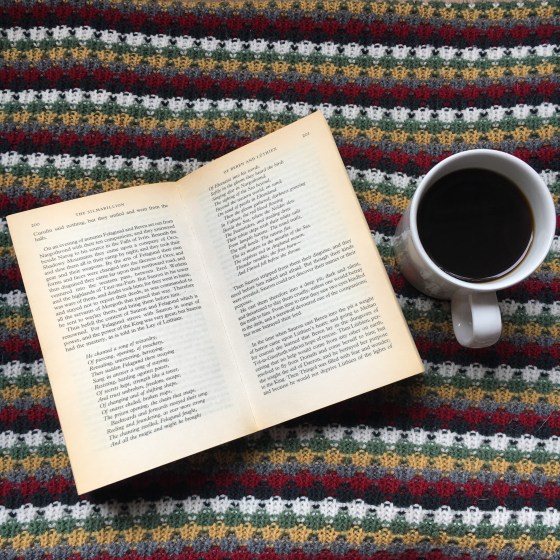
Silmarillion2

What immediately struck me about The Silmarillion was the thought and detail Tolkien put into it, from the geography and genealogy to the languages and mythology, at times the book feels more like a painstakingly researched historical treatise than a work of fantasy fiction. Having said that, the writing is dry in places and I sometimes found it hard to follow without frequently referring to the family trees and maps at the back of the book.

It is an incredibly ambitious collection, yet the quality varies from chapter to chapter: Of Beleriand and Its Realms, for exampleis a tedious geography lesson that could have been cut during edits, but I thought the highlights were the chapters concerning Melkor and Ungoliant’s theft of the coveted elven jewels (the Silmarills), Of Maeglin (a story of betrayal and comeuppance), and the thrilling but bittersweet love story, Of Beren and Luthien. I also enjoyed learning a little more about familiar characters from The Lord of the Rings such as Galadriel, Elrond and Sauron.

I have always delighted in the power of stories to connect people, and the works of J.R.R. Tolkien in particular are beloved by people all over the world, but there is no one that I’m more excited to discuss The Silmarillion with than my dad. Have a lovely week.

Review of ‘Chocolat’ by Joanne Harris

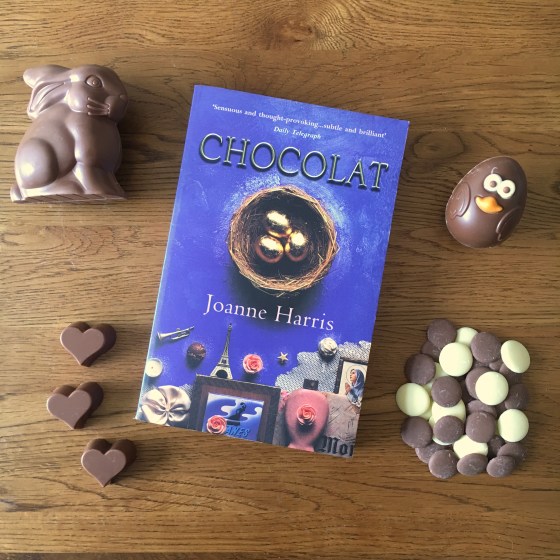
FullSizeRender (1)

Chocolat had been sitting unread on my bookshelves for more years than I can count, but last weekend on a whim I settled down to read it while nibbling pieces of chocolate Easter eggs, which seemed wholly appropriate as the story takes places between Shrove Tuesday and Easter Sunday.

Chocolat follows Vianne Rocher and her daughter who sweep in on the winds of a carnival bringing flavour and colour to the drab and parochial French village of Lansquenet-sous-Tannes.

The novel is written in the first person, but switches between Vianne and Francis Reynaud, the village priest who takes umbrage when Vianne opens a Chocolaterie on the first day of Lent. The pace of Chocolat is meandering, yet the antagonism between Vianne and Reynaud builds suspense and drives the story on to its inevitable conclusion.

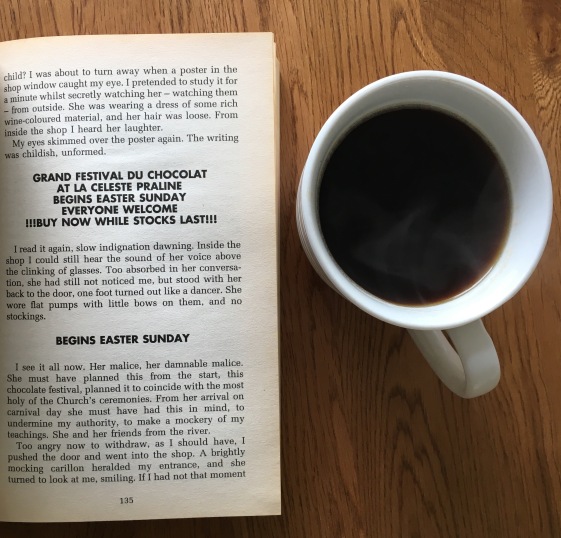
FullSizeRender (5)

The village of Lansquenet itself is rife with secrets, gossip and simmering tensions but Vianne finds friends among the other village outcasts and rebels, their kindness and camaraderie in stark contrast with Reynaud and his cronies’ hypocrisy and meddling.

Chocolat is a story that doesn’t reveal its secrets too quickly and kept me wondering right up to the end. I really enjoyed the supernatural elements of the story, there is magic in Chocolat, yet it is always understated and never becomes too fantastical.

The descriptions of Vianne’s chocolate creations are unsurprisingly mouth-watering and Chocolat was a delightful story that left me hungry for more. Have a lovely week.

Review of ‘The Little Book of Hygge’ by Meik Wiking

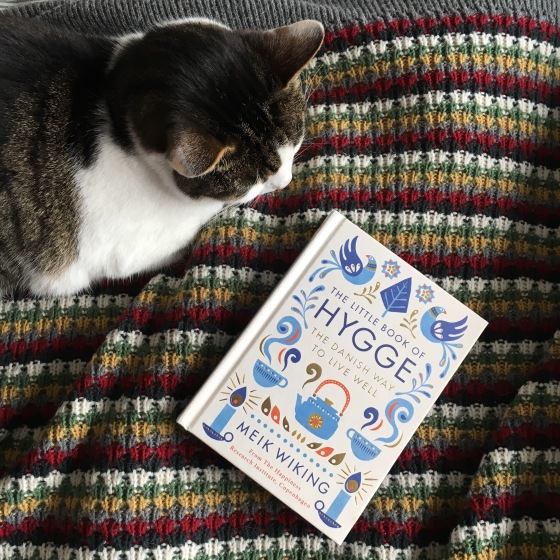
FullSizeRender (2)

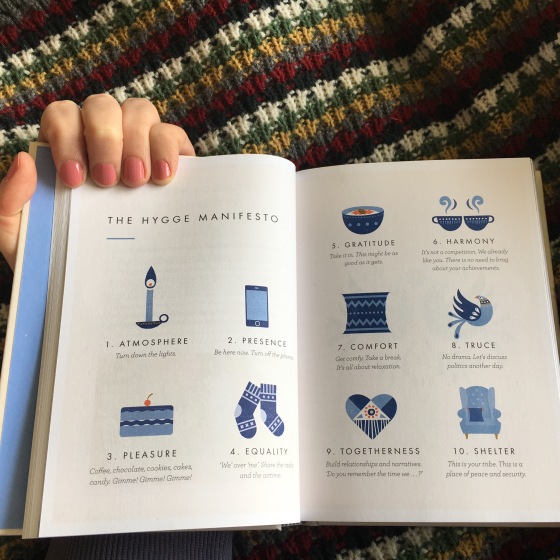
We are in the midst of fairly significant renovations in our house at the moment, and with tradesmen unblocking the fireplace in the living room and scrambling over the roof to fit a chimney, I’ve retreated upstairs and out of the way with my cat and The Little Book of Hygge for company.

Over the last couple of years, the Danish concept of hygge has taken the world by storm. Yet there has also been something of a backlash against it, with some criticizing it as xenophobic and the latest marketing ploy to sell mugs, rugs, all manner of knitwear and books on the subject.

While hygge is often synonymous with cosiness, especially during the colder and darker months of the year, Meik Wiking defines hygge as a feeling of safety, relaxation and contentment that can be found in any weather or season. For many of us who lead busy lives, part of the appeal of hygge is the chance to slow down, set aside our worries for a while and indulge in simple pleasures.

FullSizeRender (3)

The Little Book of Hygge is packed with a mix of research and personal anecdotes, which makes this book better suited to dipping into every now and again than binge-reading. There are whole chapters devoted to candles and lighting, Christmas (the most hygge time of the year), a dictionary to help you work out your hygge from your hyggeligt, a few Danish recipes (though I was a little disappointed there were more recipes for meat than cake), and various other aspects of a hygge lifestyle. The presentation of the book is lovely with beautiful photos and illustrations generously scattered throughout.

With tradesmen thudding and thumping around above and below, it’s been hard to concentrate on reading, but The Little Book of Hygge left me imagining – and looking forward to – lots of hyggeligt moments once the renovations are complete, like sitting in the garden in the sunshine over the summer, huddling around board games with friends on rainy days, and reading in front of the fire on cold, winter nights. Have a lovely week.

Review of ‘The Good, The Bad and The Furry’ by Tom Cox

10 TheGoodBadFurry1

I had been vaguely aware of Tom Cox and his cats on twitter, but I only stumbled upon his books recently while looking for A Street Cat Named Bob by James Bowen (reviewed here)The Good, The Bad and The Furry follows roughly a year in the life of Tom Cox and his cats starting at the end of his nine year relationship with his wife and explaining the difficulty of reaching a custody arrangement for the couple’s six cats, his grief following one of his cat’s deaths, a new relationship and eventually a new kitten.

Tom vividly describes his relationships and family, his own beloved cats and other wildlife (including a toad living in his dad’s shoe) he meets along the way. There is considerable anthropomorphism throughout the book as Tom tries to convey his cats’ personalities and quirks, and the animals are every bit as memorable as the people.

I chuckled aloud at so many points during this book, and could relate to Tom’s descriptions of life with cats from the conversations he has with them (“It’s a carrot, you wouldn’t like it”) to his anxiety and sorrow when any of his cats are unwell. I was also moved by his realisation about just how much of his identity and history is tied up with his furry friends.

10TheGoodBadFurry2

It seems somewhat unfair to compare The Good, The Bad and The Furry to A Street Cat Named Bob as they are very different books, one written by a middle class journalist with four cats living in Norfolk and the other by a recovering addict in London who takes in a stray cat, yet they are both aimed at a similar demographic sitting side by side on the bookshop shelf. Both books are autobiographical, but differ in tone and content, yet both writers are equally devoted to their feline companions, and they share similar insights into the comforting sense of purpose and routine that caring for pets provides during all the ups and downs of life.

After a hectic week that included taking my cat to see an oncologist and my husband to A&E along with hosting family and friends at home, The Good, The Bad and The Furry was an easy to read and often amusing book I could dip into during the rare quiet moments I had to myself.

Review of ‘Big Magic’ by Elizabeth Gilbert

9-big-magic

By the time February arrives, my sense of winter wonder has usually waned and all the optimism and enthusiasm I felt about the new year has faded as I hit the winter doldrums, which makes it seem like the ideal time to read a book about overcoming blocks and kick-starting creativity.

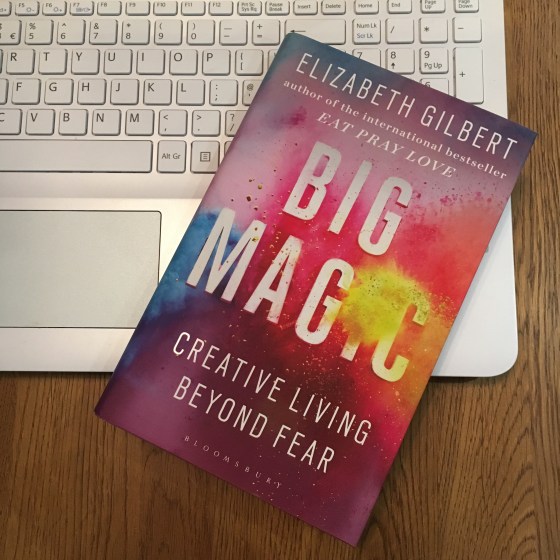
Big Magic is not a how-to-write book, instead Elizabeth Gilbert takes a more holistic view of creativity that stretches from writing to ice-skating and everything in between. Autobiographical in places, Elizabeth is passionate about creativity and eager to share her knowledge and experience to inspire others.

I could relate to many of the anxieties and blocks that inhibit creativity covered in this book, some of which were the same reasons I delayed starting my blog for so long after conceiving the idea in January last year. Big Magic is full of advice and encouragement on how to overcome the self-doubt and fears in your mind, as well as the disparaging voices of everyone else who tries to dissuade you from living creatively.

9-big-magic2

I really admire Elizabeth’s dedication to writing and her gritty determination to keep writing no matter what, both as a relatively unknown novelist before the success of Eat Pray Love and afterwards when the weight of public expectation was at its greatest. Elizabeth believes it’s a privilege to be able to earn a living from her creativity, yet it’s clear that she’s not doing it for the money or fame but simply because she loves to write.

Like many before her, she asserts that practice and habit are more faithful companions to creativity than inspiration. She debunks the myth of the tortured, struggling artist as dangerous, and I found her belief that ideas are alive in the air and searching for people to bring them to fruition delightful.

Big Magic is a humorous, honest and inspiring book that I’d recommend to anyone who would like to overcome the blocks holding them back and embrace their creativity, and it’s a book that I’ll reread at times when I need to reignite my own creativity.

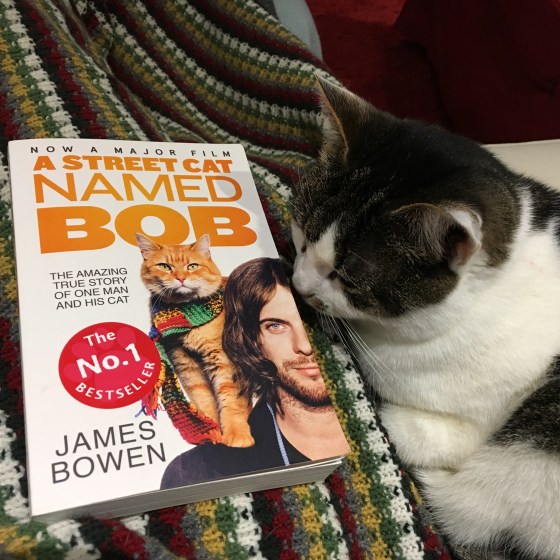
Review of ‘A Street Cat Named Bob’ by James Bowen

img_4177

I saw the film of this at the cinema last year and was so moved by it that I read the book soon after. James Bowen was a busker and recovering heroin addict living in sheltered accommodation in London when he encountered an injured but friendly stray cat (whom he names Bob) that found its way into his block of flats. The two quickly become inseparable companions and the book follows all the highs and lows they share together, it is their loyalty and devotion to each other that drives the book forward.

James is living a hand to mouth existence for most of the book, but spends the little money he earns busking and selling the Big Issue magazine on cat food and vet’s bills. From the offset, James is a responsible pet-owner, taking Bob to the vet, getting him neutered and micro-chipped. Taking care of Bob gives James a purpose, and it seems like the simple routine of caring for the cat keeps him tethered to normality, and he is rewarded with Bob’s affection and trust.

Having adopted a rescue-cat of my own from the Scottish SPCA, I could relate to James’ speculation about Bob’s past, as he tries to understand the quirks and behaviour that might offer clues about Bob’s life before they became companions.

Throughout A Street Cat Named Bob, James shows humbling insight into how society regards homeless people and addicts, drawing attention to the deliberate blindness of passers-by and how it felt to be invisible. He also describes the vulnerability of working on the streets of London, trying to eke out a living from busking and selling the Big Issue, as well as the numerous barriers facing those trying to turn their lives around.

This is a rags-to-riches autobiography in a sense, yet this is a also a tale of recovery, second chances and above all the friendship that develops between a recovering addict and a stray cat.

Review of ‘The Gratitude Diaries’ by Janice Kaplan

img_3739

The Gratitude Diaries starts at a party on New Year’s Eve when Janice Kaplan sets herself a resolution to try being more grateful for a year to see if it can improve her life and outlook.

Janice is a journalist, who has an apartment in Manhattan and a house in the country, happily married with kids, she has a lot to be grateful for, yet like many people she compares herself to others who have it better than her, struggles to look beyond the imperfections and takes what she has for granted.

I found it easy to relate to Janice throughout her gratitude experiment because she’s honest about how she had to retrain herself to be grateful instead of complaining, criticising and focusing on the negatives. Above all, Janice demonstrates that while gratitude, optimism and positivity may come more naturally to some people than others, gratitude is a habit that anyone can cultivate.

Janice also recognises that it’s easy to feel grateful when life is good, but gratitude is not a panacea shielding us from all of life’s disappointments, sorrows and frustrations instead gratitude is a way of steadying ourselves in the storms, setbacks and struggles by adjusting what we focus on.

The Gratitude Diaries is split into four parts, corresponding with the seasons of the year, where she concentrates on different areas of her life, including marriage and family, career, money and health, and shows how gratitude improves each aspect of her life. The book is peppered with quotes from philosophers such as Epicurus and Marcus Aurelius whose wisdom is as relevant today as it was in their own lifetimes, as well as research and interviews from more contemporary sources like the psychologist Martin Seligman and actor Matt Damon.

I really enjoyed this book, it’s full of ideas on how to develop an “attitude of gratitude” and I can see myself re-reading it for inspiration and motivation as I try to live gratefully.

Review of ‘Northanger Abbey’ by Jane Austen

image1-4

I feel unworthy of reviewing Jane Austen as I’m embarrassed to admit that until now I had only read one of her novels (Persuasion at school) but determined to fill in some of the more obvious gaps in my literary knowledge, I picked up a copy of Northanger Abbey.

Northanger Abbey was the first novel Jane Austen completed, but it languished with a publisher for over a decade before being returned to the author, and sadly it was published just a few months after her dealth.

Northanger Abbey follows Catherine Morland, an unlikely but likeable heroine with a weakness for gothic horror novels such as Ann Radcliffe’s Mysteries of Udopho. The plot trots along, though Northanger Abbey itself doesn’t feature until halfway through the story. The first half of the novel is set in Bath where Catherine meets her charming and witty hero, Henry Tilney, and the antagonists, Isabella and John Thorpe, before she is invited to visit the Tilney family’s home, Northanger Abbey.

I won’t give too much away, Northanger Abbey is not the haunted, gothic ruin that Catherine expects but that doesn’t stop her imagination from getting the better of her, and Austen creates an air of mystery and suspense during parts of the story.

This is a novel that doesn’t take itself too seriously, it’s satirical and unpretentious, but still manages to elicit sympathy for the characters when misfortunes befall them. If this novel has a fault, it is that Catherine is too sweet-natured, naïve and forgiving, while the antagonists are in contrast too selfish, conceited and devious.

Northanger Abbey seems to be often overlooked compared to Austen’s other novels but it’s easy to read and thoroughly enjoyable. I thought it was perfect reading material for a cosy night in and a lovely introduction to Jane Austen’s works.

Review of ‘Simple Matters’ by Erin Boyle

IMG_2290[1]

Erin Boyle lives in a tiny apartment in New York with her husband and daughter, and writes a blog called Reading My Tea Leaves about simple, sustainable living.

Erin’s book, Simple Matters, covers similar themes to her blog and provides practical advice on how to declutter your home, change your purchasing habits by buying less, as well as investing in items which are durable or recyclable, and other ways to reduce waste and protect the environment.

This book is full of ideas on how to simplify and style your home, how to choose natural beauty products or make your own to reduce the chemicals that we put on our bodies, as well as DIY cleaning products (white vinegar, lemon juice and bicarbonate of soda have a multitude of cleaning uses) instead of the harmful detergents and bleaches available in the shops to reduce the toxins in our homes and our impact on the world. My favourite piece of advice (which I adopted before I’d finished reading the book) was keeping food waste to be composted in a sealed box in the freezer which prevents it from going off, smelling or in our case our cat from getting into it.

The writing can be a little dry and instructional in places, but comes to life when she describes her personal experiences of moving home, travelling, parenting and living simply. I appreciated that while Erin is dedicated to reducing her impact on the planet as much as possible, her personal brand of minimalism and sustainable living is both aspirational and pragmatic, she advocates conscious consumption but she doesn’t beat herself up for eating her favourite fruit out of season once in a while.

The presentation of this book is lovely, it’s packed with photos of her home and its contents to show that simplicity and minimalism can be stylish as well as functional. This was an easy book to read which made me think about ways I could live more sustainably and simplify my home.