A Darker Shade of Magic by V.E. Schwab

A Darker Shade of Magic

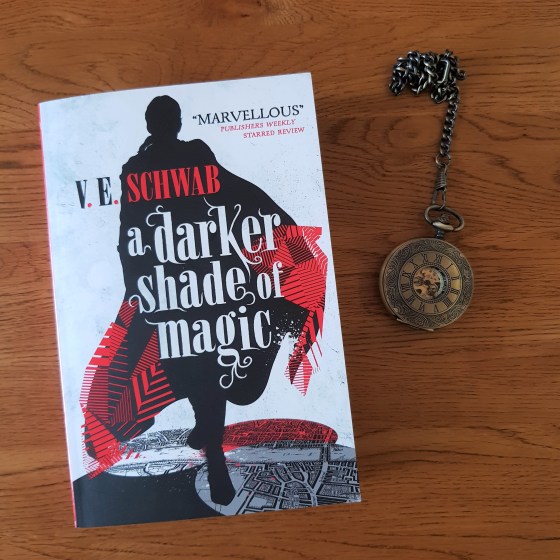
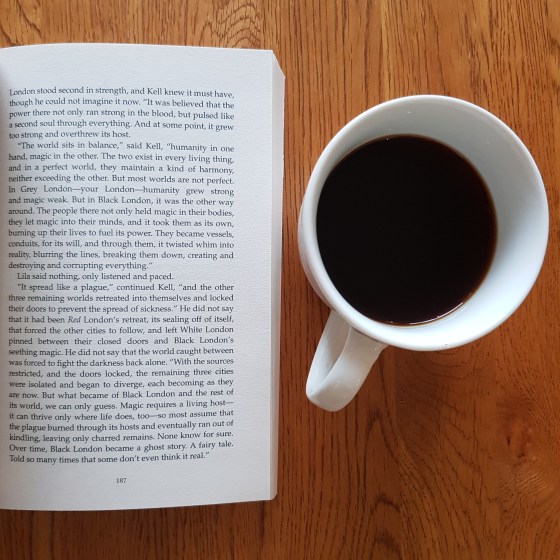
It took me a while to get into A Darker Shade of Magic as almost the first third of the book is spent setting the scene, introducing the two magicians, Kell and Holland, the last of the magical race known as the Antari – easily identified by having one entirely black eye – and explaining that there are four parallel Londons. There is Grey London where magic is waning; Red London, where magic is comparatively ordered and balanced; White London, where magic is chaotic and cruel; and finally the ruins of Black London, where magic became corrupted, and the city eventually had to be sealed off to prevent the corruption from spreading. One aspect of the story that I really enjoyed was that magic is not just a force to be used as in most fantasy stories but had a will of its own and could be downright dangerous to those who came into contact with it.

The story follows Kell, who acts as a messenger carrying correspondence between the rulers of each London until he is tricked into transporting a forbidden relic from one London into another. Along the way, we’re introduced to Kell’s counterpart and rival, Holland, who serves Astrid and Athos Dane, the tyrannical rulers of White London, and Lila Bard a thief from Grey London, who reminded me of the Artful Dodger in the best possible way. It takes around 100 pages for anything interesting to happen, but after that this tale becomes a gripping adventure as pretty much everything that possibly could go wrong for Kell and Lila does. The rest of the story is so full of suspense, action and humour that it more than made up for the slow start.
A Darker Shade of Magic2

The ending wraps up most things neatly, but there’s an almost throwaway comment about part of Lila’s appearance that hints towards the possible direction of her character development and somehow I don’t think we’ve seen the end of the antagonist Holland, I can’t wait to find out how the rest of this trilogy unfolds. Have a lovely week! X
The Final Empire by Brandon Sanderson

TheFinalEmpire

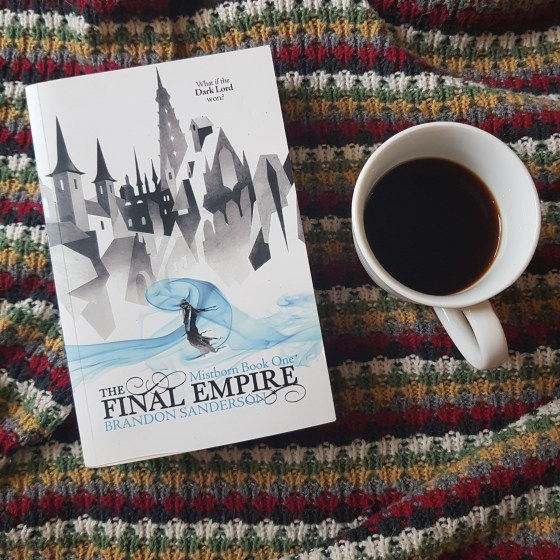
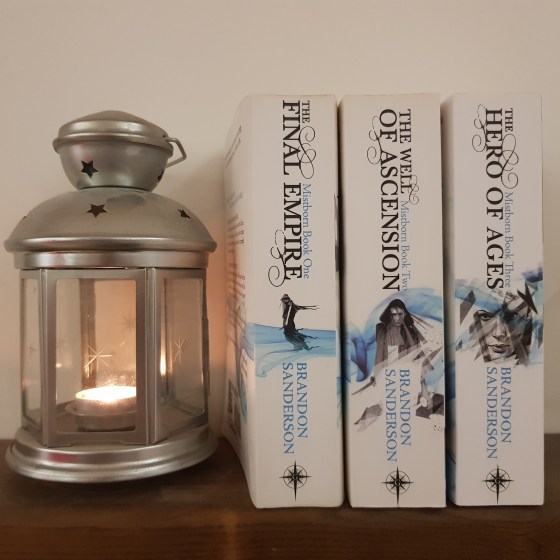
Dark and stormy evenings in our corner of the world have given me a lovely excuse to stay at home snuggled under a blanket on the couch with candles lit and books to read. I’ve had a few false starts this year – books that I’ve started but lost interest in – and I decided to re-read The Final Empire by Brandon Sanderson to refresh my memory before picking up the other books in the Mistborn trilogy, which have been on my TBR list for a long time.

The plot of The Final Empire follows a fairly typical hero’s journey as the charismatic Kelsier leads a daring group of rebels from a subjugated race in an attempt to overthrow the tyranical Lord Ruler and his oppressive empire. Along the way, Kelsier takes a thief called Vin as his apprentice and trains her in allomancy, the magic system Sanderson created and it’s easily one of the most original and well-integrated systems I’ve come across in a long time.

The Mistborn Trilogy

I suspect fantasy novels are often dismissed by many readers because they require too much suspension of disbelief and yet beyond the magic and battles, The Final Empire explores some universal and pertinent themes such as prejudice, persecution and even the injustices and atrocities that ordinary people ignore or accept every day, as well as the redeeming qualities of courage, resilience, loyalty and hope.

The biggest criticism I have of this story is that Sanderson doesn’t so much foreshadow the two major plot twists as shine a spotlight on them, and many readers will probably guess the Lord Ruler’s identity and the source of his power long before any of the characters do, while another character’s death carries a certain sense of inevitability. Despite this though, it’s still a gripping tale and I enjoyed re-reading The Final Empire just as much as I did the first time around, and I’m looking forward to finding out what happens next in the series. Have a lovely week! X

Review of ‘Temeraire’ by Naomi Novik

Temeraire

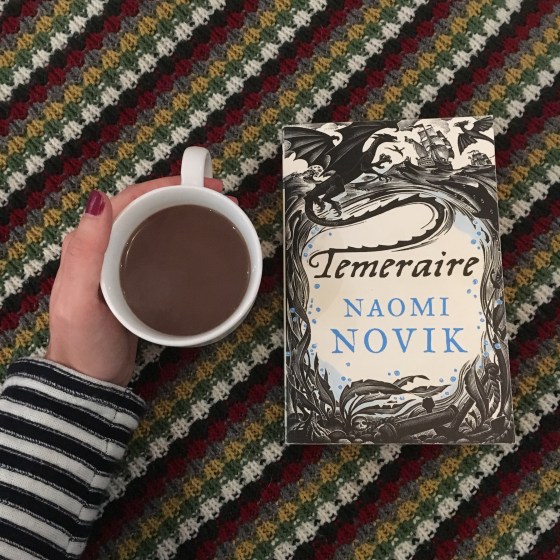
Temeraire is set during the Napoleonic Wars, but in a slightly alternative history where dragons exist. The story begins just after Captain Will Laurence of the HMS Reliant has taken command of a French ship carrying a dragon egg. Soon after, the egg hatches and the dragon chooses Laurence to be his rider, a role he is at first reluctant to accept as being bound to a dragon means giving up his naval career, plans to marry his childhood sweetheart and his position in polite society as (despite their vital contribution to the war) dragon riders are largely shunned by the rest of society. However, a bond quickly develops between Laurence and the dragon he names Temeraire, and their relationship is at the heart of this story.

Once they have joined the British Aerial Corps, both Temeraire and Laurence feel like misfits as Temeraire discovers he is a rare breed but lacks the fire-breathing or acid-spitting abilities of the other dragons, while Laurence struggles with the informality of the Aerial Corps and the inclusion of female dragon riders. The dragons themselves are all wonderful characters, and the plight of one particularly loyal and brave dragon brought tears to my eyes.

This an engaging story, but there are some pacing issues as Laurence and Temeraire don’t see any combat until the last third of the story. Having said that, the aerial battles are thrilling and capture the danger and savagery of combat for the dragons and their crews.

I’m a bit apprehensive about committing to a nine-book-long series, yet I found Temeraire quick to read and a little twist at the end left me eager to find out what happens next. Have a lovely weekend. X

Review of ‘The Silmarillion’ by J.R.R. Tolkien

Silmarillion1

As a child both of my parents took turns to read stories to me, yet my dad was never much of a reader himself. The exceptions, however, were J.R.R. Tolkien’s tales of elves, dwarves and hobbits in Middle-Earth, which captured his imagination as a teenager and have continued to fascinate him over the years. My dad and I have spent countless hours discussing the books and film adaptations of The Hobbit and The Lord of the Rings, but I have always struggled to get into The Silmarillion, which happens to be his favourite book.

I recently learned that my dad, who has suffered from backache all of his adult life, requires surgery as the underlying condition has been steadily deteriorating and has now reached a level of severity where the risks of doing nothing outweigh the risks of operating. After spending some time with him recently, I became determined to attempt The Silmarillion once more.

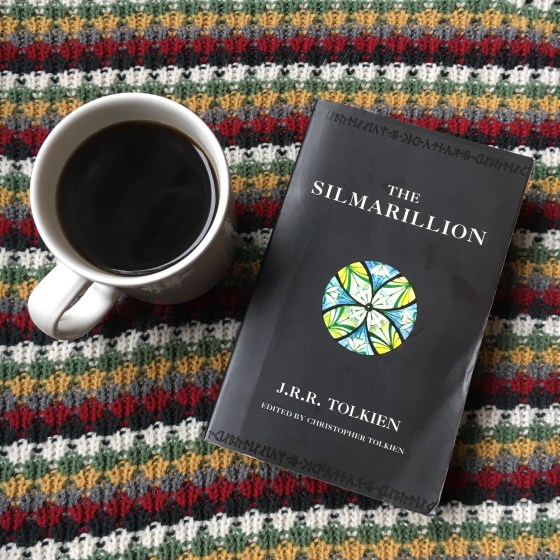
Published posthumously, The Silmarillion is a compendium of stories starting with the creation of Middle-Earth and ending when the elves depart after the events of The Lord of the Rings.

Silmarillion2

What immediately struck me about The Silmarillion was the thought and detail Tolkien put into it, from the geography and genealogy to the languages and mythology, at times the book feels more like a painstakingly researched historical treatise than a work of fantasy fiction. Having said that, the writing is dry in places and I sometimes found it hard to follow without frequently referring to the family trees and maps at the back of the book.

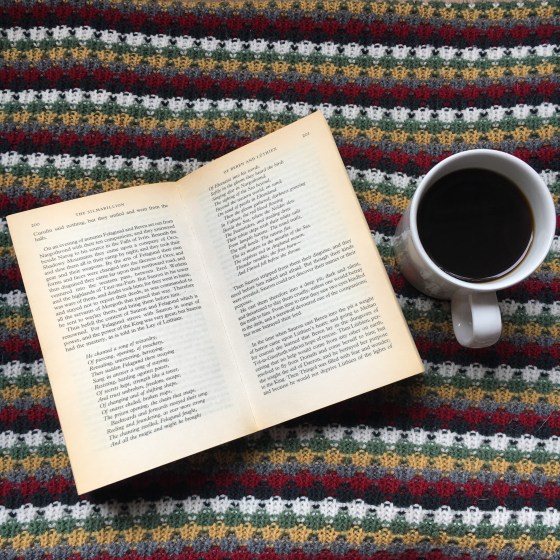
It is an incredibly ambitious collection, yet the quality varies from chapter to chapter: Of Beleriand and Its Realms, for exampleis a tedious geography lesson that could have been cut during edits, but I thought the highlights were the chapters concerning Melkor and Ungoliant’s theft of the coveted elven jewels (the Silmarills), Of Maeglin (a story of betrayal and comeuppance), and the thrilling but bittersweet love story, Of Beren and Luthien. I also enjoyed learning a little more about familiar characters from The Lord of the Rings such as Galadriel, Elrond and Sauron.

I have always delighted in the power of stories to connect people, and the works of J.R.R. Tolkien in particular are beloved by people all over the world, but there is no one that I’m more excited to discuss The Silmarillion with than my dad. Have a lovely week.