Kitchen by Banana Yoshimoto

Kitchen_Banana Yoshimoto

Let me preface this review by saying that Kitchen is a book that shouldn’t be judged by the cover, as aside from the garish colours, the description and synopsis on the back cover are downright misleading. This slim book compromises of two standalone stories covering similar themes of grief and loss, Kitchen and Moonlight Shadow.

The first story, Kitchen, is narrated by a young woman, Mikage Sakurai, following the death of her grandmother – and last remaining blood relative. After her grandmother’s funeral, Yuichi Tanabe, a young man who knew her grandmother invites Mikage to live with him and his transgender parent, Eriko; feeling cast adrift and at something of a crossroads in her life, Mikage gratefully accepts. The title of the story refers to Mikage’s favourite room in the home, where she finds a sense of comfort and purpose preparing food for the people she cares about or even just cleaning and setting things in order in the midst of her own turmoil and upheaval.

Kitchen_Banana Yoshimoto2

Kitchen explores the different ways that the three characters, Mikage, Yuichi and Eriko experience and react to grief. Rather than seeming macabre and depressing, Kitchen is an inspiring and thought-provoking reminder not to sleepwalk through life lost in our daily routines because our time is finite and every moment is precious. As the narrator wrestles with her own highs and lows, she also ponders if we can really appreciate joy and triumph without also experiencing sorrow and disappointment, and it is Mikage’s acceptance of her own loneliness and mortality that encourages her to consider new paths and possibilities.

Unfortunately, Moonlight Shadow is a bittersweet story with similar themes but it just didn’t resonate with me the way that Kitchen did.

This is a short book and so easy to slip into, yet it is one I savoured and will likely re-read. Have a lovely week. X

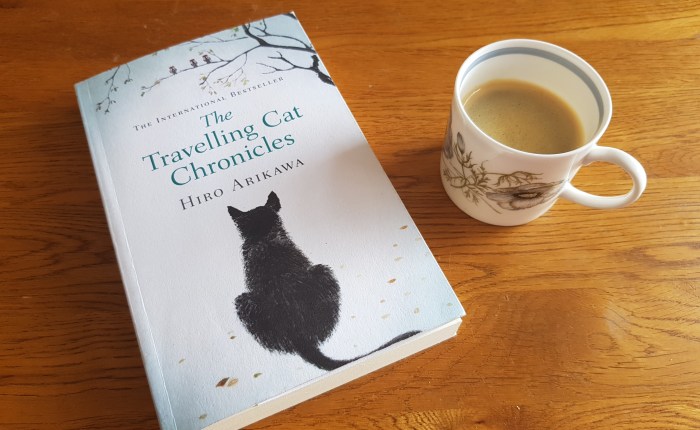
‘The Travelling Cat Chronicles’ by Hiro Arikawa

‘The Travelling Cat Chronicles’ by Hiro Arikawa

The Travelling Cat Chronicles is a Japanese novel that tells the tale of Satoru and a stray cat he rescues and names Nana. Satoru is kind, easy going and whimsical with a deep affinity for misfits and strays of both the human and feline variety, while Nana is proud and independent but the pair quickly become devoted to each other. A few years after adopting Nana, however, Satoru begins to contact old friends and relatives to ask if any of them could re-home his beloved cat.

The Travelling Cat Chronicles is as much about friendship and families as it is about cats, and each chapter focuses on one of Satoru’s closest friends and relatives, and through each chapter the reader learns more about Satoru and the lives he has touched. In a way, this story explores the regrets and hidden hurts that people often carry through life, and what happens when life seems to give us another chance to atone for our past mistakes and heal some of our old wounds.

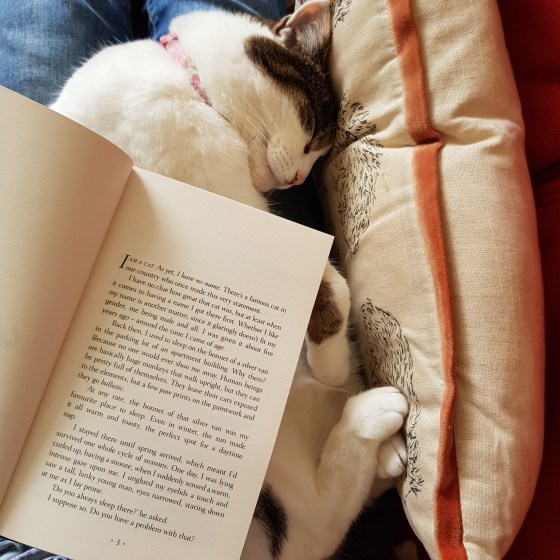
Mara_and_TTCC

The Travelling Cat Chronicles is a bit predictable, and yet it is such a poignant story that I still enjoyed it and was moved by the ending. Have a lovely week. X

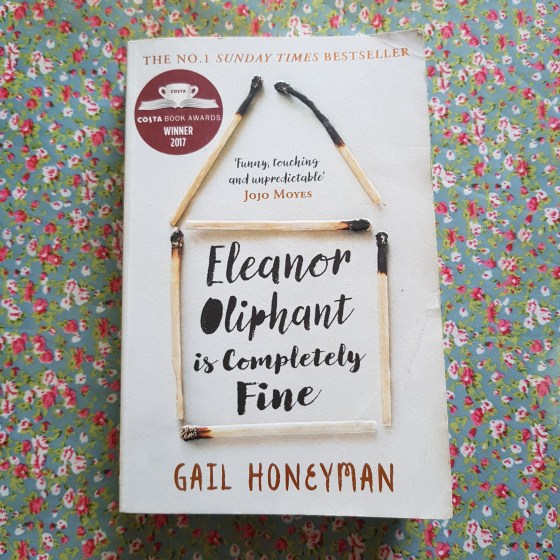
Review of ‘Eleanor Oliphant is Completely Fine’ by Gail Honeyman

Eleanor Oliphant is Completely Fine is the story of a woman in her thirties who has managed to drift through life without forming any close connections, and describes what happens when she develops a crush on an aspiring musician, and when she and a colleague help a stranger in need. It’s hard to describe the plot without giving too much away, but this is an engaging story of loneliness, resilience, friendship and how the smallest acts of kindness can have the most profound impact.

Written in the first person, we see the world through Eleanor’s eyes, her awkward social interactions, the weight of her sinister mother’s influence, and little by little the mystery of her past is revealed. Eleanor is so peculiar at times, yet most readers will be able to relate to the themes of loneliness, rejection and the feeling of not fitting in, and I quickly found myself rooting for Eleanor.

EleanorOliphant1.jpg

Loneliness is often considered to be a problem for the older generations, yet this novel shows just how easy it is for someone to muddle through life without making any close or lasting connections, and why someone might even choose solitude to avoid difficult personal questions, the risk of rejection or the fear of the past repeating itself.

Eleanor Oliphant is Completely Fine tackles some pretty heavy topics from child abuse to domestic violence, depression and social isolation, yet it also shows how people can survive the most traumatic events and blossom when shown kindness and understanding. I found this story to be poignant, funny, uplifting and thoroughly engaging. Have a lovely week. X

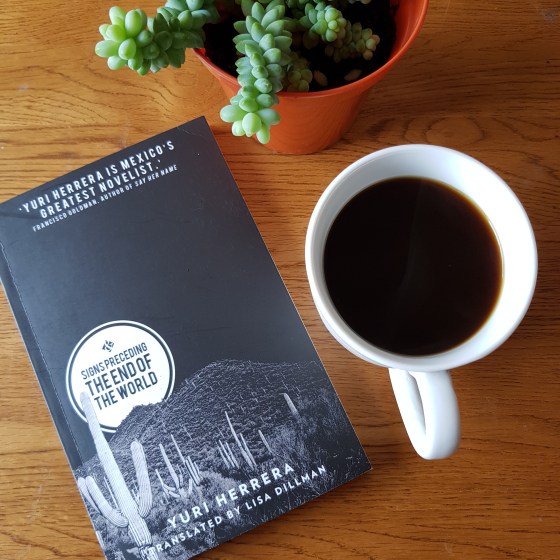
Review of ‘Signs Preceding the End of the World’ by Yuri Herrera

Review of ‘Signs Preceding the End of the World’ by Yuri Herrera

Inspired by Ann Morgan’s TED talk My Year Reading a Book from Every Country in the World, I’ve been trying to read more translated fiction over the last few years, and I picked up Signs Preceding the End of the World on a cold day while day-dreaming about sunnier climes.

Signs Preceding the End of the World is the tale of a young Mexican woman called Makina who embarks on a quest to deliver a message to her brother who crossed the border to make a new life for himself in the United States.

In some ways, this is a modern retelling of the hero’s quest, reminiscent of Orpheus’ journey through the underworld, except Makina’s underworld is one full of crimelords, thugs, border patrols, police officers and illegal immigrants. The writing is sparse and poetic, and at times the plot trots along so quickly that whole chapters pass in a blur adding to the surreal and sometimes nightmarish quality of the story.

YuriHerrera2

Makina is quite literally a messenger, working at a telephone exchange connecting people from “Little Town” where she lives to “the Big Chilango” (Mexico city) and beyond; Makina is resourceful, capable of crossing borders and languages, and able to defend herself in a machismo culture.

Signs Preceding the End of the World is a topical story concerning someone crossing the Mexico-US border illegally, describing how dangerous the crossing itself is as she relies on crimelords and smugglers to help her, evading border patrols and police along the way. Reaching the U.S.A she finds immigrants everywhere, and notices their influence on the culture from food to music and language, as well witnessing the daily prejudice and discrimination they face.

This is a short book – barely more than 100 pages – it ends almost as abruptly as it starts, but leaves the reader with much to ponder. Have a lovely week. X

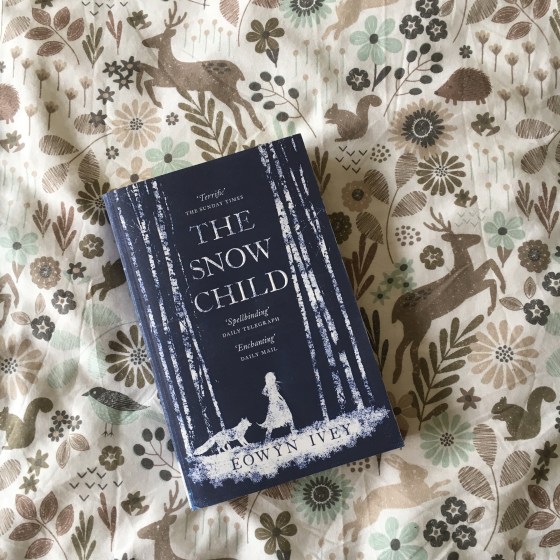
Review of ‘The Snow Child’ by Eowyn Ivey

TheSnowChild

Over the last few weeks, the long, dark midwinter evenings have given me the perfect excuse to sit by the fire and make a start on the pile of new books waiting to be read. It has been snowing on and off all week in our part of the country, making Eowyn Ivey’s The Snow Child seem like an appropriate story to start with.

Set in 1920, The Snow Child centres around Jack and Mabel, a married couple in their mid-forties from Pennsylvania grieving the stillbirth of their baby, and attempting to make a new life for themselves on a homestead in Alaska. Both lost in their own grief, Jack and Mabel hope it will be a fresh start away from all the reminders of their loss, but the reality proves quite different from their expectations as Alaska turns out to be a beautiful but harsh and unforgiving landscape.

One winter night, caught up in the magic of the first snowfall, they build a child in the snow – a little girl – but the very next day they find their snow child smashed and foot prints leading away from it. Not long after, they begin to see a little girl around their homestead and wandering in the wilderness. As the seasons and years pass, the reader is left wondering whether the snow child is just a feral orphan left to fend for herself or a fairy-tale brought to life by the couple’s desperate longing.

The Snow Child is split into three parts, and I found the final part – which jumps ahead several years – the weakest section as it seemed disjointed as it rushed towards the end. Despite this, I loved the descriptions of life on the homestead and the struggle to cultivate the land, making friends with their coarse-mannered but kind-hearted neighbours, the beautiful Alaskan winters and the mysterious snow child who seemed to haunt the land. The Snow Child is an ideal story to read under a cosy blanket with a cup of hot chocolate while the wind howls and the snowflakes fall outside.

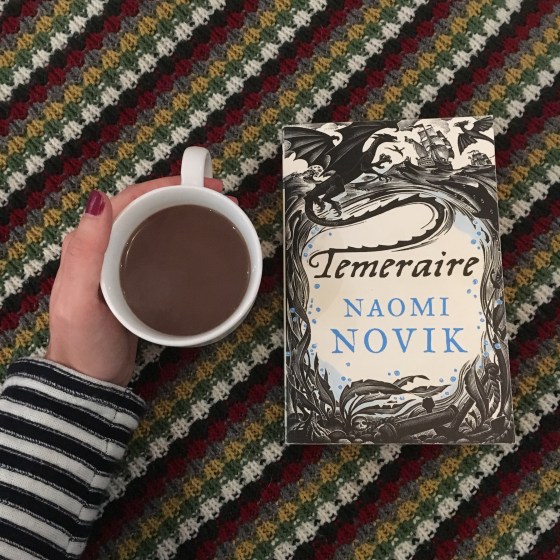
Review of ‘Temeraire’ by Naomi Novik

Temeraire

Temeraire is set during the Napoleonic Wars, but in a slightly alternative history where dragons exist. The story begins just after Captain Will Laurence of the HMS Reliant has taken command of a French ship carrying a dragon egg. Soon after, the egg hatches and the dragon chooses Laurence to be his rider, a role he is at first reluctant to accept as being bound to a dragon means giving up his naval career, plans to marry his childhood sweetheart and his position in polite society as (despite their vital contribution to the war) dragon riders are largely shunned by the rest of society. However, a bond quickly develops between Laurence and the dragon he names Temeraire, and their relationship is at the heart of this story.

Once they have joined the British Aerial Corps, both Temeraire and Laurence feel like misfits as Temeraire discovers he is a rare breed but lacks the fire-breathing or acid-spitting abilities of the other dragons, while Laurence struggles with the informality of the Aerial Corps and the inclusion of female dragon riders. The dragons themselves are all wonderful characters, and the plight of one particularly loyal and brave dragon brought tears to my eyes.

This an engaging story, but there are some pacing issues as Laurence and Temeraire don’t see any combat until the last third of the story. Having said that, the aerial battles are thrilling and capture the danger and savagery of combat for the dragons and their crews.

I’m a bit apprehensive about committing to a nine-book-long series, yet I found Temeraire quick to read and a little twist at the end left me eager to find out what happens next. Have a lovely weekend. X

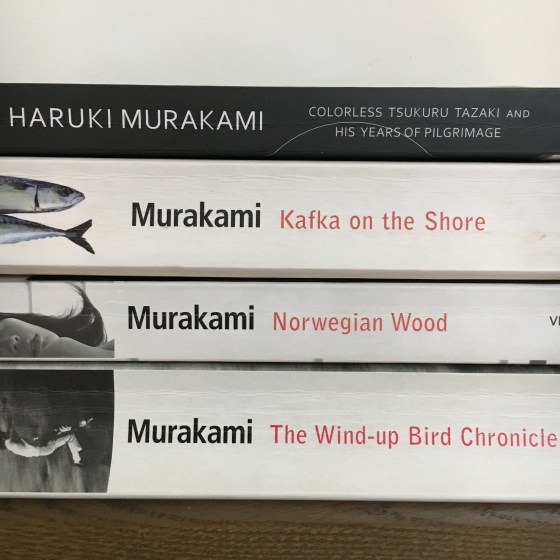
Review of ‘Colorless Tsukuru Tazaki and His Years of Pilgrimage’ by Haruki Murakami

Murakami1

I sometimes hesitate to recommend Haruki Murakami to other readers as his novels are often strange and surreal, and I often find it hard to describe what they’re about and even harder to explain why I enjoyed them.

Colorless Tsukuru Tazaki and His Years of Pilgrimage is easily one of Murakami’s most accessible novels and probably the one I’d recommend to anyone who’d never read anything by him before. However, Murakami is not for everyone, there are awkward sex scenes, some strands of the plot are frustratingly unresolved by the end and there is still a slightly surreal element to this novel with actions that occur in Tsukuru’s dreams seeming to have consequences in reality.

Murakami2

The story follows Tsukuru Tazaki who had four best friends at high school but was the only member of the group without a colour in his name leading him to view himself as colourless and empty; then one day Tsukuru was rejected by the group suddenly and without any explanation. For the next sixteen years, Tsukuru drifts through life unable to form deep or meaningful relationships with others until he meets Sara, his would-be girlfriend, who pushes him to find out why his friends ostracised him all those years ago, sensing that until he heals those wounds he’ll never be able to connect with anyone else. Tsukuru’s quest takes him from Tokyo back to his hometown of Nagoya and all the way to Finland in search of answers to the questions that have haunted him for so long.

This is a story about friendship and belonging, rejection, loneliness, death and rebirth that allows Murakami to explore the difference between how we see ourselves and how others perceive us, the choices that define us and the ripple effects they create. Bittersweet, slightly surreal and even humorous in places, Colorless Tsukuru Tazaki and His Years of Pilgrimage is laced with a sense of regret about lost time and the ways things could have been, yet it very much ends with hope.

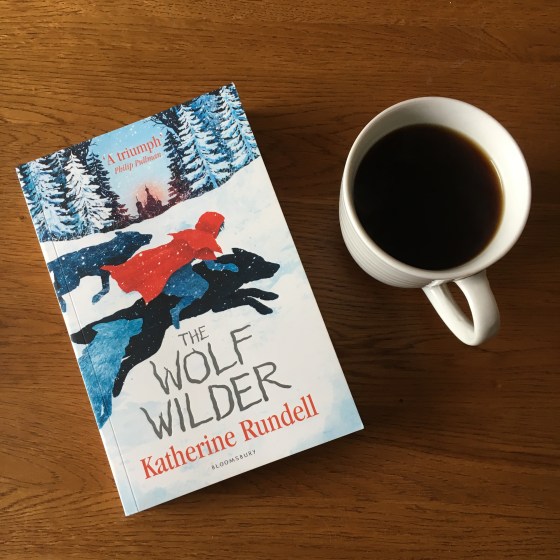
Review of ‘The Wolf Wilder’ by Katherine Rundell

TheWolfWilder1

The cover of this book caught my eye in a bookshop a few months ago, but I held off reading it over the summer until the stormy weather in our part of the country last weekend gave me the perfect opportunity to settle down in front of the fire to read as the wind howled and the rain pattered against the windows.

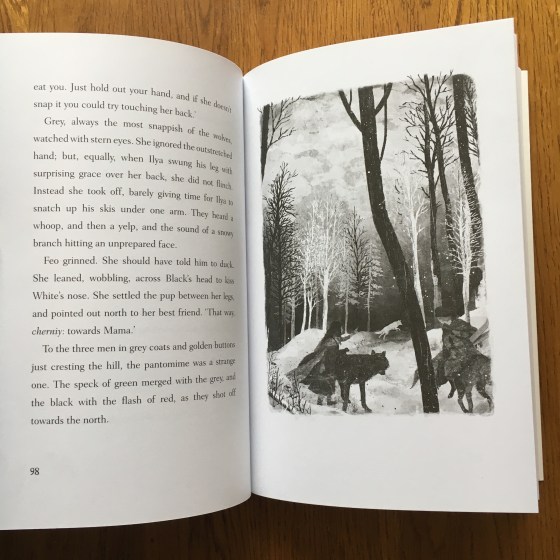
The Wolf Wilder has something of a fairy tale quality and the story is beautifully illustrated throughout by Gelrev Ongbico. Set in Russia before the revolution, this is the tale of twelve-year-old Feo, who like her mother is a wolf-wilder, teaching wolves that were kept as pets by the aristocracy how to howl, hunt and live in the wilderness once their masters have bored of them. When her home is burned to the ground and her mother is arrested by the tyrannical and cruel General Rakov, Feo embarks on a quest to rescue her mother.

TheWolfWilder2

At times, Feo is hard to relate to, she can be reckless and coarse, and she much prefers the company of her wolves (simply named White, Grey and Black) to people. Yet over the course of the story, Feo softens as she makes friends with members of her own kind who offer her food, shelter and help when she needs it most. There is almost a sense of reversal as the wolf-wilder girl is not exactly tamed by the end of the story but regains some of her own humanity along the way.

The Wolf Wilder is a story that doesn’t shy away from describing cruelty, injustice and death, but also one that reminds us that sometimes we have to be braver than we feel, that challenges can be overcome and bullies can be defeated. This is a thrilling adventure ideal for dark and stormy nights. Have a lovely weekend.

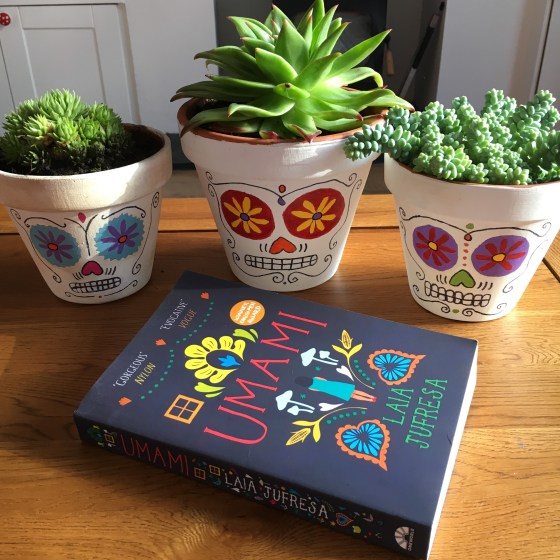
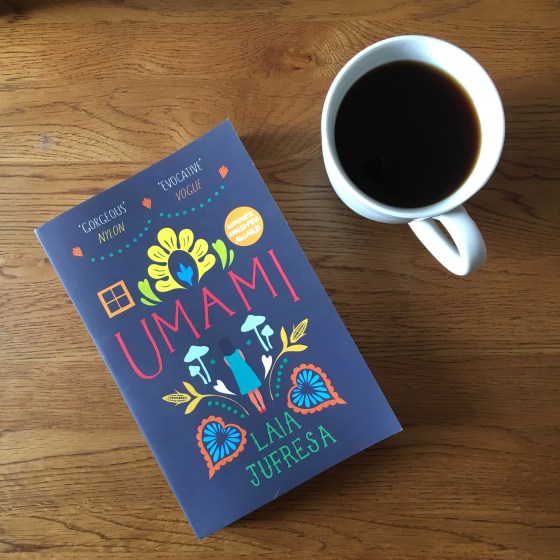
Review of ‘Umami’ by Laia Jufresa

Umami1

Umami is a novel set in Mexico City that follows the residents of five houses (named after the flavours sour, salty, sweet, bitter and umami) all of whom are experiencing some form of loss or grief. The story has five narrators, there is twelve-year-old Ana trying to make sense of the death of her little sister, Luz; Marina, an artist recovering from anorexia who creates colours to describe emotions; Alfonso, an anthropologist mourning the death of his vivacious wife, Noelia (who was in life grieving her own childlessness); Pina, Ana’s friend and neighbour, trying to understand her mother’s unexplained departure from the family, and finally, Luz, describing the events leading up to her death.

Umami has an unusual and non-linear structure, each chapter focuses on one character during a particular year starting with Ana in 2004, switching to Marina in 2003, then Alfonso in 2002, Luz in 2001 and Pina in 2000, before returning to Ana and working backwards again. The time and character shifts can seem disorientating at first but it allows the story to unfurl gradually and shows how seemingly ordinary interactions between the characters can take on greater meaning and significance once the consequences are fully revealed.

Umami2

Umami is a short novel that tackles some big themes such as loss, grief and identity. As Ana and Pina take their first awkward steps towards adolescence, Alfonso is adjusting to his own transition from husband to widower and also describes Noelia’s struggle with her own identity as a wife and respected cardiologist but “only a daughter” because of her childlessness, while Marina attempts to overcome anorexia, an abusive childhood and work out who she is.

The sense of loss that permeates through the novel isn’t the tidal waves of sorrow, anger and shock that wash over us when grief is fresh, but the dull ache of missing someone that never really goes away no matter how many years pass, and of slowly trying to find a new purpose in life.

The slow and thoughtful pace of Umami has been a pleasant contrast to the busy-ness at work and home in my own life over the last few weeks, and Umami is a poignant but hopeful novel that lingers long after the story ends.

Review of ‘The Silmarillion’ by J.R.R. Tolkien

Silmarillion1

As a child both of my parents took turns to read stories to me, yet my dad was never much of a reader himself. The exceptions, however, were J.R.R. Tolkien’s tales of elves, dwarves and hobbits in Middle-Earth, which captured his imagination as a teenager and have continued to fascinate him over the years. My dad and I have spent countless hours discussing the books and film adaptations of The Hobbit and The Lord of the Rings, but I have always struggled to get into The Silmarillion, which happens to be his favourite book.

I recently learned that my dad, who has suffered from backache all of his adult life, requires surgery as the underlying condition has been steadily deteriorating and has now reached a level of severity where the risks of doing nothing outweigh the risks of operating. After spending some time with him recently, I became determined to attempt The Silmarillion once more.

Published posthumously, The Silmarillion is a compendium of stories starting with the creation of Middle-Earth and ending when the elves depart after the events of The Lord of the Rings.

Silmarillion2

What immediately struck me about The Silmarillion was the thought and detail Tolkien put into it, from the geography and genealogy to the languages and mythology, at times the book feels more like a painstakingly researched historical treatise than a work of fantasy fiction. Having said that, the writing is dry in places and I sometimes found it hard to follow without frequently referring to the family trees and maps at the back of the book.

It is an incredibly ambitious collection, yet the quality varies from chapter to chapter: Of Beleriand and Its Realms, for exampleis a tedious geography lesson that could have been cut during edits, but I thought the highlights were the chapters concerning Melkor and Ungoliant’s theft of the coveted elven jewels (the Silmarills), Of Maeglin (a story of betrayal and comeuppance), and the thrilling but bittersweet love story, Of Beren and Luthien. I also enjoyed learning a little more about familiar characters from The Lord of the Rings such as Galadriel, Elrond and Sauron.

I have always delighted in the power of stories to connect people, and the works of J.R.R. Tolkien in particular are beloved by people all over the world, but there is no one that I’m more excited to discuss The Silmarillion with than my dad. Have a lovely week.