My little blog has been gathering dust while I’ve been juggling my return to work with family life, but just finding some time to share a little post about some of the adventures we’ve enjoyed in January.
We started 2024 with a trip to Ayr Beach for a stroll along the shore with a rainbow arching overhead, which seemed like the loveliest symbol of hope for the New Year. A wrapped up New Year’s Day walk has become one of our traditions, and it’s been lovely to share it with our little daughters, who always love a trip to the beach whatever the weather or season.
We also took a trip to the Sea Life Centre, which we last visited when our youngest was just a couple of weeks old, but now a year old and walking, she was delighted by the fish, sharks, rays and otters. Our nearly four year old also enjoyed it, and was fascinated by seeing a real crown of thorns starfish, which are the villains in one of her favourite TV shows, The Octonauts.
Finally, we visited Loch Lomond one morning for a wee wander. While the kids played in the park, I admired the view and spotted some snowdrop growing under an oak tree. As much as I love the excuse to stay home and cosy in the winter, I miss spending time outside, so these winter walks and the little signs that spring is on the way always give me a boost.
I returned to work after the Christmas break, and it’s been a less smooth transition second time around because so much has changed, colleagues have been promoted, others have moved on, retired or passed away, and I feel like I’m ready for a change too.
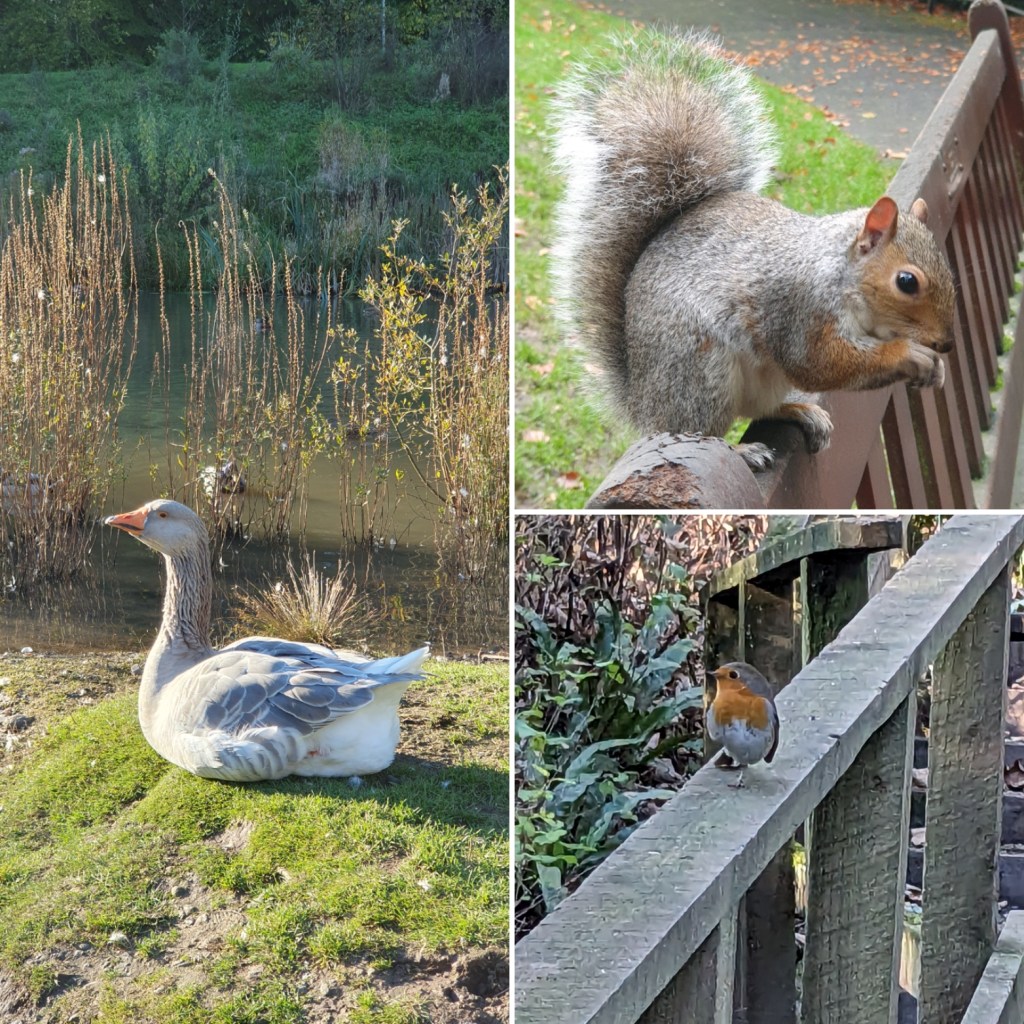
We’re into the embers of the year, which for us are always a balance of wrapping up warm for walks to feed the squirrels and ducks at the park, kicking our way through crunchy leaves and splashing in puddles before heading home for cosy evenings of warming meals, cartoons, crafts, bubble baths and bedtime stories.
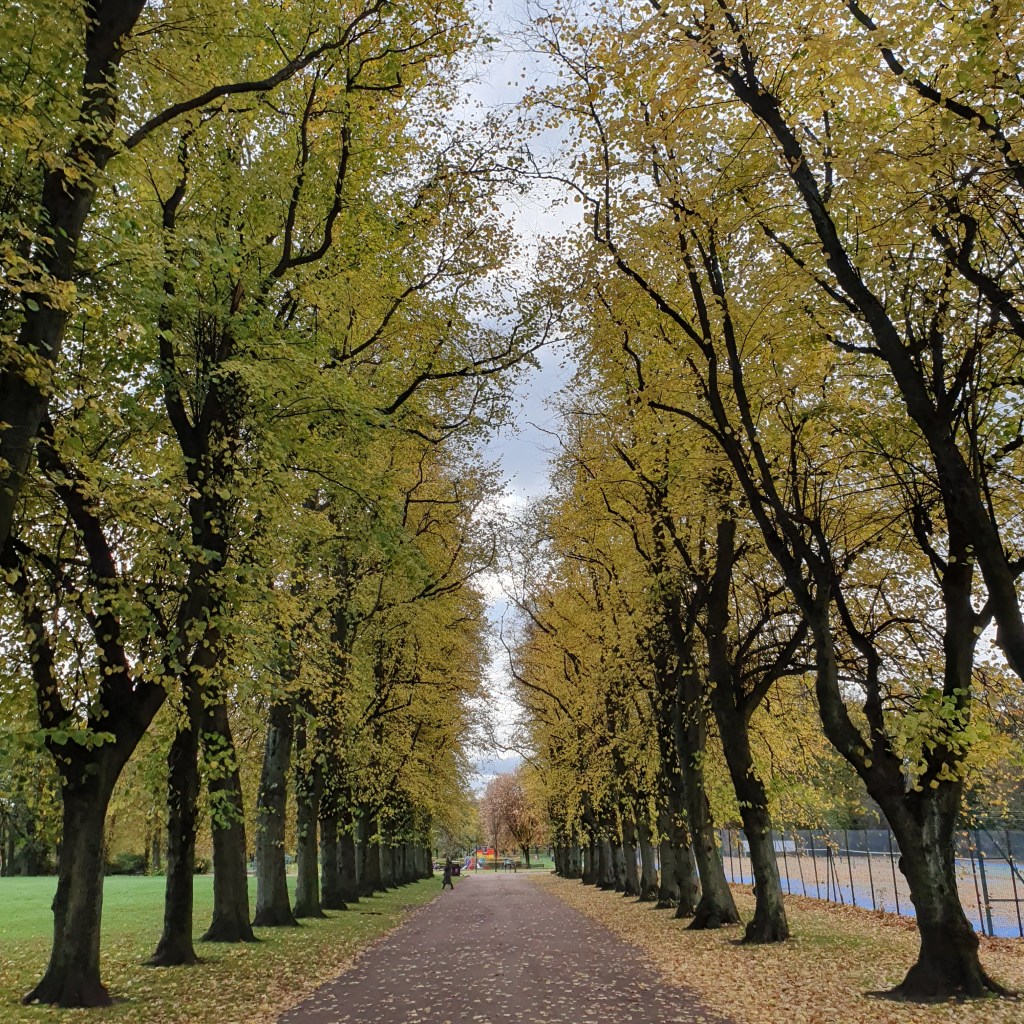
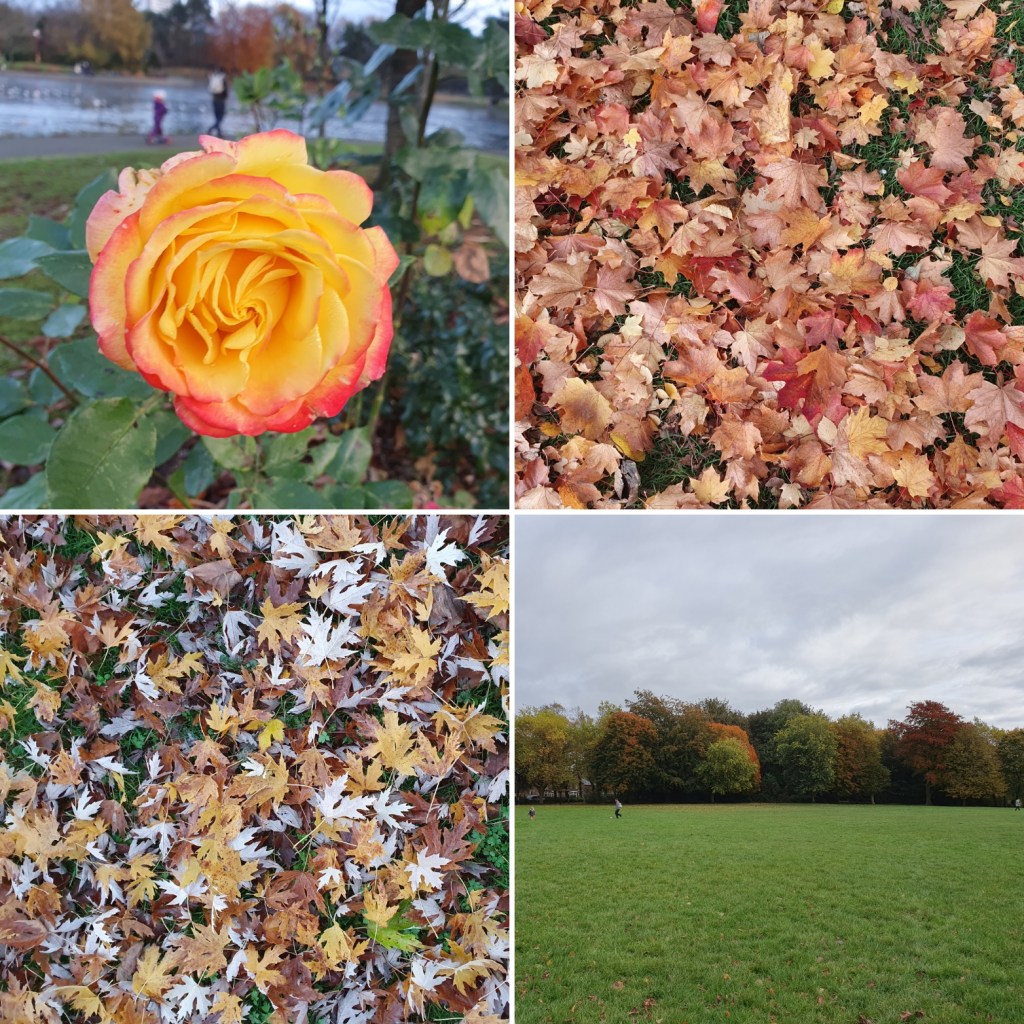
We’ve been making an effort to get outside as much as possible whenever there’s a break in the rain to feed the squirrels and birds, or to play at the park. Our local park is particularly lovely at this time of year when all the leaves turn, and the fallen leaves create a colourful, crunchy carpet. I love the Scottish seasons and how they remind me to pause and pay attention to nature and the world around me.
This autumn has been filled with little adventures, time with our extended family and so many of the ordinary little moments that we often take for granted that make up the fabric of life. Reading the news lately I’ve been struck by how lucky I am to be able to play in the park with my girls, take my oldest to her football class and my youngest to sensory group, read bedtime stories together and tuck them in every night, it’s easy to take our relative comfort and safety for granted when it’s all we’ve ever known.
As autumn treads towards winter, our calendar is filling up with festive plans and we’ve made a few small preparations for Christmas, buying a few new baubles and decorations, baking our Christmas cake and picking out presents for people.
September has always been one of my favourite months, usually offering a gentle transition from summer into autumn, as the last of the warmth and light fades into crisp cool mornings and darkening evenings.
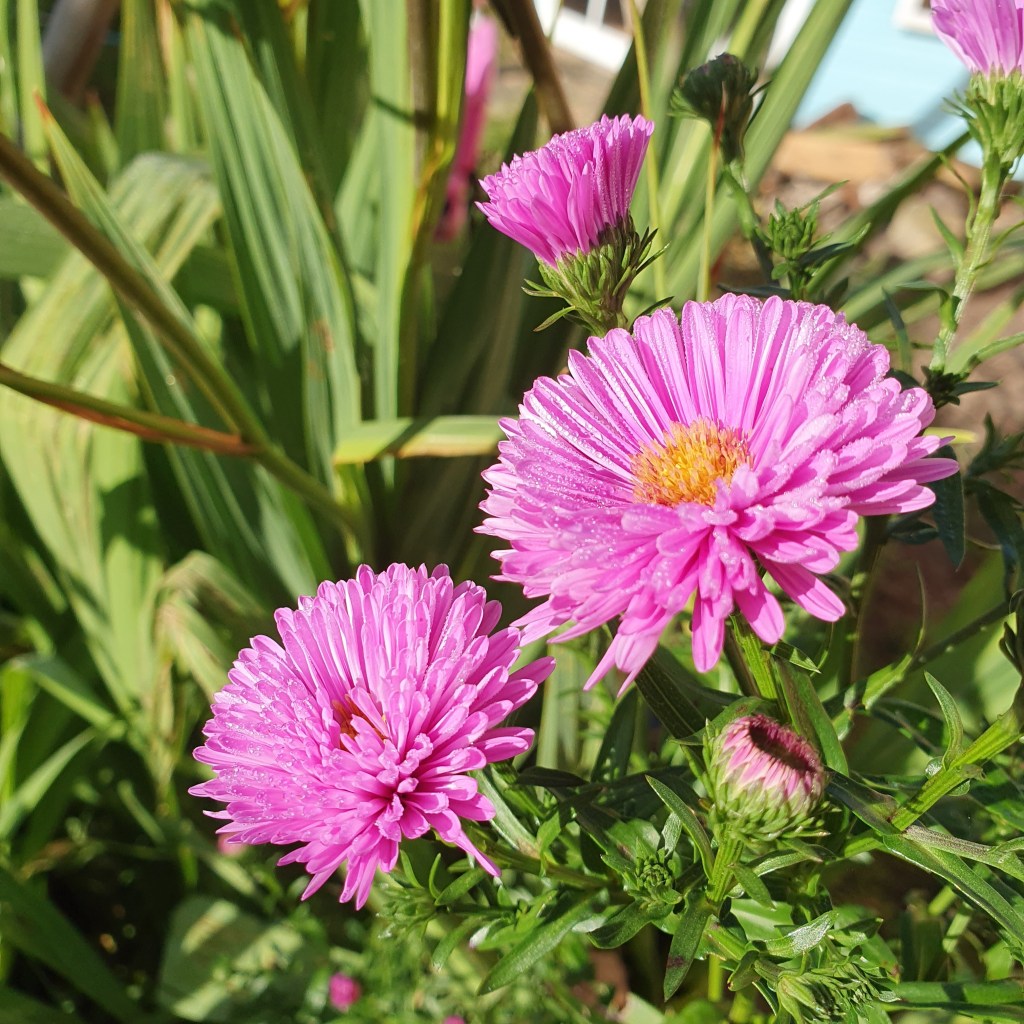
It’s also one of the loveliest months in the garden. The hardy geraniums have passed their best but they’ll stubbornly continue flowering until the first frosts, the roses have caught a second wind, the pink aster has flowered and there have been butterflies fluttering around the garden in the sunshine.
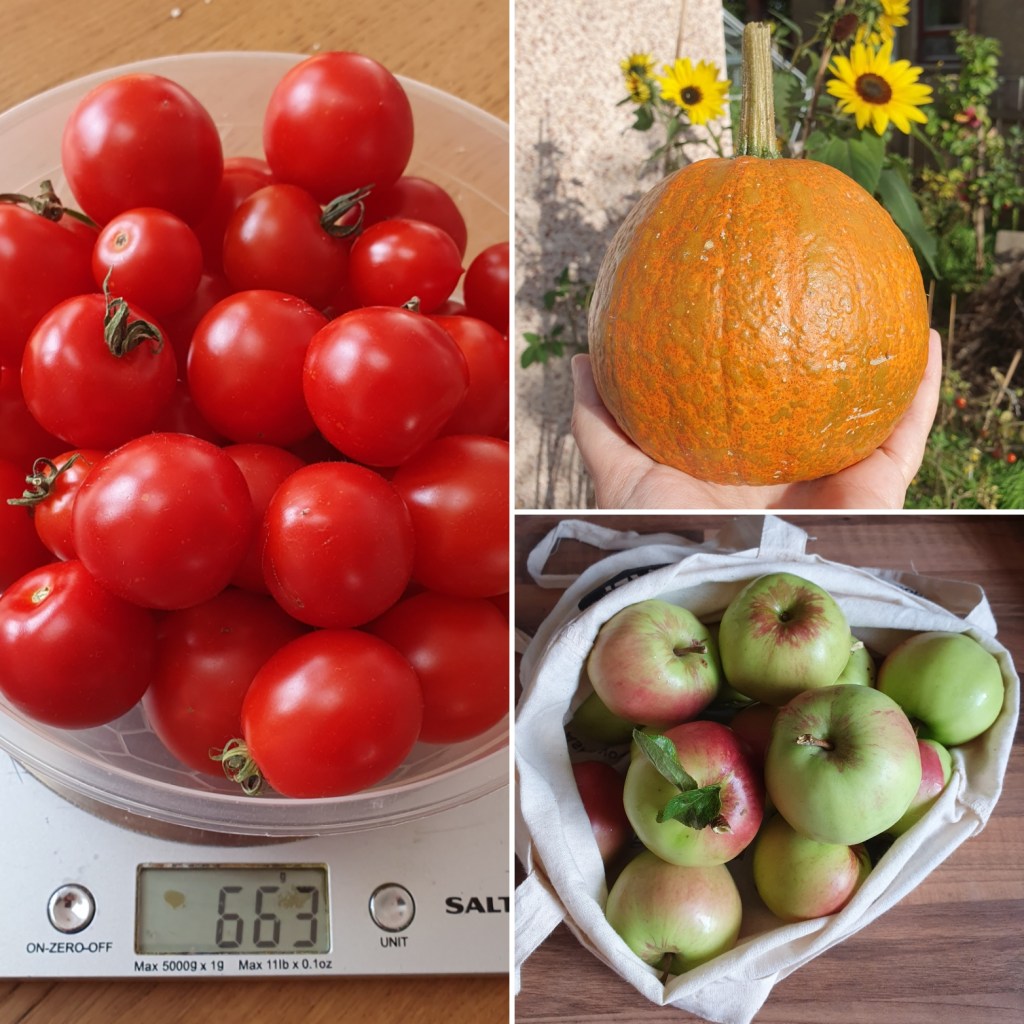
In one week I gathered over 600g of cherry tomatoes and my husband has conceded that I was right to salvage the plants he’d given up on. I’ve picked a single sweet sugar pumpkin, as always slugs and snails appear to have gotten most of the others before the skins had a chance to harden. Most exciting of all was harvesting a dozen small cooking apples from our Grenadier tree planted in 2018, enough to bake a pie or eve’s pudding.
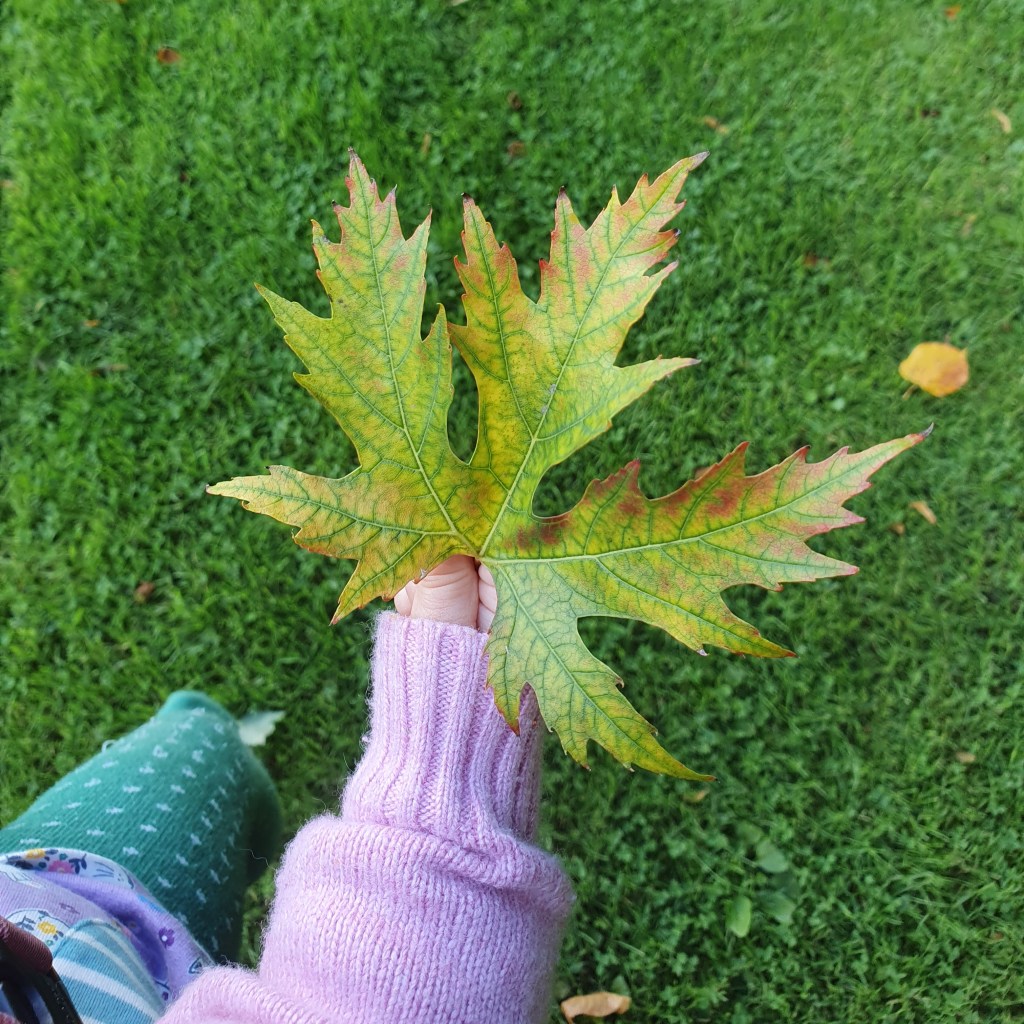
Time outside at this time of year feels precious before the cold, dark and inclement weather sets in. We’ve been enjoying trips to the park kicking a ball around with our energetic three year old, gathering fallen leaves to press and acorns for the squirrels that visit our garden. We’re an outdoorsy family but it’s easier to get out when the weather is fair than foul, and I’m determined to find ways to get outside through the winter months.
After the mini heatwave earlier in the month, the weather has definitely turned this week bringing the first named storm (‘Agnes’) of the season, so we’re making ourselves cosy at home until it passes. Take care and have a lovely week. X
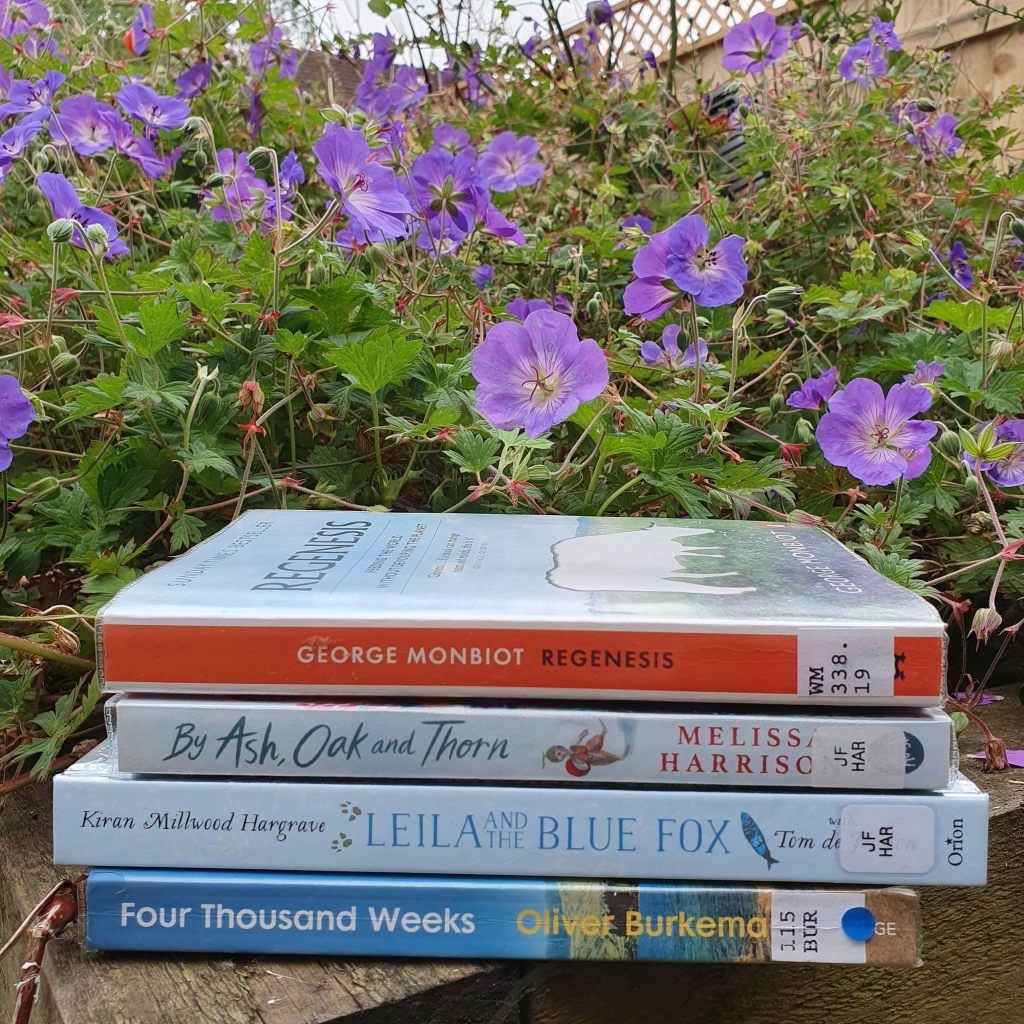
August turned out to be a busier month than anticipated and I had less time to read than planned but enjoyed everything I did read.
4000 Weeks: Time Management for Mortals by Oliver Burkeman
What a refreshing and thought provoking book, Burkeman starts with the idea that the average human only has 4000 weeks of life and then delves into how we spend our time. Increasingly as individuals and society we have become obsessed with productivity and consider busyness as a status symbol, trying to achieve more and more with our finite time. Burkeman argues that instead of making ourselves stressed, anxious and exhausted by our overwhelming and never ending to-do lists we should accept our limitations and focus on creating a meaningful life with the short time we have instead. Having spent my 20s and 30s treating significant milestones and achievements like items on a shopping list, this book really resonated with me as I try to balance the competing demands of my young children with my aging parents, career and hobbies.
Leila and the Blue Fox by Kiran Millwood Hargrave
I have not stopped thinking about Julia and The Shark (reviewed here) since I read it last year, and this spiritual sequel did not disappoint. Leila and the Blue Fox is a poignant and thought-provoking story about a Syrian refugee, Leila, trying to reconnect with her mother, who left her in London, while she went to study animal migration due to climate change. The story of their incredible journey across the Arctic as they follow one determined little fox weaves so many pertinent themes from climate change to animal and human migration as well as families and friendships, this will undoubtedly be one of my end of year favourites.
By Ash, Oak and Thorn by Melissa Harrison
A charming children’s story about three little Hidden Folk (Moss, Burnett and Cumulus) who are all living in a garden after being displaced from their wildflower meadow, forest and pond by humans, when they are forced to embark on an unexpected quest to find others of their kind. This story is reminiscent of The Hobbit and The Borrowers but full of little lessons about nature, conservation and friendship. Whimsical, charming and poignant, though the ending felt like a rushed prelude to the next book.
Regenesis by George Monbiot
A fascinating critique of farming and the challenges of trying of feed 6 billion people without wrecking the planet. Monbiot starts by taking an unflinching look at some of the common practices in farming such as the use of pesticides, herbicides, fertiliser, genetic engineering of crops, the use of antibiotics, the spread of manure and the amount of land required to grow crops to feed livestock, and their impact on the environment, both local and global. He then considers the alternatives from (live)stockfree organic farming, reducing food waste and food redistribution through food banks, no till farming, perennial cereals like Kernza wheat and PR23 rice, and the development of microbial proteins (and other alternatives to meat). An interesting book about food production with some unflinching criticisms of current agricultural methods and some pragmatic alternatives for the future.
Autumn is upon us once more, a transitional season that reminds me of the inevitability of change, and this year feels particularly bittersweet. At the end of July, my blog turned seven. I originally named my blog ‘Lovely and Grateful’ because I wanted it to record all the loveliness in my life that I’m grateful for and even the not-so-lovely parts that remind me not to take anything for granted, but I’m not sure if the name still fits. I’d love to know what you think in the comments.
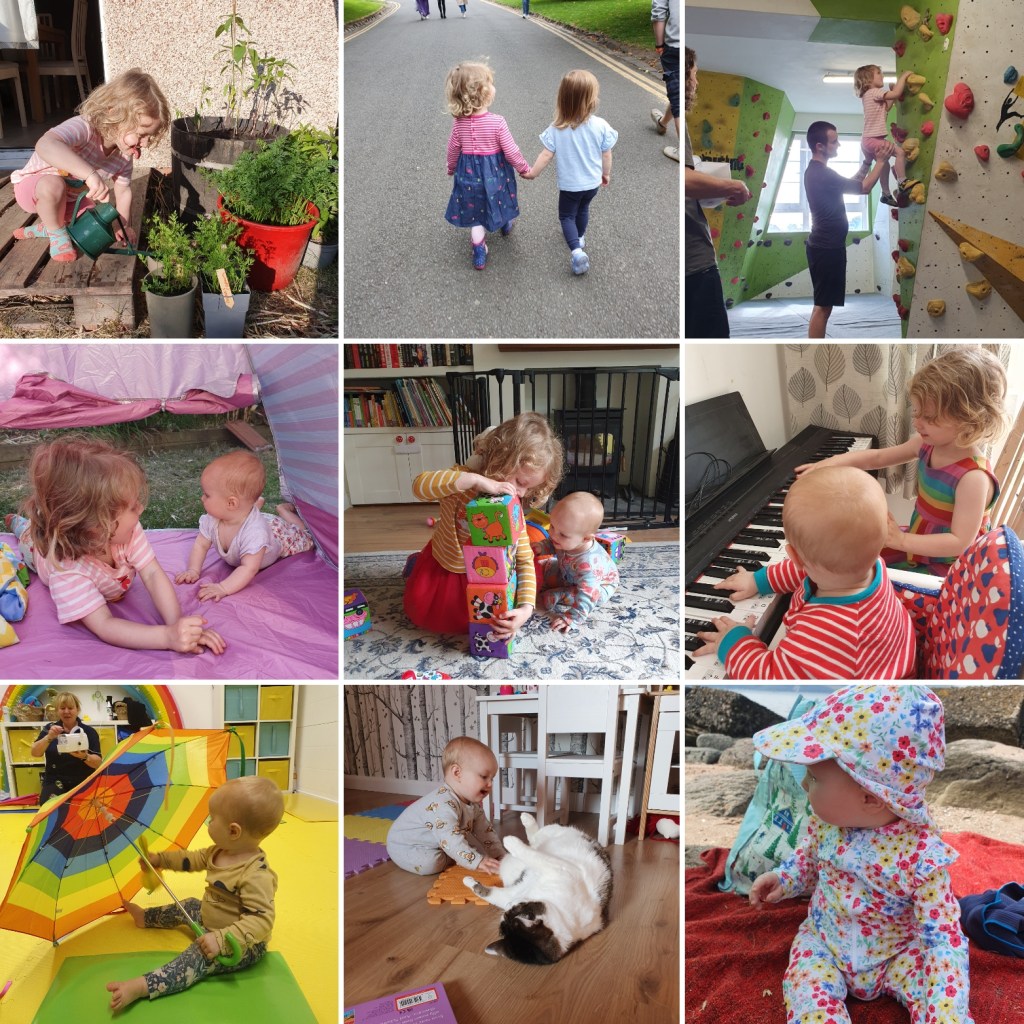
There have been other milestones too, our youngest daughter started crawling at 7 months, then pulling herself up and crabwalking around furniture, she is just so desperate to join in with her big sister’s games and to see what we’re doing. We’ve had a fair few disrupted nights because of teething, but she has taken to weaning with great enthusiasm, willing to try anything and enjoying most of the same meals we eat (without the salt or stock). At nearly 10 months old, she’s still petite and cheerful, but curious and determined too. Over the last few months, we’ve been getting out to bookbug sessions at the local library and baby sensory, which we’ve both really enjoyed. As her first birthday draws near, I’m already feeling the nerves and guilt about returning to work but she’ll have her big sister to look out for her at nursery.
As for our oldest daughter, she is as boisterous and independent as ever but also surprises us with her caring and generous side. We’ve finally started getting to know the parents of our 3 year old’s nursery friends and have had a few playdates together, that we’ve all enjoyed and that I really felt we’d missed out on because of Covid19.
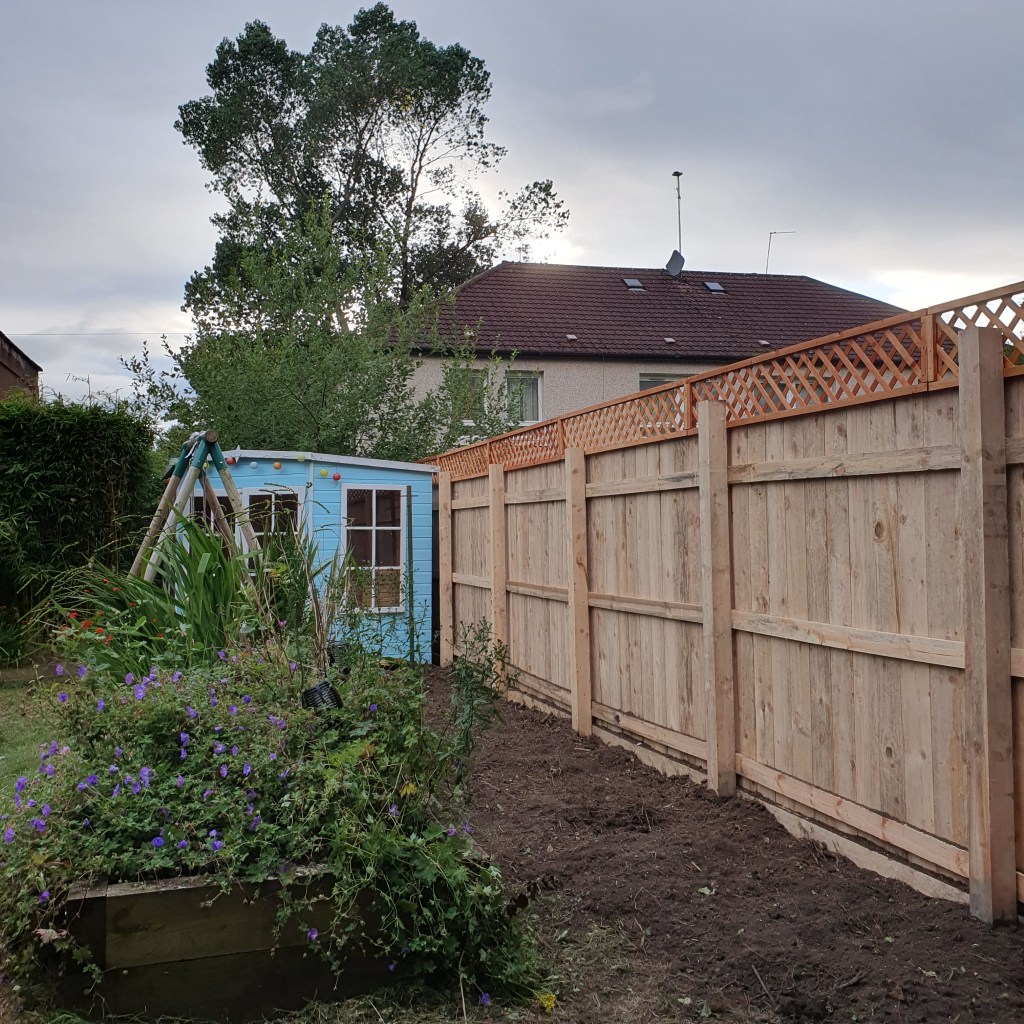
There has been a big change in the garden too, and I’m still getting used to the new view. When our new neighbours in the house attached to ours moved in they asked to replace the privet hedge that separates our gardens with a fence, we politely declined citing the wildlife such as nesting sparrows and hedgehogs passing through. Unfortunately, we’ve had to reconsider recently as they now have a dog that regularly strays into our garden, and he’s a large, reactive breed that scares our kids.
As it happens, I suspect the sparrows had already abandoned the hedge, and we haven’t seen any hedgehogs this year, but it does make me sad that we’re making our garden inaccessible to any that try to visit in the future, but we’ll find other ways of making the space wildlife friendly.
It’s been a summer full of family trips to beaches and playparks, our first family holiday together and lots of time in our garden, and I’m a little sad to say goodbye to the season. So many of the summer highlights have been the pure and simple joy of gardening and watching our daughters learn and grow, and the ordinary moments playing, dancing, reading stories, crafting and swimming together that is the fabric of our family life. As the weather cools and the nights draw in, we have a couple of autumnal light shows to look forward to, as well as our youngest daughter’s first birthday, and all the seasonal loveliness to be found in nature at this time of year. Have a lovely week. X
One of the highlights of the summer has been watching all the wildlife in our garden, particularly the front garden since we’ve added the pond.
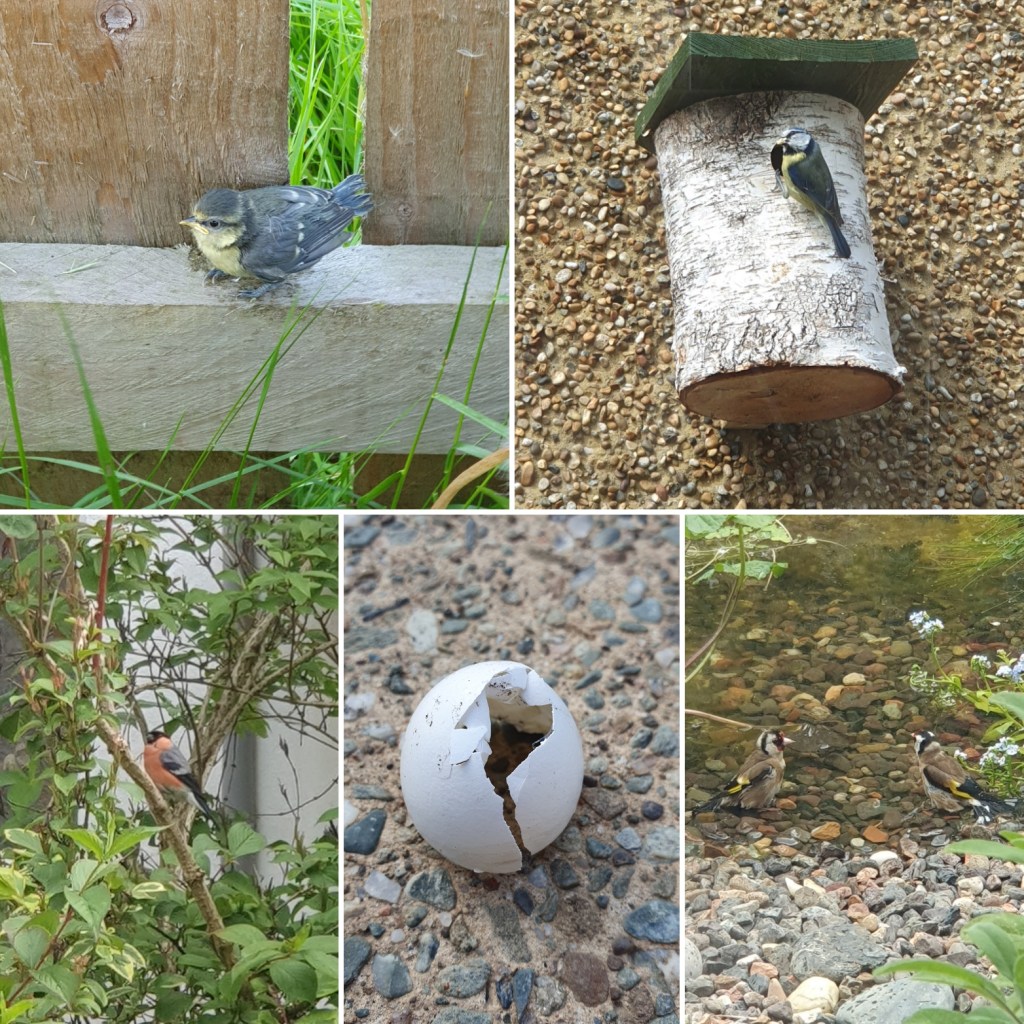
I’d read worrying reports of a lack of insects across the UK leading to chicks starving, but I was so relieved to see our blue tit and sparrow fledglings in the garden in June. In previous years, the blue tits nested in a disused pipe on the side of our house and invariably at least one chick would either shuffle or be pushed off the edge, last year we lost three chicks from either the fall or dehydration before we could return them to the nest, so the birdbox has been a huge success in that regard.
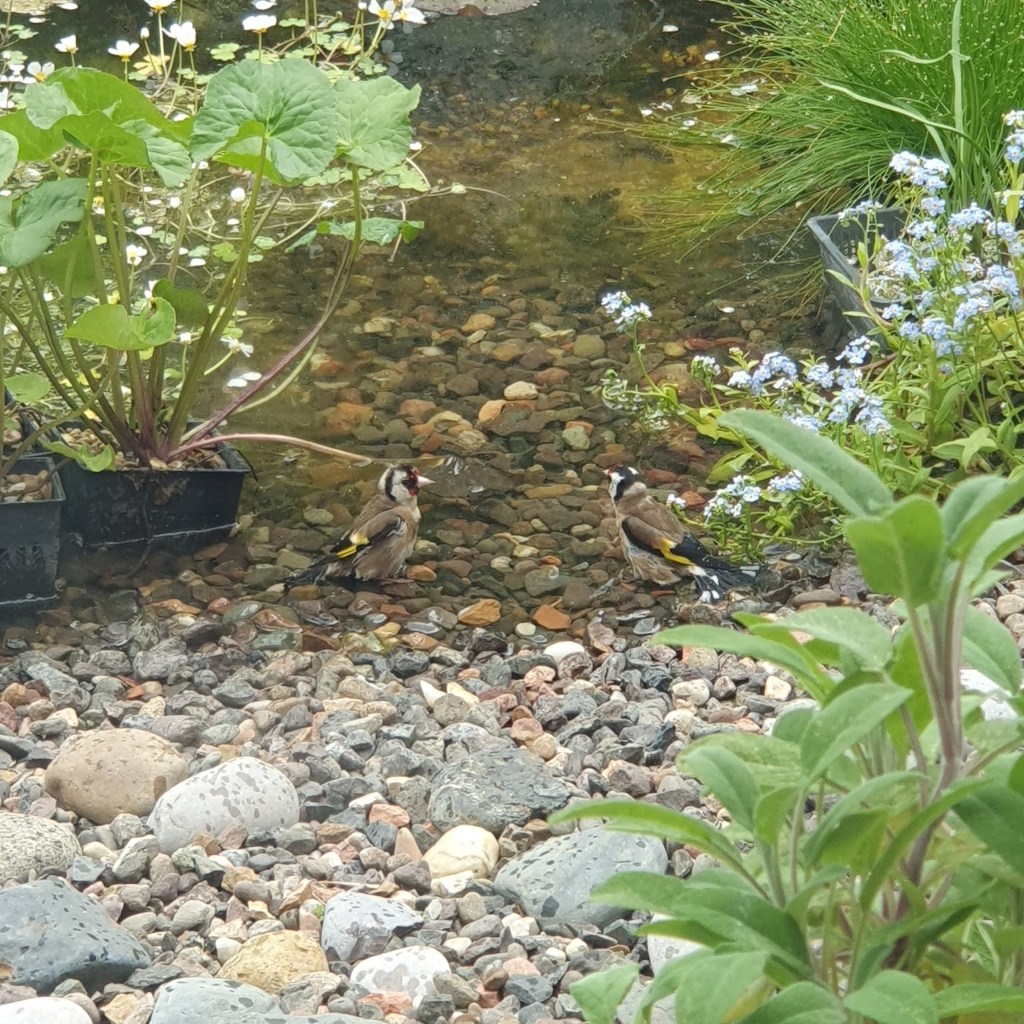
It made my day when I spotted a pair of goldfinches bathing in our pond because we’ve never been able to coax them into our garden before. While chatting with a neighbour, I also spotted a bullfinch in her garden and I’m wondering if I can lure it to our garden just a couple of houses further up.
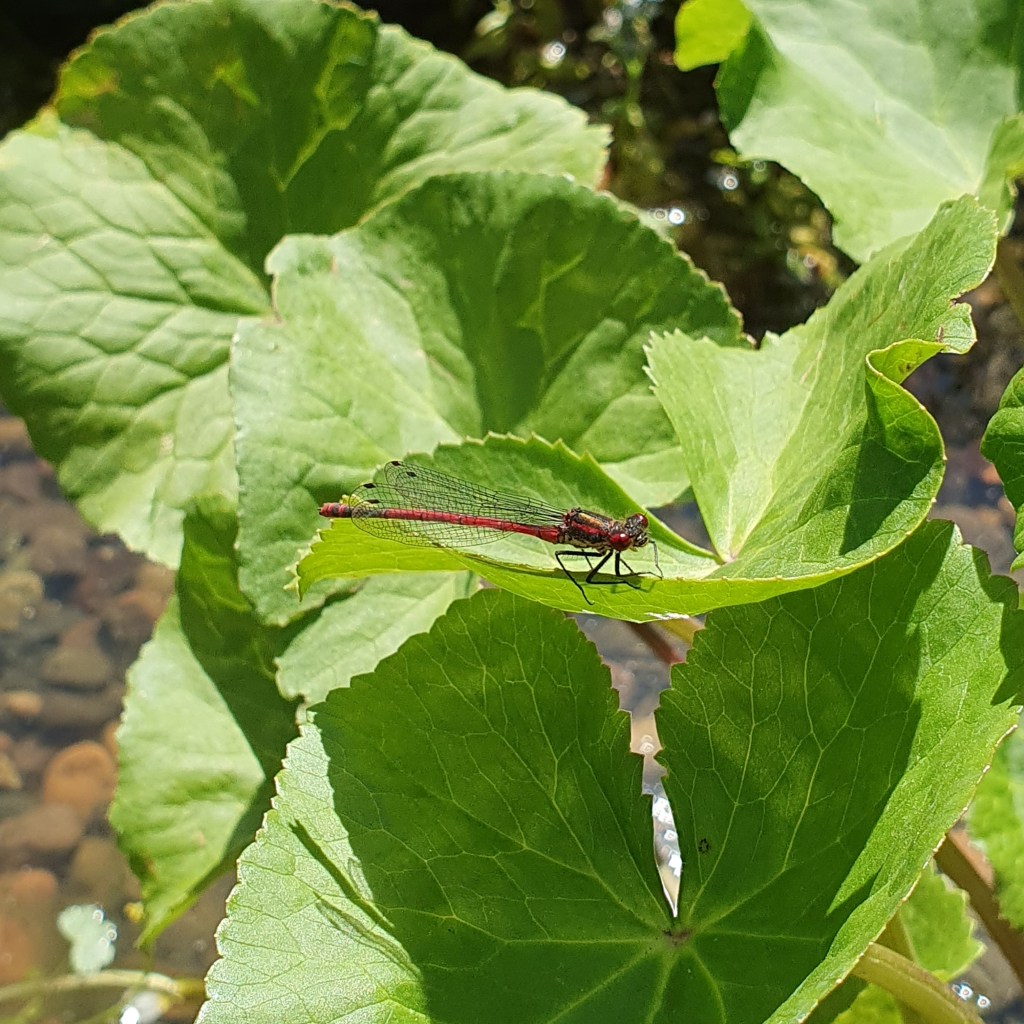
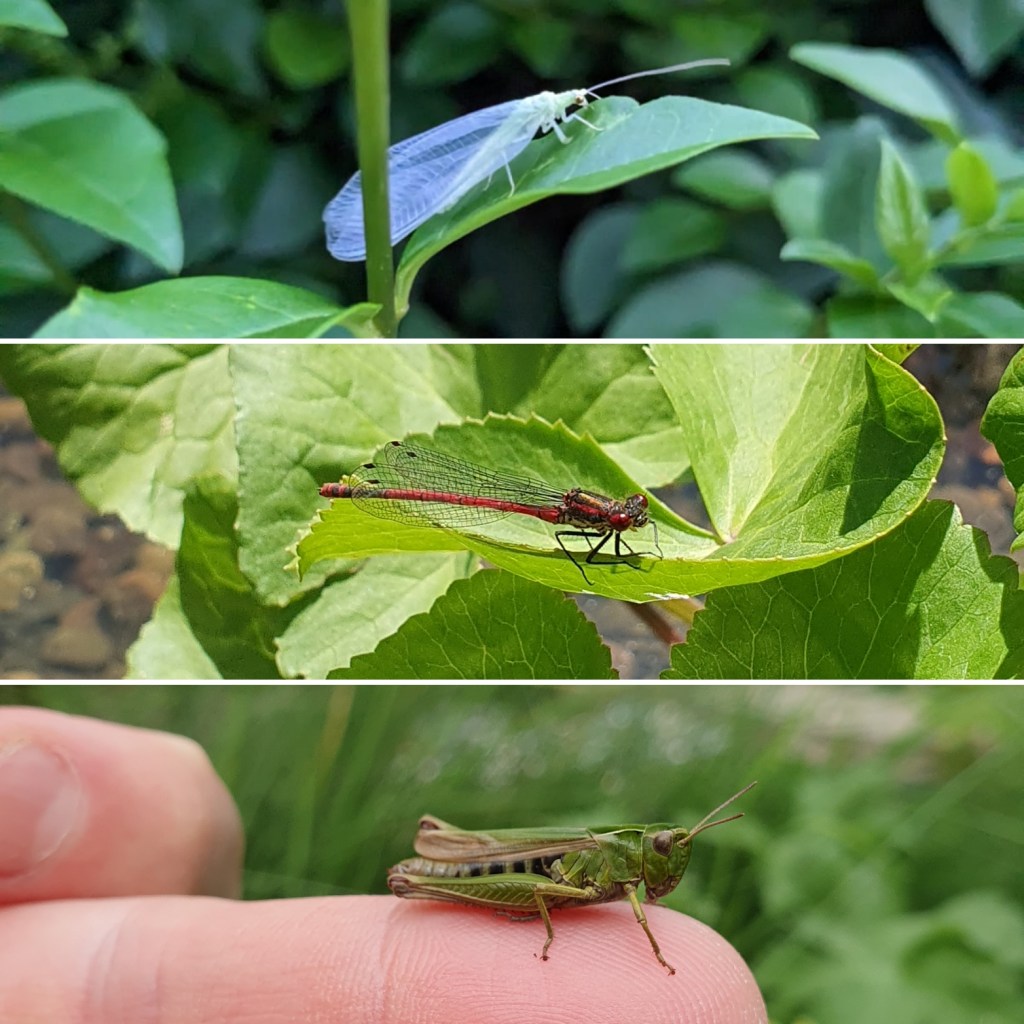
Many of our most interesting wildlife finds have been in the front garden, my husband spotted a lacewing for the first time and I spent half an hour watching a red damselfly flit around the pond. My husband was beside himself with excitement when he found grasshoppers in our fairly wild front garden, giving him the perfect excuse not to mow the grass for a while longer.
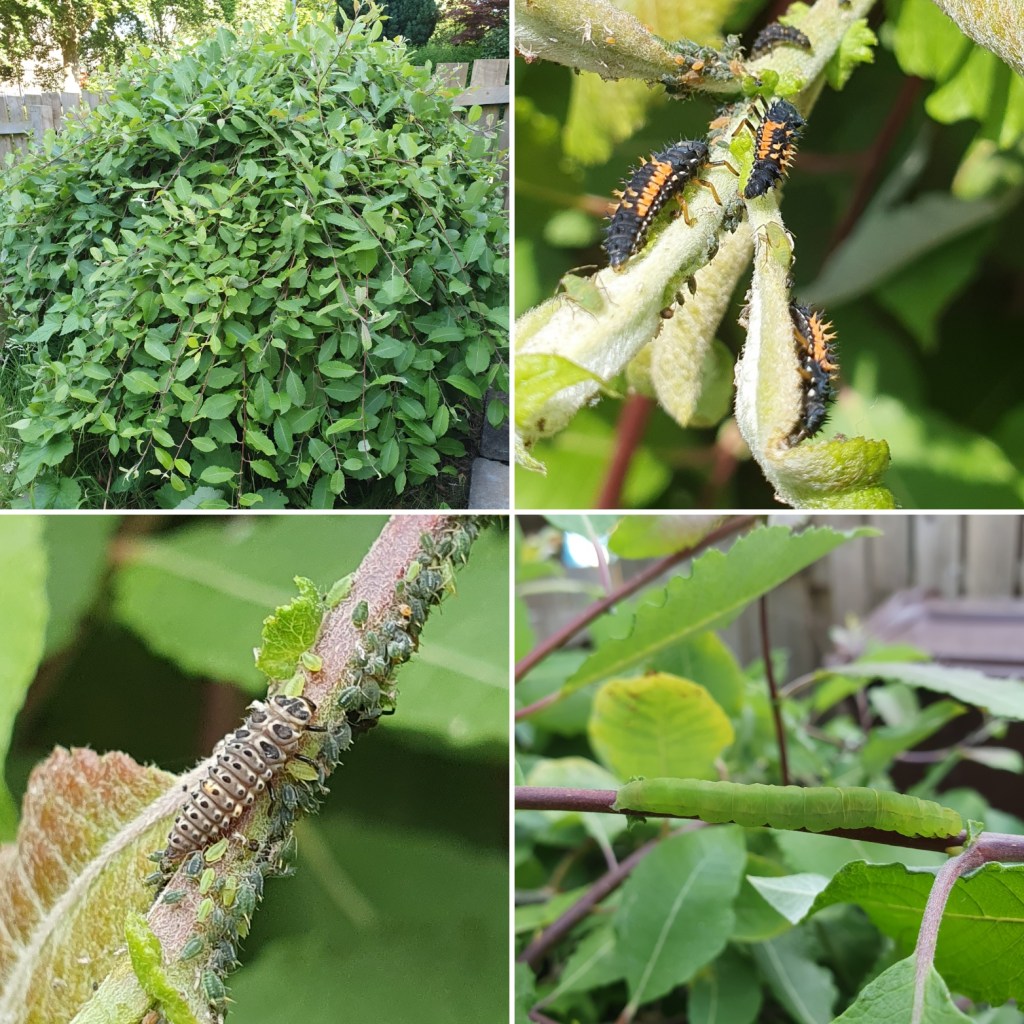
The Kilmarnock Willow was covered in aphids in early summer providing a feast for ladybird larvae, and we also spotted a very hungry and very fat green caterpillar crawling around. None of these insects are particularly rare or unusual but it’s wonderful to see our garden becoming a thriving habitat in an urban environment.
I know one little garden is not enough to stop the rapid decline of so many species across the UK, and I feel so out of sync with my friends and neighbours who are replacing their lawns with artificial grass or paving over front gardens to create driveways, yet I have to try, and I’ll keep trying to create a little safe haven for everything that finds its way here (especially if it eat slugs!). Have a lovely week. X
Halfway through the year and I’m still a few books behind my reading target, but have already found a couple of books that will be in my top ten come the end of the year. In June itself I read an interesting mix with non fiction outnumbering fiction, which is unusual for me.
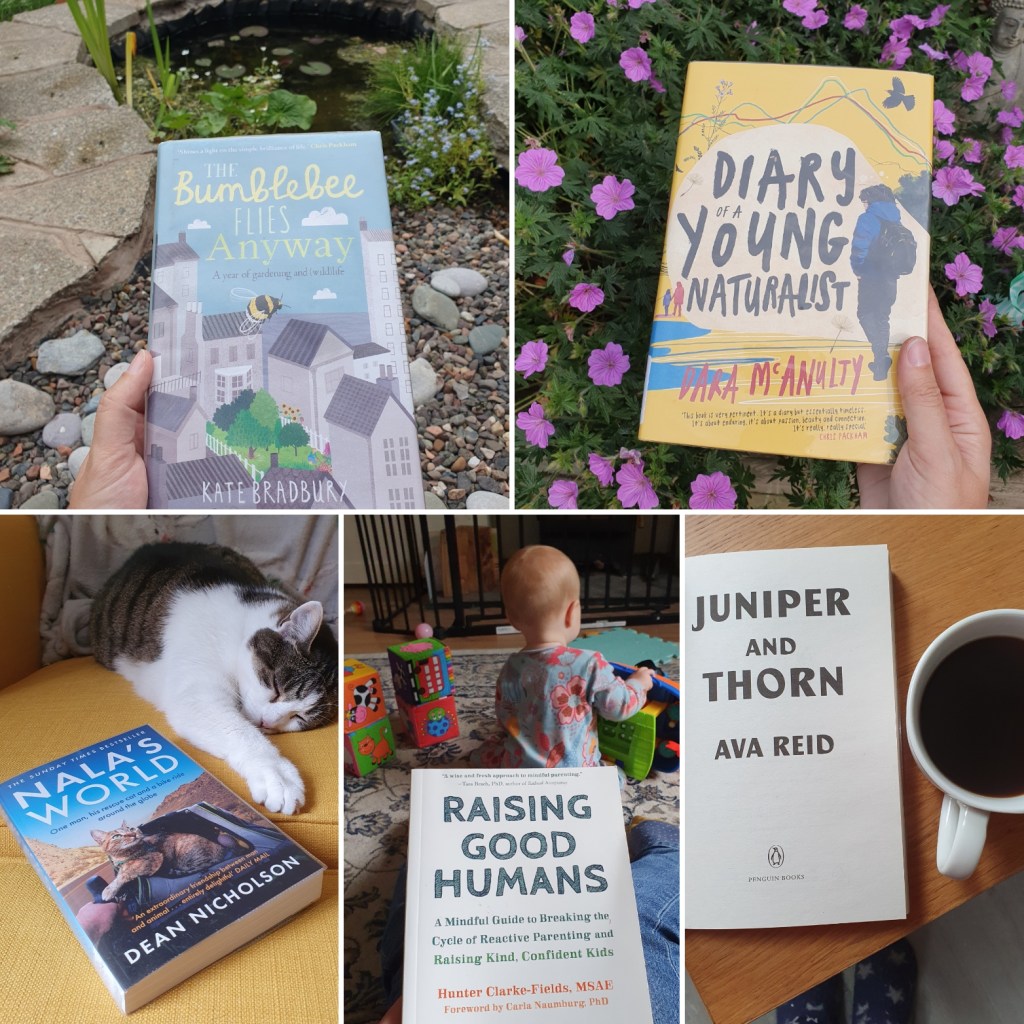
The Bumblebee Flies Anyway by Kate Bradbury
An autobiographical story of Kate Bradbury creating a wildlife garden in the middle of Brighton. Written in a rambling, meandering style with flashbacks to her childhood and trips to see specific insects, interspersed with personal tragedies from bereavements to breakups that only nature could soothe and heal. I could relate so strongly to her desire to provide a safe, inviting habitat for birds, bees, butterflies and other wildlife, and felt keenly her grief over gardens and green spaces paved over or covered with decking and fake grass, or bulldozed to build blocks of flats and carparks. I also found it full of useful information about what to plant to benefit particular species, a really inspiring read.
Diary of a Young Naturalist by Dara McAnulty
Follows the diary entries of Dara for a full year, one that brings change and upheaval as he moves house and starts at a new school, but balanced by time spent in nature. This is a heavy book in places as he describes his struggles in social settings due to autism, school bullying and his frustration about environmental issues such as climate change and loss of species, yet the darker moments are balanced by his fascination and reverence for the natural world from the birds and insects in his own garden to adventures exploring the coasts, forests and mountains of Northern Ireland, and the warmth and safety of his family.
Nala’s World by Dean Nicholson
Dean was a fairly ordinary young man, a bit of a drifter who decided to cycle around the world when he turned 30; not long into his journey across Europe he comes across, Nala, a stray kitten whom he immediately falls in love with and decides to take with him on his adventure. Caring for a pet gives Dean an external purpose beyond his own whims and goals, teaching him lessons in empathy, compassion and responsibility. The overarching theme of this story is kindness, and the ripple effect that one kind deed creates, as Dean’s story of finding and caring for Nala inspires others to donate money to animal charities around the world or adopt strays of their own, as well as the countless people he meets on his journey that share food with him or offer him a place to stay.
Raising Good Humans by Hunter Clarke-Fields
A slightly different parenting book about using mindfulness techniques to cultivate patience, kindness and empathy to help parents become calmer and build stronger connections with their children. As a few other parenting books I’ve read, the book starts by asking parents to identify their own triggers and childhood experiences before moving on to developing a mindfulness practice that can be applied to the challenges of parenting as well as developing skills for mindful listening and communicating to help foster connection and cooperation. I found this really easy to read and put into practice, a very helpful parenting book for those of us who aspire to remain calm in trying times.
Juniper and Thorn by Ava Reid
The only fiction book I read this month was a twisted gothic fairytale by Ava Reid. Juniper and Thorn is narrated by Marlinchen, the third and youngest daughter of a wizard who has been cursed never to feel full no matter how much he eats, never rested no matter how long he sleeps, and to find fault with his daughters no matter how beautiful, clever or kind they are. I found the atmosphere incredibly tense and unsettling but this story was absolutely gripping. Juniper and Thorn is the story of wizards and witches, hunger and revulsion, magic, monsters and rebellious maidens.
Last summer, my interest in environmental issues peaked during the heatwave and I was alarmed to learn that the UK is one of the most nature depleted landscapes in the world. I’ve always been someone who believes that small actions matter and we gardeners have the ability to make a real difference to support wildlife and biodiversity.
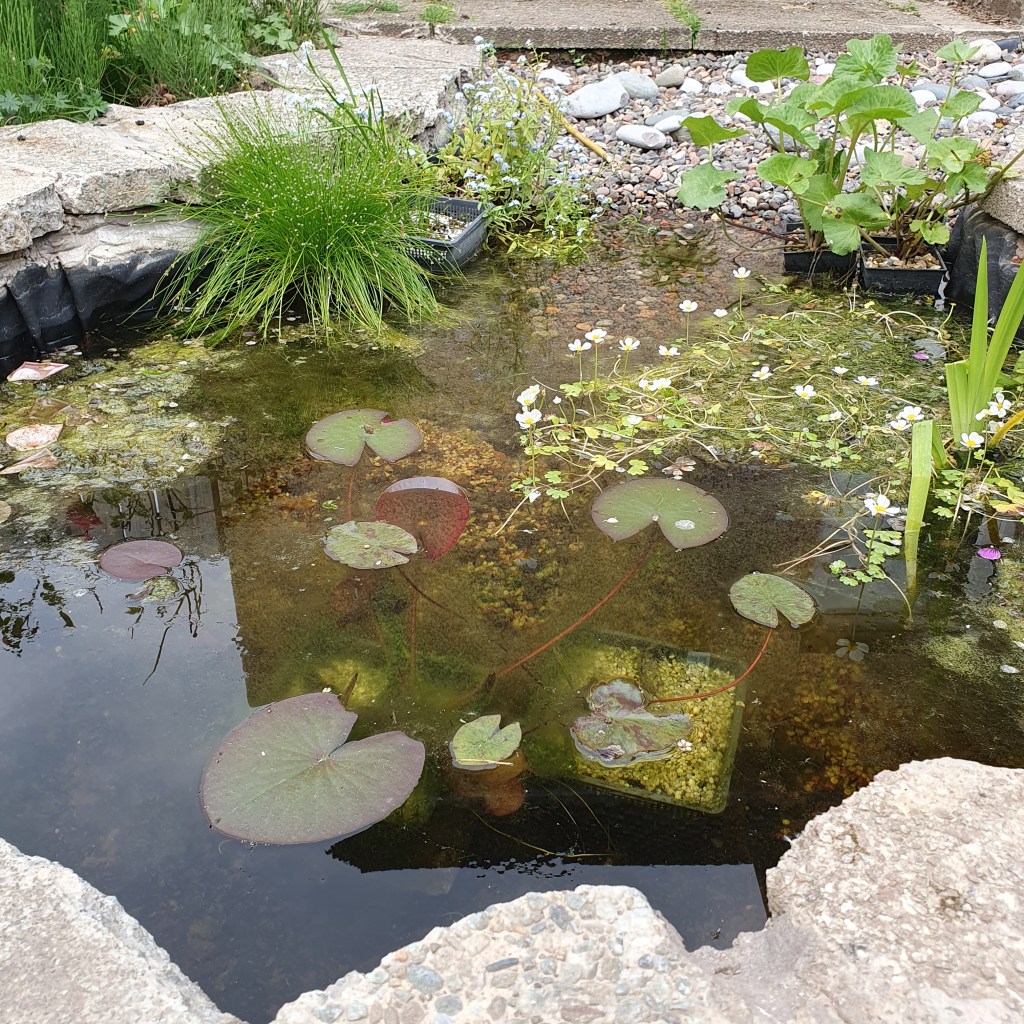
One suggestion that came up again and again was adding a water feature to the garden. I have fond memories of watching tadpoles, frogs and dragonflies in my best friend’s pond as a child, and thought a pond would be a lovely feature to add to our own garden.
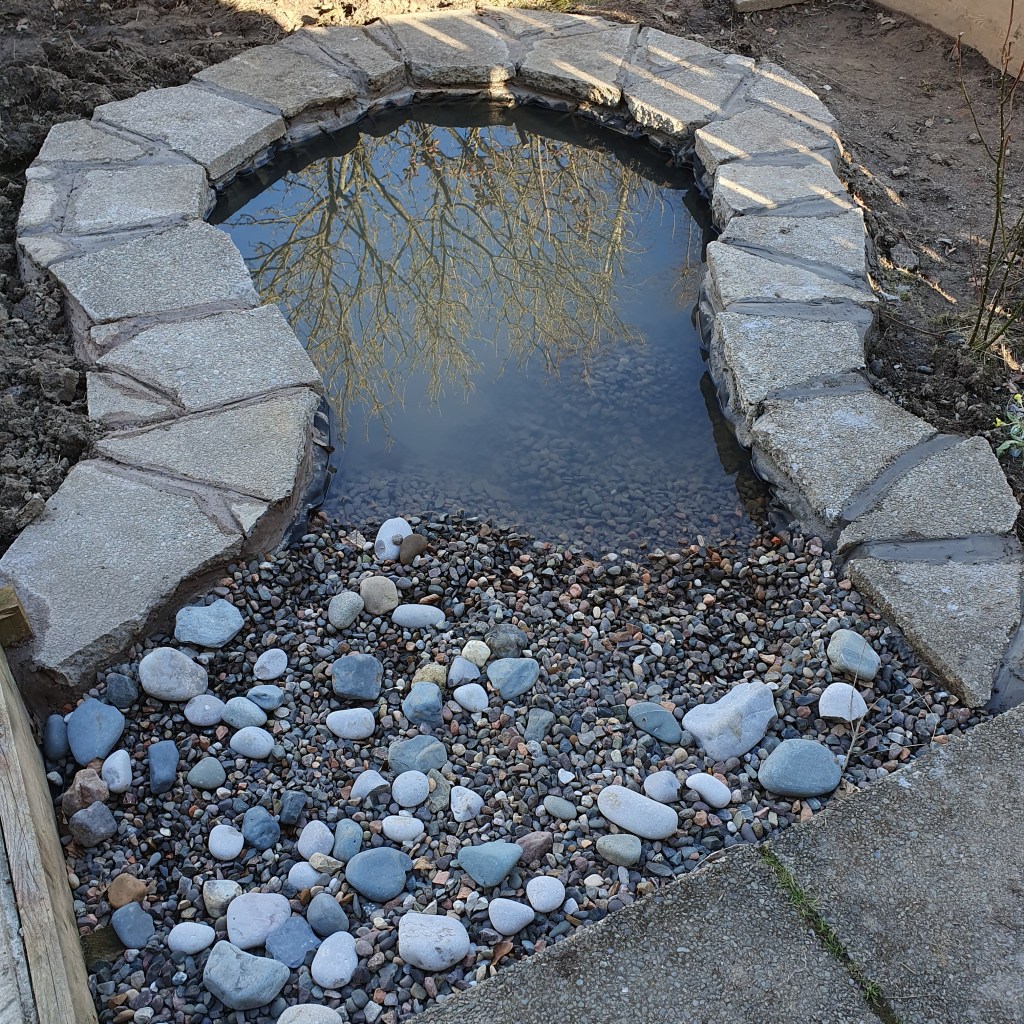
We decided to put the pond in the front garden as it seemed safer for the kids as they’re never out the front unsupervised. We (or rather my hubby and father-in-law) dug out the pond, put in a liner and part filled with the hose, and then cemented crazy paving around the edge. It’s about 60cm deep at the deepest point with a shelf at 30cm and a gradual slope up to a wide pebble beach to prevent any animals from drowning.
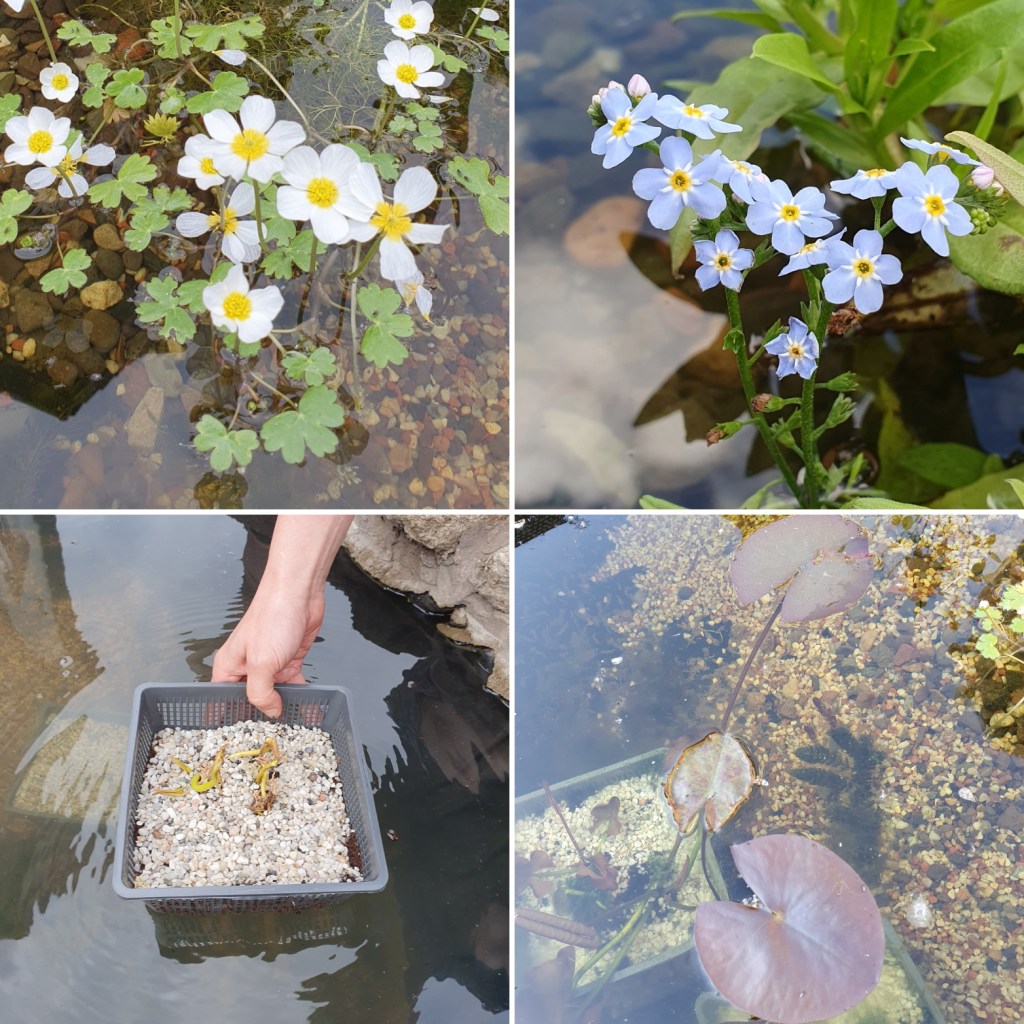
I’ve been filling the pond with plants, Hornwort and water crowfoot as oxygenators, then water forget-me-nots, flag iris and Marsh marigolds as marginals. We’ve also submerged a couple of water lillies in the deepest part of the pond, but I’m prioritising native plants to attract wildlife.
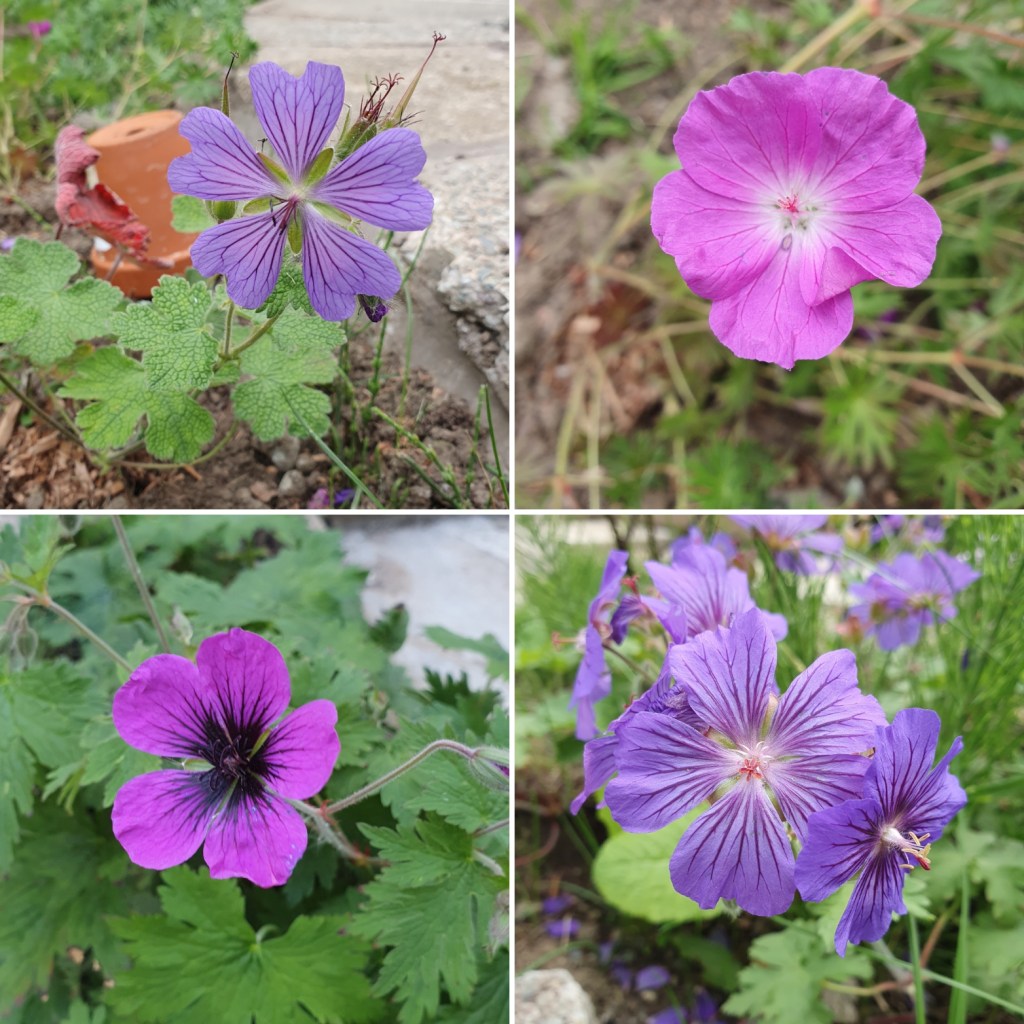
Cranesbill or hardy geraniums are my favourite perennial, so they were my first choice for planting around the pond to soften the edges, provide shelter for critters and food for pollinators. I relocated dragonheart from the long border in the back garden to the edge of the pond, along with a blue geranium I picked up years ago that has been living in a pot while I tried to find a permanent home for it, and added a few more that I bought from a local nursery.
I’ve always taken a “build it and they will come” approach to coaxing wildlife to our garden, and been rewarded when birds, insects and animals have found their way here. We all trooped out in our Pyjamas one evening after I’d spotted a pond skater, and my husband found diving beetles a few days later. It made my day when I spotted a pair of goldfinches bathing in the shallows as we’ve never had them in the garden before.
We’ve had a prolonged spell of dry, hot weather, leading to water scarcity warnings (very rare in Scotland!) and we’ve seen the pond water level dropping, and algae spreading. Nevertheless, I hope that over the summer our pond will be a little oasis in the urban desert for wildlife. Have a lovely week. X
We’ve been enjoying a spell of warm, sunny weather lately, which has meant we’ve been spending lots of time out in our garden.
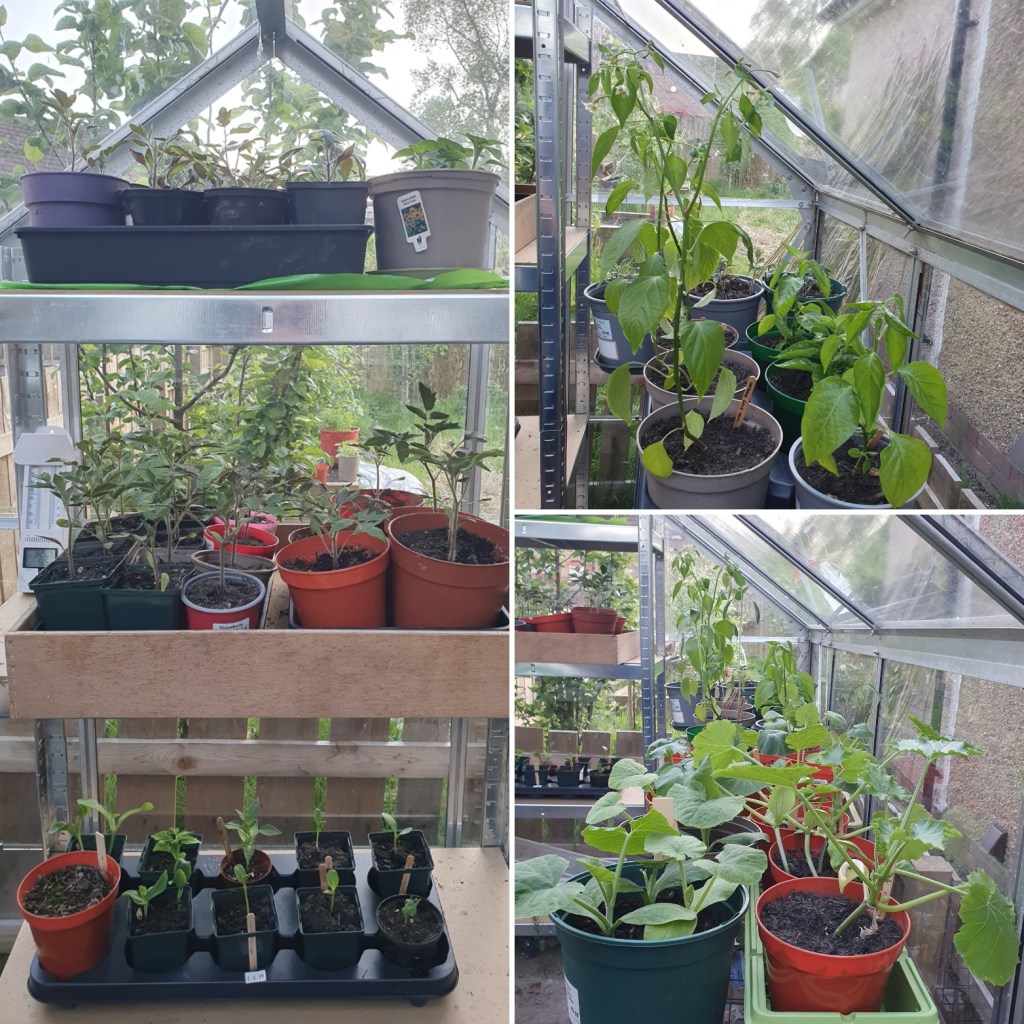
I risked sowing chilli seeds at the start of February, as always tricky to judge when the best time to start them off is as they need a long growing season but seedlings raised on my windowsills tend to go leggy as they stretch towards the sun on East and West facing windows, before transferring them to the greenhouse.
I sowed pumpkin, squash, courgette and sunflower seeds in the middle of April, and I’ll plant them out in June – which will probably bring a month of rain and a plague of slugs knowing my luck. My husband has also started off lots of tomato seedlings, and we spent an afternoon at the weekend pricking out and repotting them. The greenhouse is currently full of seedlings and plants as we’re always ridiculously optimistic about how much we can grow in our garden.
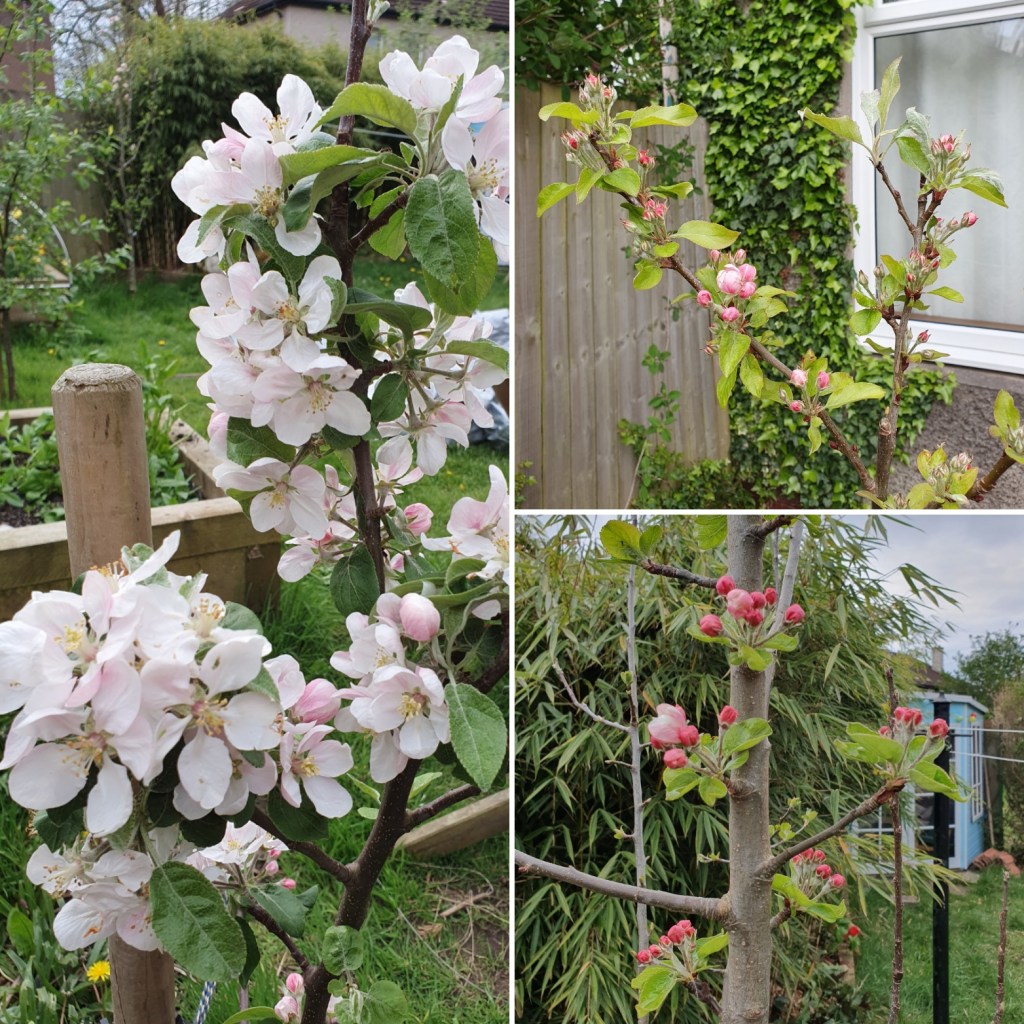
There was blossom on three of our four apple trees, unfortunately the other has grown several water spouts from the trunk, which is usually a sign of stress or a failed root graft. Our plum tree also had two little flowers on it earlier in the spring.
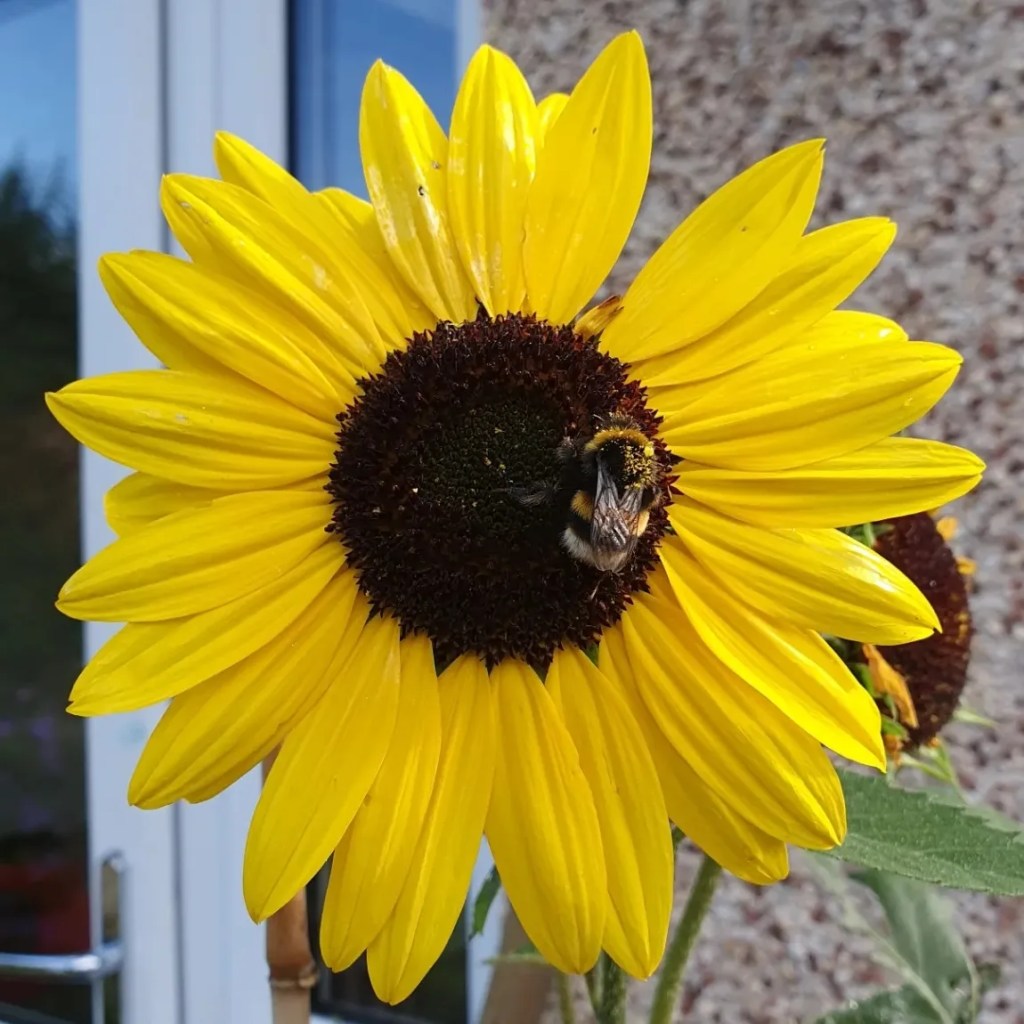
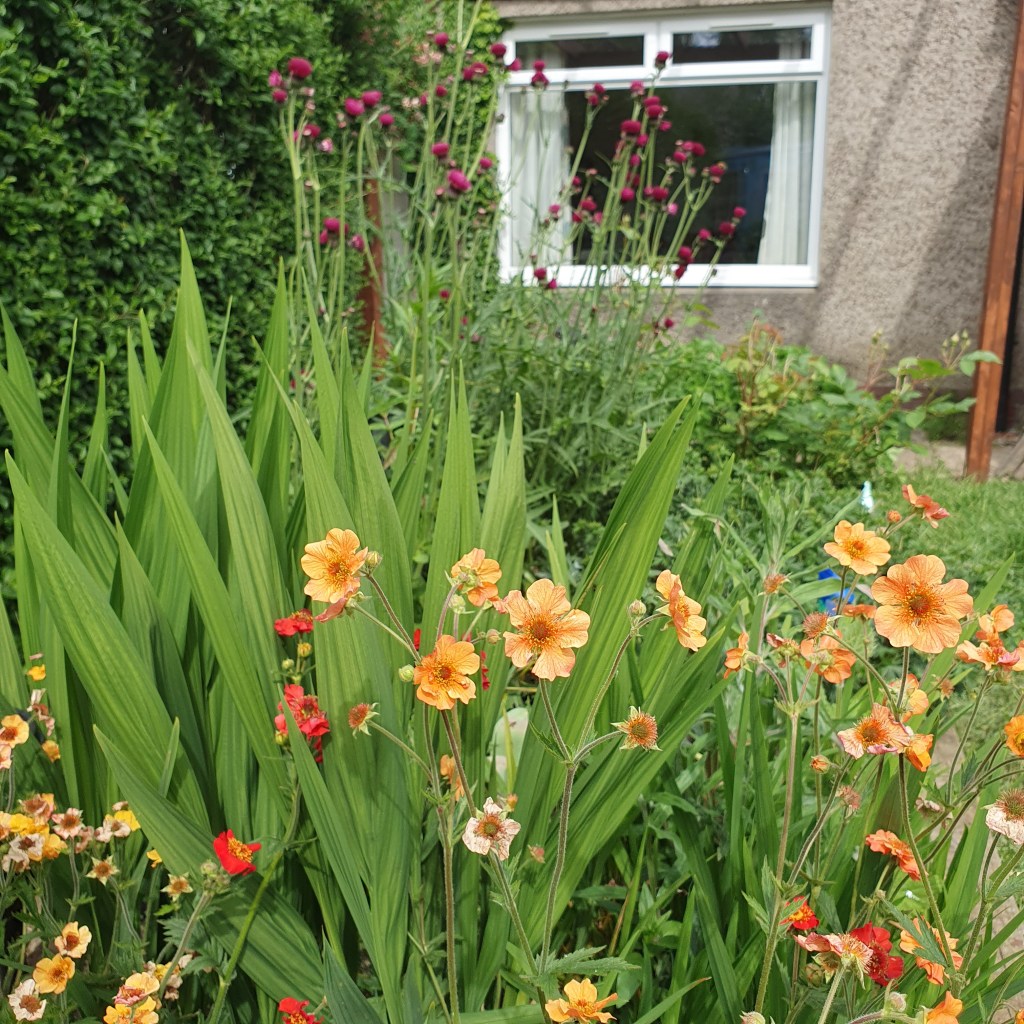
In the flower beds, the tulips and daffodils have died back but the Geum and Thistle have flowered, and I always enjoy counting and identifying the bees that have been crawling all over them.
We got a bird house for Christmas and affixed it to the side of the house, soon after a pair of blue tits moved in and I love watching them flit back and forth to feed their chicks while I’m working in the greenhouse.
May is often a month of anticipation marking the gentle transition from spring to summer, and it’s been lovely to spend so much time outside. Even when we have very little to show for our efforts, gardening brings us a tremendous amount of joy. Have a lovely week. X
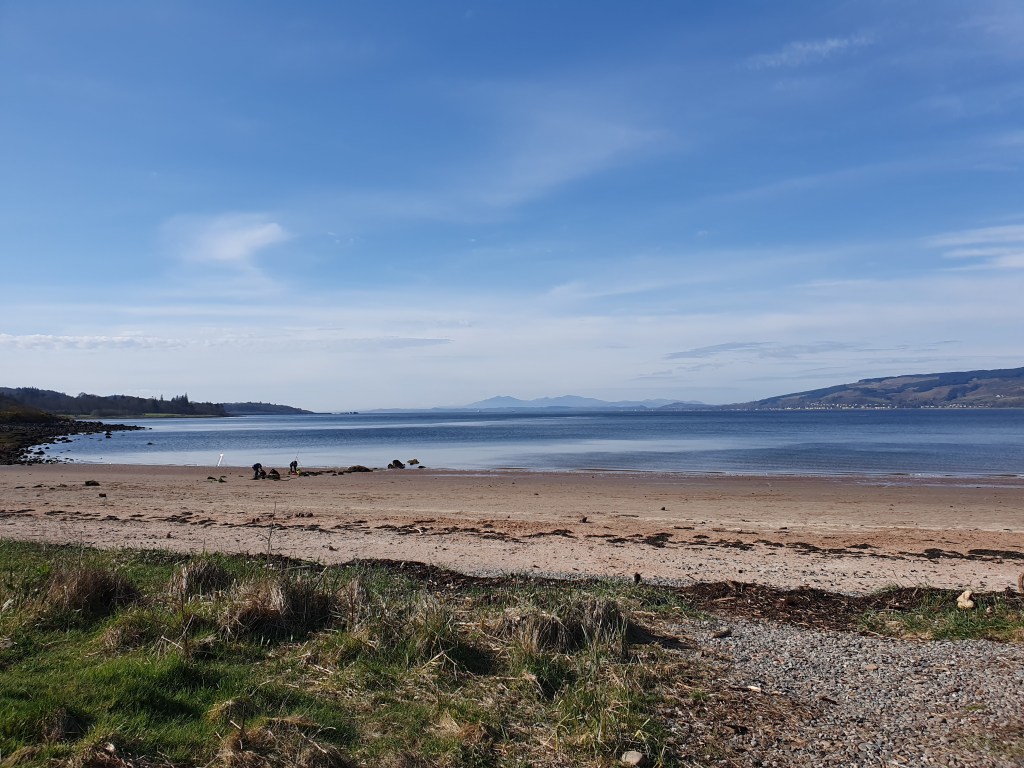
We’ve had a couple of trips to Lunderston Bay, a little beach in Inverclyde, at high and low tide this spring, and it’s rapidly becoming one of our favourite places to visit.
The first time we visited Lunderston Bay this year, the tide was in and there was a fairly strong breeze that made it ideal for trying out our 3 year old daughter’s new kite.
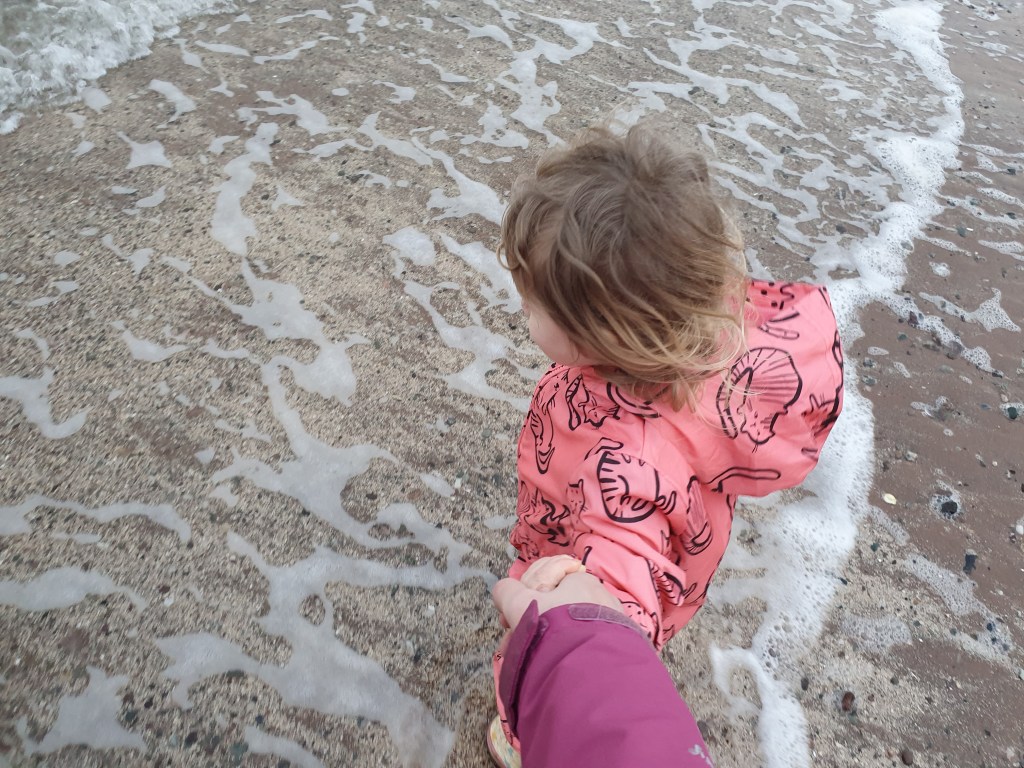
We spent a lovely afternoon strolling along the shore, splashing in the waves and looking in rock pools for crabs. It’s amazing how much fun and how memorable such simple activities can be. After that we meandered up to the new playpark for swings, slides and climbing fun before heading home at dusk.
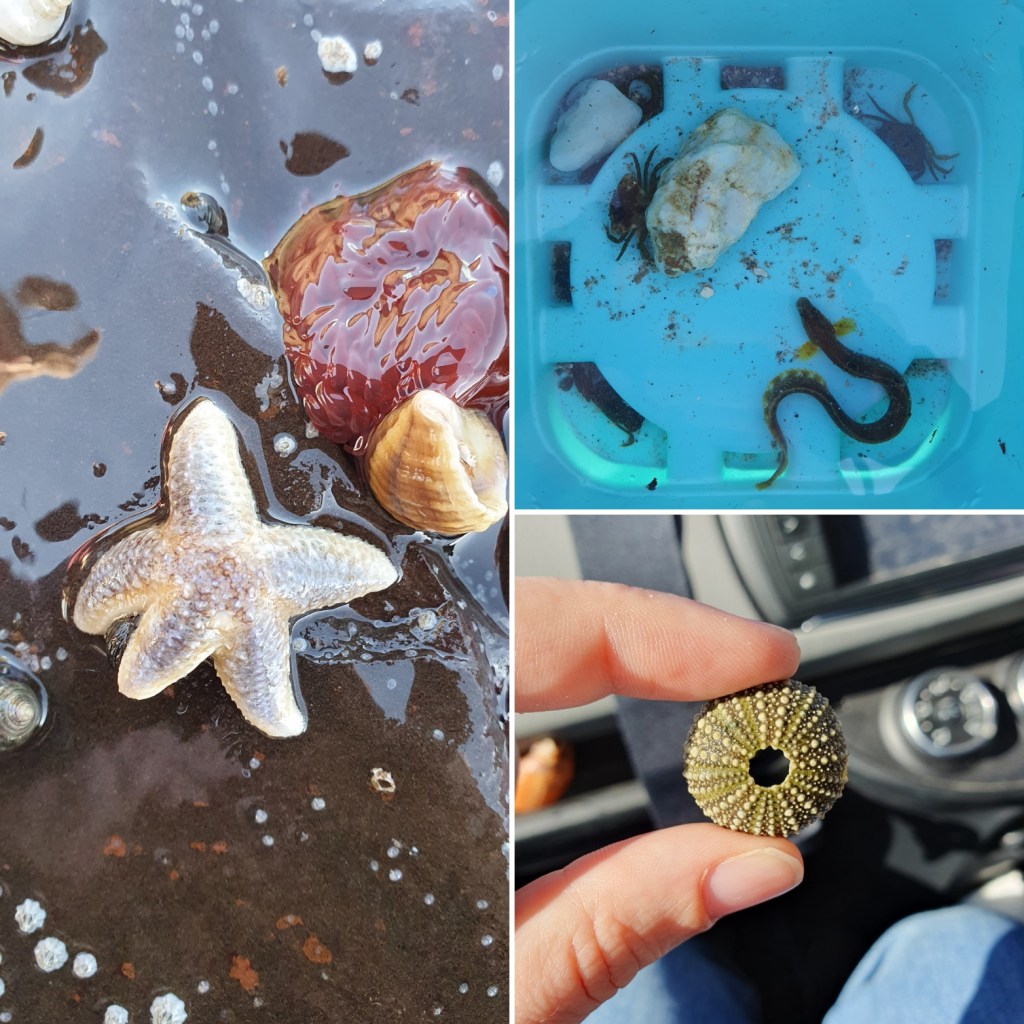
Our second trip was on a sunny morning when the tide was low. My husband and oldest daughter wasted no time in making straight for the rock pools to search for crabs and other aquatic critters, and we found lots of little crabs, sea snails, a sea gunnel and even a couple of starfish clinging to rocks. The sea was too cold for a proper paddle but we waded in wearing our wellies and I found a little sea urchin shell to take home as a souvenir.
A trip to the seaside is always one of my favourite ways to spend a day and I’m looking forward to lots of picnics, building sand castles, beachcombing, rock pooling and paddling in the sea over the summer. Have a lovely week. X







 Lovely and Grateful
You must be logged in to post a comment.