Our purr-fect patient

image1
Mara before the operation

A little while ago, my husband found a lump about 3mm wide and 8mm long near the base of our cat Mara’s tail. Our vet took samples but didn’t seem particularly concerned. About a week later, the vet called us to advise that the lump was a malignant tumour and they recommended operating to remove it, because this type of tumour was particularly invasive and reactive; they also apologised that they hadn’t recognised it at first as they never see tumours at such an early stage. We were warned that the location of the lump meant tail amputation might be necessary. It came as a shock because in every other respect Mara seemed perfectly healthy; eating, playing, grooming and cuddling as normal.

It was painfully reminiscent of when my family’s cat Peach died of cancer. It was me who took Peach to the vet when he stopped eating, became lethargic and breathless, and I also brought his body home after the vet called to tell me Peach had died in his arms.

My husband and I took the day of Mara’s operation off work. Signing the consent form warning us that some animals don’t wake up from the general anaesthetic and about the risks of unexpected complications during surgery made leaving Mara there difficult. We spent most of the day driving, as there were too many reminders of Mara at home and it was too quiet there without her. We tried to distract each other but couldn’t stop ourselves from anxiously checking our phones every few moments. My husband answered the vet’s call, they had unfortunately had to amputate Mara’s tail as they found a second smaller lump next to the first, but she had woken up from the anaesthetic and we were able to have her home that evening. We both shed tears of relief and sorrow.

image2
Mara slept on me every night for a week after the operation

Our world shrunk as we wrapped ourselves around Mara to make sure she was as comfortable and pain-free as possible in the days after her operation. Mara has been a purr-fect patient, she’s a very special little lady, and she was soon back to affectionately butting heads with us (albeit awkwardly because of the cone she has to wear to stop her from licking her wound), squeaking for her food that she gobbled up despite the medication hidden in it, and sleeping stretched out on my torso every night after the operation.

It’s hard to explain to those who don’t have pets just how much love and joy they bring to a home, but also how much we worry when our animal companions are injured or unwell. Many of us consider our pets to be members of the family, and often it is the daily routines of feeding, petting, playing with them or even washing their bowls and litter trays that ground us in the here and now when other personal and global events seem overwhelming.

image3
Enjoying some cuddles with the cone off

We’ve been touched by the messages and calls from well-wishing family and friends, and we’re so thankful to our vets who acted quickly and decisively to give Mara the best chance of survival, and for all their advice and after-care. There are unfortunately more procedures and tests on the horizon for Mara, but for now we are just relieved and grateful to have her recovering at home with us.

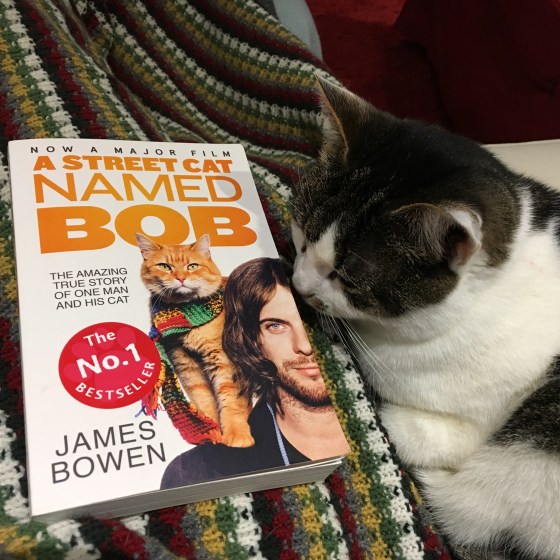
Review of ‘A Street Cat Named Bob’ by James Bowen

img_4177

I saw the film of this at the cinema last year and was so moved by it that I read the book soon after. James Bowen was a busker and recovering heroin addict living in sheltered accommodation in London when he encountered an injured but friendly stray cat (whom he names Bob) that found its way into his block of flats. The two quickly become inseparable companions and the book follows all the highs and lows they share together, it is their loyalty and devotion to each other that drives the book forward.

James is living a hand to mouth existence for most of the book, but spends the little money he earns busking and selling the Big Issue magazine on cat food and vet’s bills. From the offset, James is a responsible pet-owner, taking Bob to the vet, getting him neutered and micro-chipped. Taking care of Bob gives James a purpose, and it seems like the simple routine of caring for the cat keeps him tethered to normality, and he is rewarded with Bob’s affection and trust.

Having adopted a rescue-cat of my own from the Scottish SPCA, I could relate to James’ speculation about Bob’s past, as he tries to understand the quirks and behaviour that might offer clues about Bob’s life before they became companions.

Throughout A Street Cat Named Bob, James shows humbling insight into how society regards homeless people and addicts, drawing attention to the deliberate blindness of passers-by and how it felt to be invisible. He also describes the vulnerability of working on the streets of London, trying to eke out a living from busking and selling the Big Issue, as well as the numerous barriers facing those trying to turn their lives around.

This is a rags-to-riches autobiography in a sense, yet this is a also a tale of recovery, second chances and above all the friendship that develops between a recovering addict and a stray cat.
Time spent with cats is never wasted…

image1-3

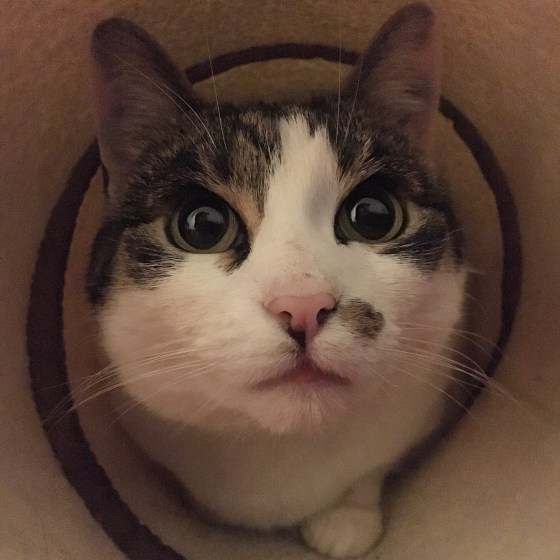
It was around this time last year that my husband and I adopted our cat, Mara, from a rescue centre. We had just returned from our honeymoon when we decided to get a pet, both of us had cats growing up and missed the energy and routine that pets add to a home.

The cats I had growing up were all rescued: Peach and Lucky were kittens abandoned in a sack on a construction site; Oscar was the runt of a farmyard cat’s litter, he was suffering from a respiratory infection and was left behind when his mother moved her other kittens from one barn to another. Despite having a difficult start in life, all of our rescue cats became such loyal and trusting members of the family that I was determined to give an “unwanted” cat a safe, loving home when my husband and I decided to get a pet of our own.

Although we knew very little about Mara’s background we took a chance on her because she seemed timid but curious and affectionate in the re-homing centre.

Mara has become such a big part of our little family that it’s hard to believe it has only been one year since we adopted her. From the cheerful chirrup when we arrive home from work to the impatient whine at feeding times and the rumbling purr when she’s content, the affectionate nuzzling and playful scampering, stretching across our laps for a snooze or curling up at the bottom of our bed to sleep every night, Mara has made a significant impression on our home and our hearts.

img_0311
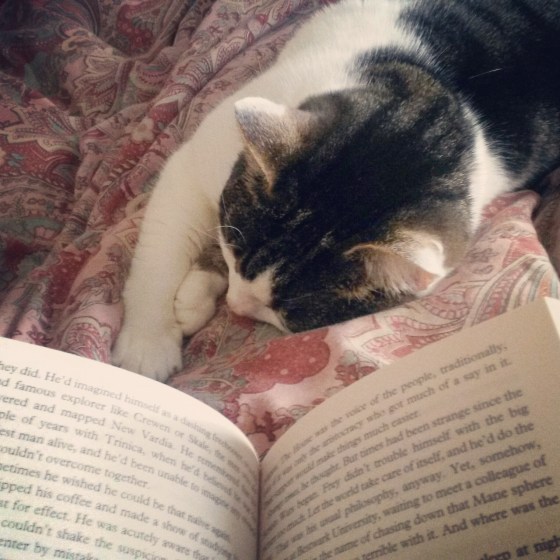
Bedtime stories…

It’s been so rewarding to watch Mara start to trust us, settle into her new home and slowly overcome her timidity. Nowhere is this more evident than in her playfulness, Mara has progressed from hiding under furniture with all but her two front paws hidden swiping at her toys to scampering, pouncing and leaping after her toys in the middle of the floor with fearless abandon.

I learn so much from observing Mara, she lives in the present moment, she doesn’t ruminate on the past or worry about the future; and I’m always inspired by the pleasure she takes in the simple comforts of life such as companionship, food, play, rest and a warm, safe home.

The thought of coming home to a hug from my husband and nuzzles from Mara is enough to help me keep all the daily stresses and struggles in perspective. The quiet, cosy hours we pass together always fill me with a sense of peace, contentment and gratitude. As the autumn nights grow longer and the weather gets colder, I look forward to the three of us spending many more evenings snuggled up together. Have a lovely week.