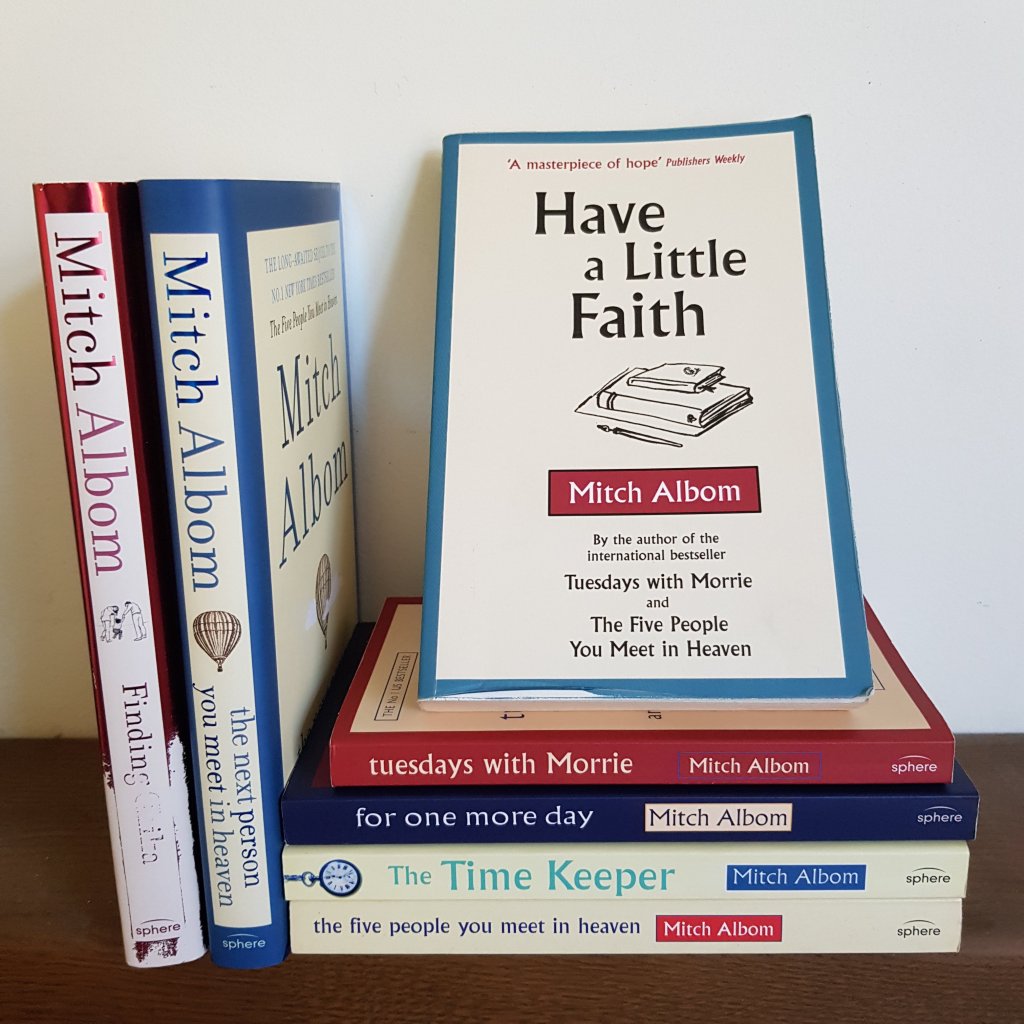
Have A Little Faith by Mitch Albom

For a couple who met in a bookshop, my husband and I rarely swap books, but he’s been nagging me to read Mitch Albom for years, and while he’s been reading the newest Finding Chika, I decided to read my husband’s favourite, Have A Little Faith.

The gist of Have A Little Faith is that Mich Albom is asked by Albert Lewis, the Rabbi who has known him since childhood, to give his eulogy when he dies. Albom reluctantly accepts but realises that he’d better get to know his Rabbi as a person first, and what Albom expects to be a short series of interviews, becomes regular visits and a close friendship spanning eight years.

The narrative switches between conversations with the Rabbi, the writer’s own thoughts and experience of religion, and the life of Henry Covington, and at first it’s difficult to see how they all intersect.

Henry’s story is one of redemption, as he goes from a Brooklyn drug dealer to the pastor of a dilapidated church in Detroit where homeless people congregate for food and shelter.

This isn’t a book trying to convert agnostics and atheists, but covers a range of topics that will resonate with those of all faiths and none, such as family and community, tolerance and prejudice, charity and gratitude, regret and forgiveness, mortality and grief.

Have A Little Faith was probably an unusual choice to start with but it won’t be the last of Mitch Albom’s books I read. Hope everyone reading is safe and well. X

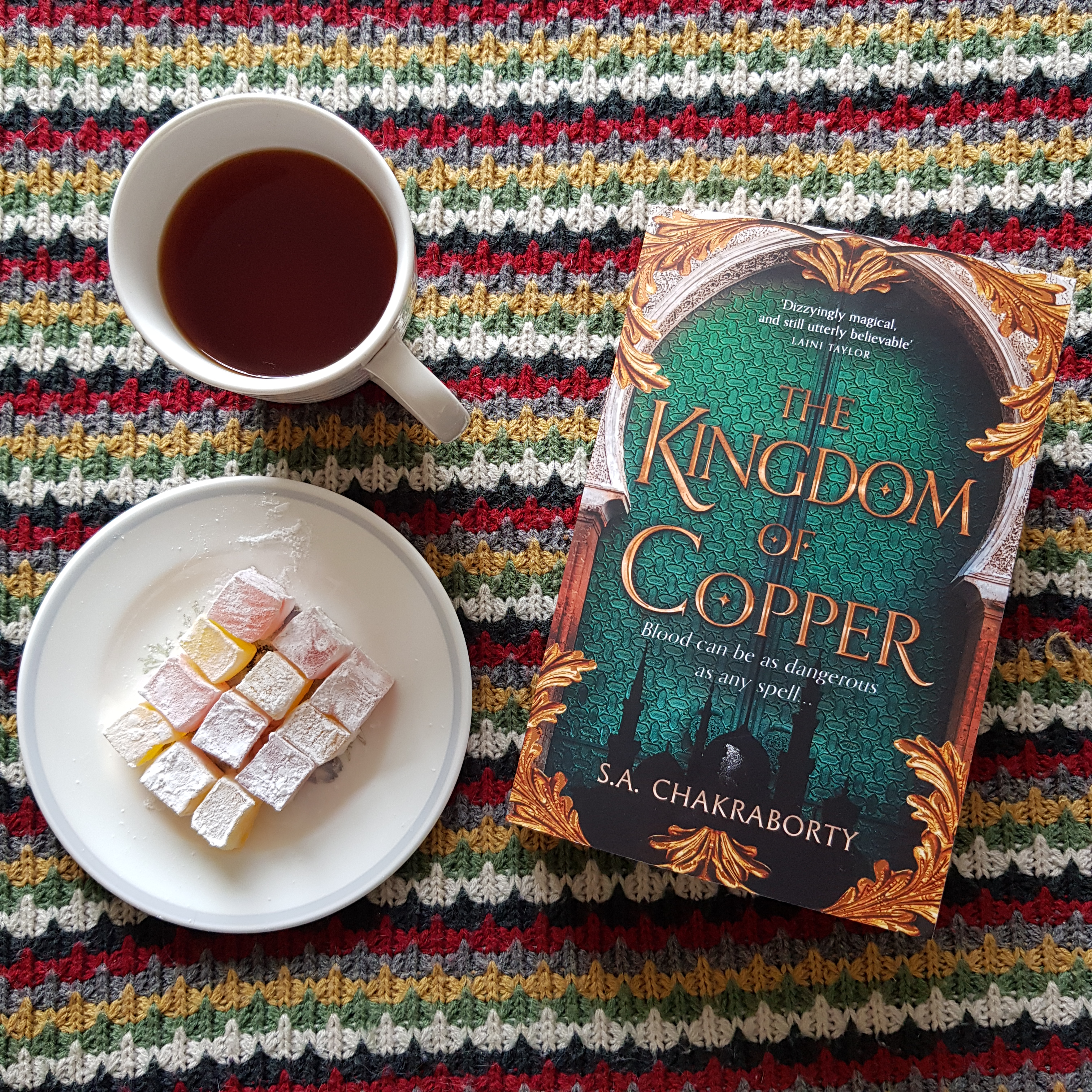
The Kingdom of Copper by S.A. Chakraborty

The Kingdom of Copper

The City of Brass (reviewed here) was the best book I read last year, and I loved slipping back into this world inspired by Arabian mythology in The Kingdom of Copper.

Set five years after the first book, Nahri has been forced to marry King Ghassan’s eldest son, Muntadhir, while Prince Ali has been exiled, and Dara has been freed from Ifrit enthrallment by Nahri’s mother, Manizheh.

Generations and tribes clash in a conflict that pits husbands against wives, parents against children, and siblings against each other. Ali is caught between his scheming relatives, as much as Nahri is caught between the rival factions of daeva and djinn. Nahri and Ali try to ease tensions between their rival tribes and improve conditions for the persecuted half-human shafit, while their parents’ generation seek vengeance, power and control over the city of Daevabad.

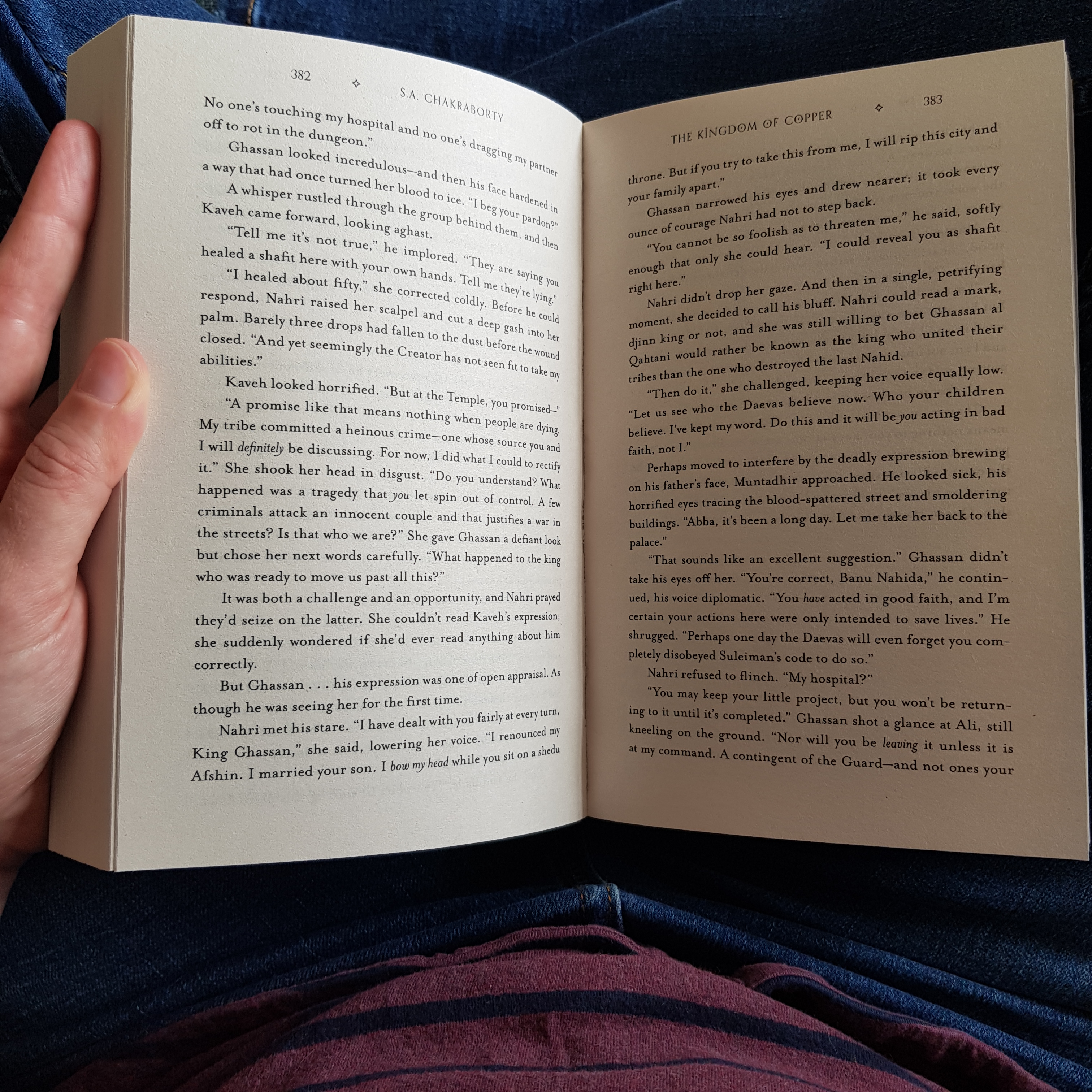
The Kingdom of Copper2

Despite the fantasy setting, this story explores universal themes of love, loyalty, family, idealism and fanaticism, prejudice and revenge, and I’m so looking forward to finding out how the story resolves in the final part of this trilogy. Have a lovely week. X

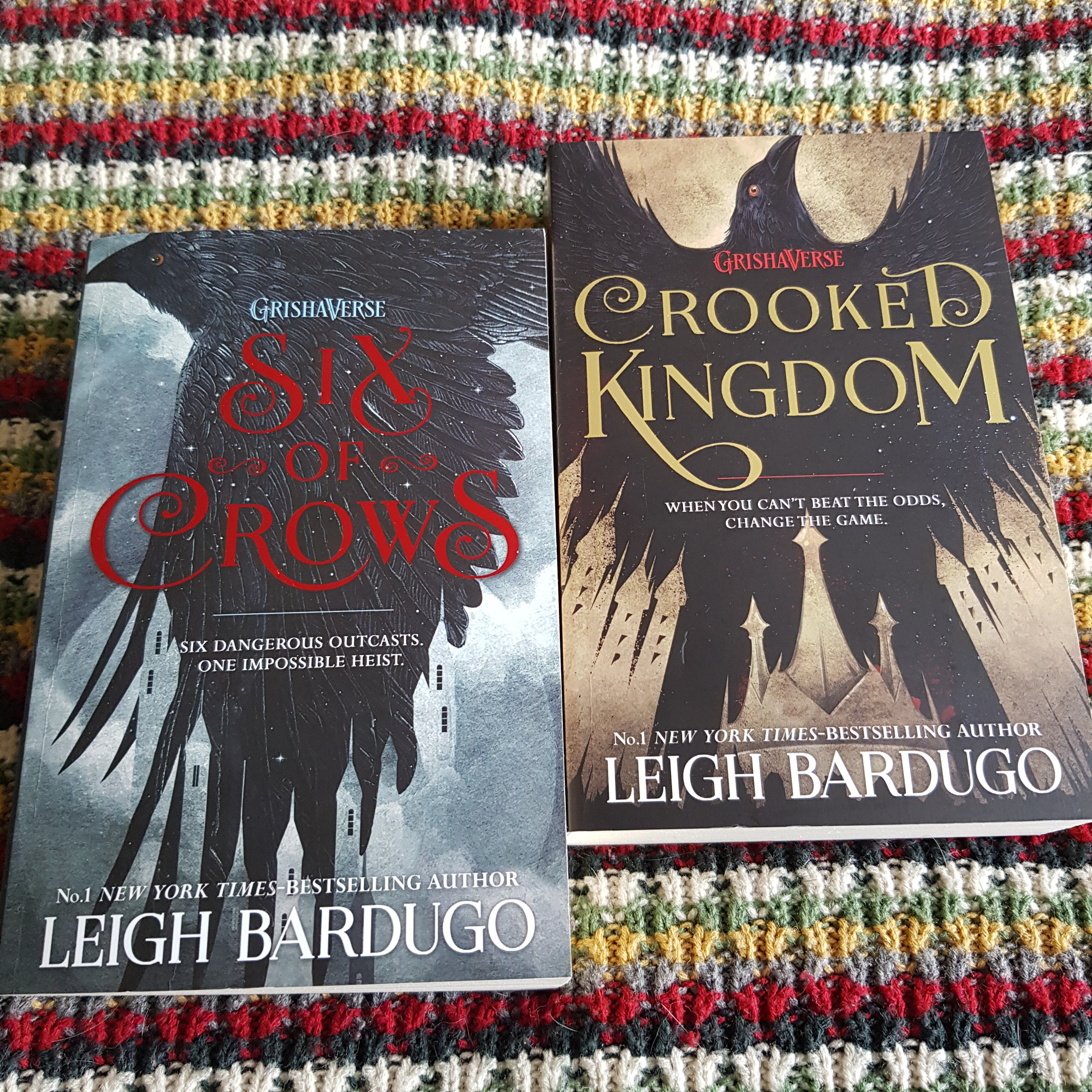
Crooked Kingdom by Leigh Bardugo

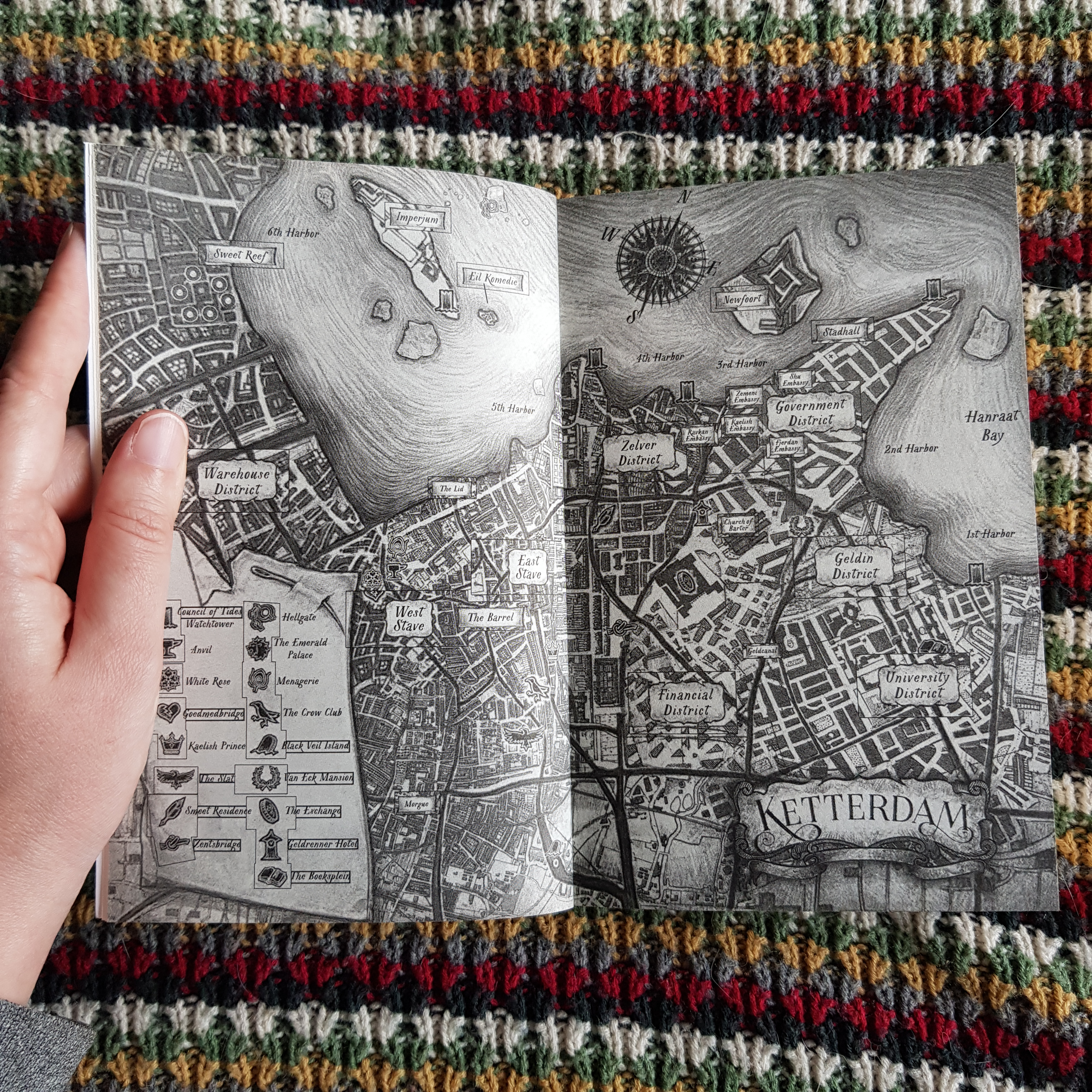
Ketterdam

It feels very much like we’re living in a dystopian novel at the moment, like many others I’ve been staying at home, worrying about family and glued to the news over the last week, yet at times it’s been necessary and calming to retreat from our strange, new reality into fiction.

Crooked Kingdom starts just after the events of Six of Crows (reviewed here); betrayed by the merchant Van Eck who hired them for the seemingly impossible prison break in the first book, the Crows are seeking vengeance while Van Eck attempts to eliminate them.

I have such a soft spot for rogues and underdogs who refuse to give up no matter how impossible it seems, and I loved seeing how this band of misfits fought back when Kaz’s carefully laid plans fell apart. What makes this duology so compulsive is that time after time the Crows are outwitted, ambushed and betrayed, yet somehow they always drag themselves out of it and refuse to give up. Although magic exists in the Grishaverse, I also really appreciated that most of the characters rely on a combination of skill and cunning rather than superpowers.

SoCandCK

The romantic subplots are a little bit neat in that all six of the main characters pair off, though not everyone gets their happily ever after. Kaz and Inej in particular have become some of my favourite characters, and I was fascinated watching them circle each other warily, trying to bridge the distance across their personal traumas.

Crooked Kingdom contains the same blend of humour, action, twists and romance as Six of Crows, but I enjoyed the second book even more than the first. When reality seems stranger than fiction, I’m grateful to have stories as absorbing as this to escape into. Hoping everyone is safe and well. X

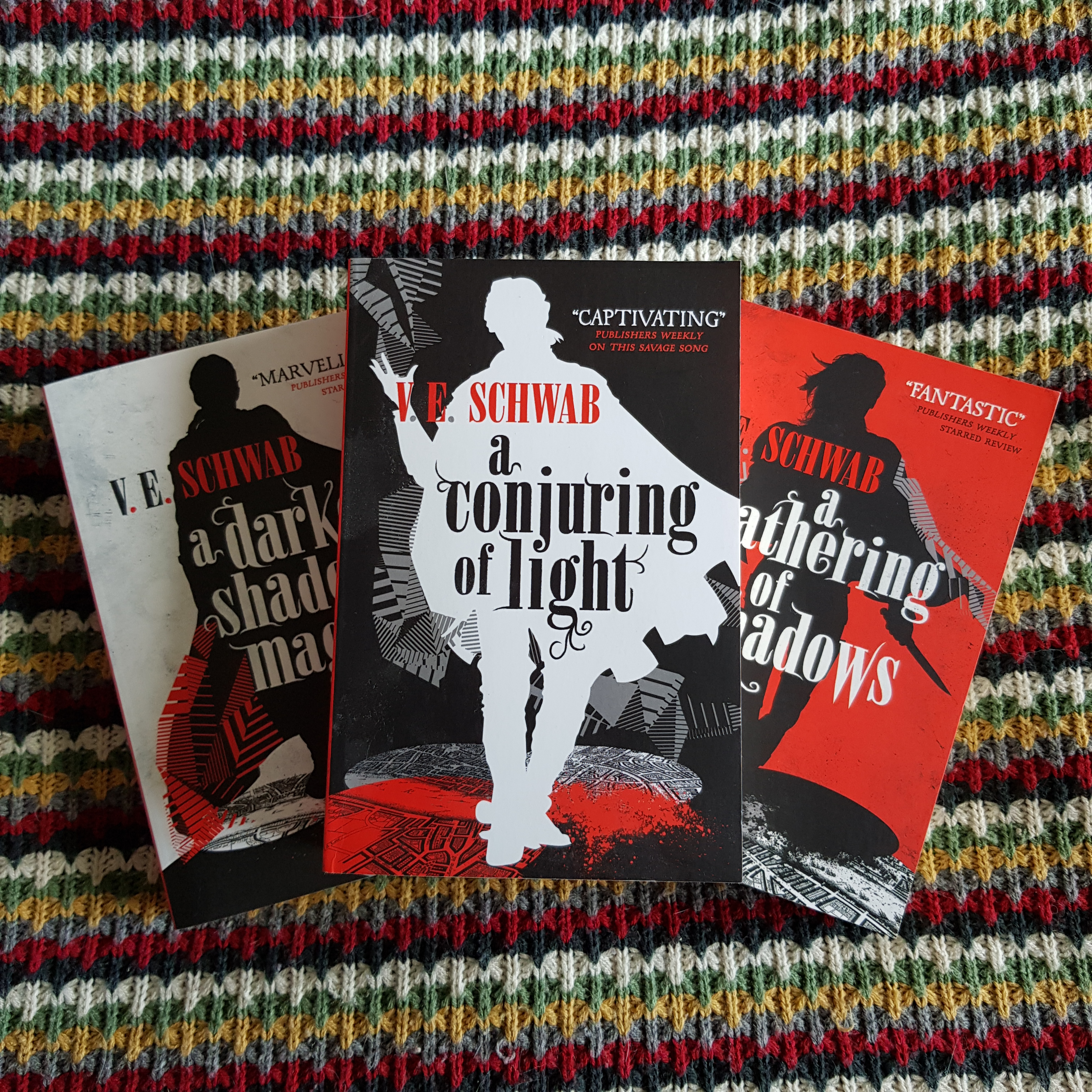
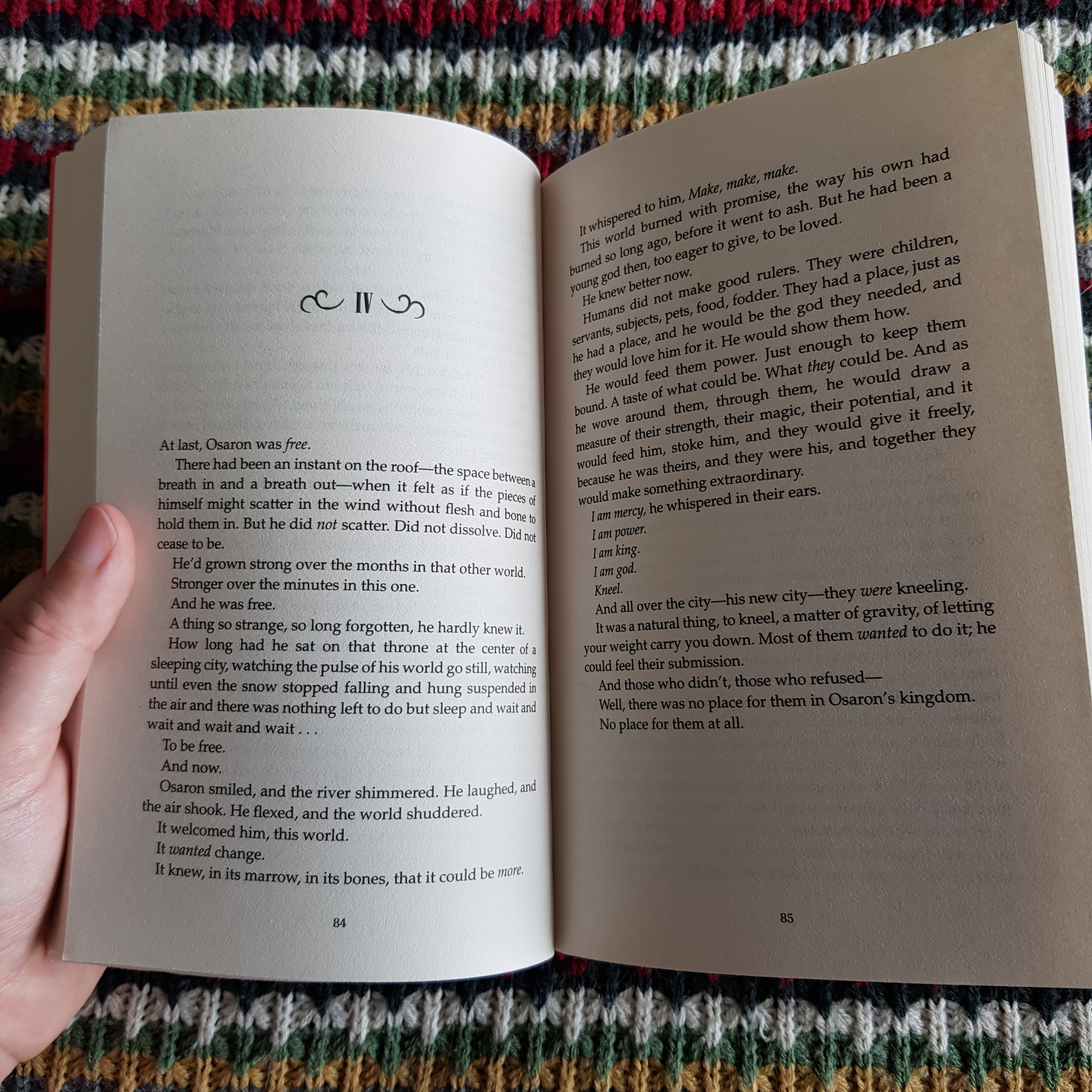
A Conjuring of Light by V.E. Schwab

A Conjuring of Lights

I’d been putting off reading the final part of the Shades of Magic trilogy because I’d fallen in love with the characters and their world so much that I didn’t want the adventure to be over, yet I finally gave in to the competing desire to find out how it all ends.

A Conjuring of Light starts immediately after the end of A Gathering of Shadows (reviewed here). There’s a certain sense of circularity in that the plot of the final book resembles that of the first, A Darker Shade of Magic (reviewed here) as once again magic incarnate spreads like a plague possessing or destroying all who come into contact with it, yet this time the stakes are so much higher. There’s a real sense of desperation as Kell, Lila, Holland, Rhy and Alucard battle to save the besieged city, and they have to set aside their differences and grudges to work together to fight a common enemy.

A Conjuring of Lights2

A Conjuring of Light was full of enough suspense, betrayals, sacrifices, romance and humour to keep me hooked right up to an ending that felt both satisfying and bittersweet. This is one of the best fantasy series I’ve read in a long while, and a trilogy that I’ll happily re-read at some point. Have a lovely week. X

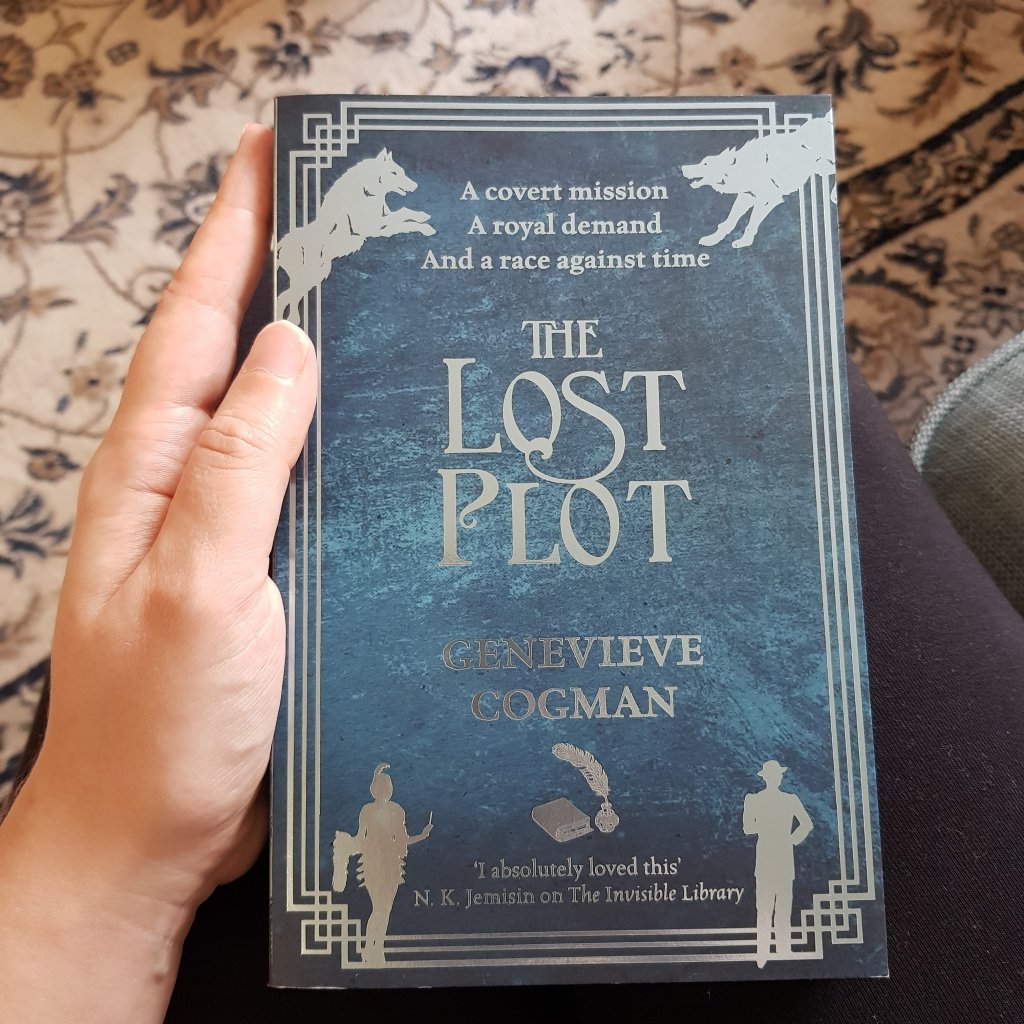
The Lost Plot by Genevieve Cogman

The Lost Plot is the fourth book in the Invisible Library series following the librarian Irene Winters in the battle between the forces of chaos and order.

Shortly after The Lost Plot begins, Irene is approached by a dragon with a request to acquire a specific version of a text, a request that threatens the Library’s neutrality between the dragons and the fae, and Irene finds herself caught between two rival factions of feuding dragons.

One of the aspects I love most about this series are the locations and this one was set in an alternate 1920’s New York complete with speakeasy’s, prohibition and gangs.

The pace of The Lost Plot trots along and there were enough shady deals, betrayals, shoot-outs and librarian duels to keep me hooked until the end. As an added bonus the slow burn romance between Irene and her assistant Kai finally starts to heat up.

I’m generally reluctant to commit to long-running series, but the Invisible Library books are so original, fun and easy to read with such endearing characters that I’m always happy to find out what Irene and her allies are up to. Have a lovely week. X

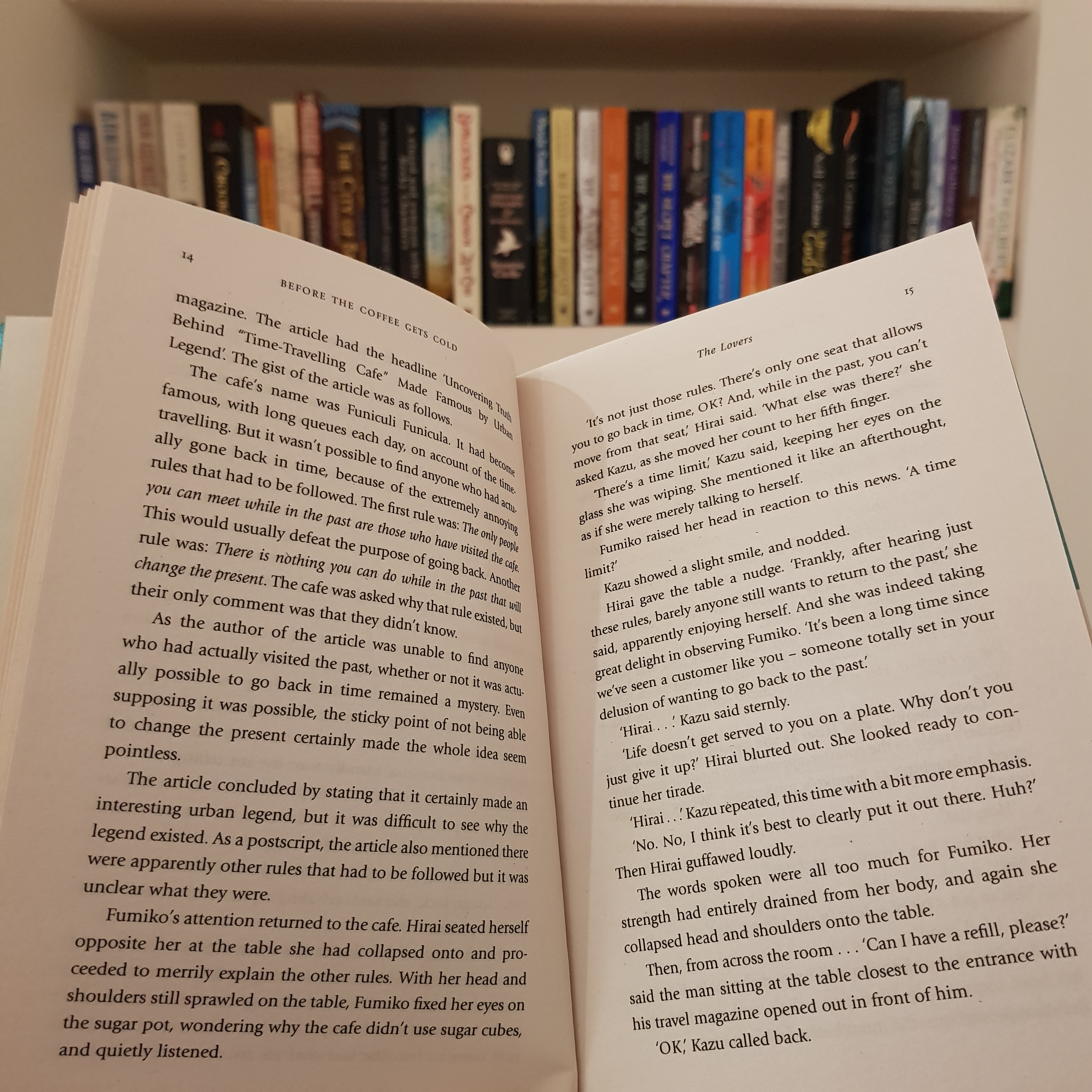
Before the Coffee Gets Cold by Toshikazu Kawaguchi

Before the Coffee Gets Cold

Set in an old-fashioned cafe off the beaten path in Tokyo, Before the Coffee Gets Cold is a quirky, Japanese novel about time travel. In the Funiculi Funicula Cafe, there is a particular chair that allows the person sitting in it the once in a lifetime chance to travel back or forward in time to speak to someone they know who has visited the cafe. There are several rules regarding time-travel, the most important of which is that the traveller must return to the present before their cup of coffee gets cold.

Before the Coffee Gets Cold is split into four parts, each following a different relationship from a broken-hearted woman whose lover moved to the U.S.A., a nurse whose husband has forgotten her due to Alzheimer’s Disease, a grieving sister who ran away from her family to escape her obligations and responsibilities, and a mother and daughter who never had the chance to know each other. There’s also a ghostly woman who haunts the cafe and failed to return to the present in time, but regrettably her story isn’t elaborated on. Visiting the past and future helps the time travelers to make sense of events and find a way forward in the present.

Before the Coffee Gets Cold is a short but thought-provoking and poignant story of regret and hope. Have a lovely week. X

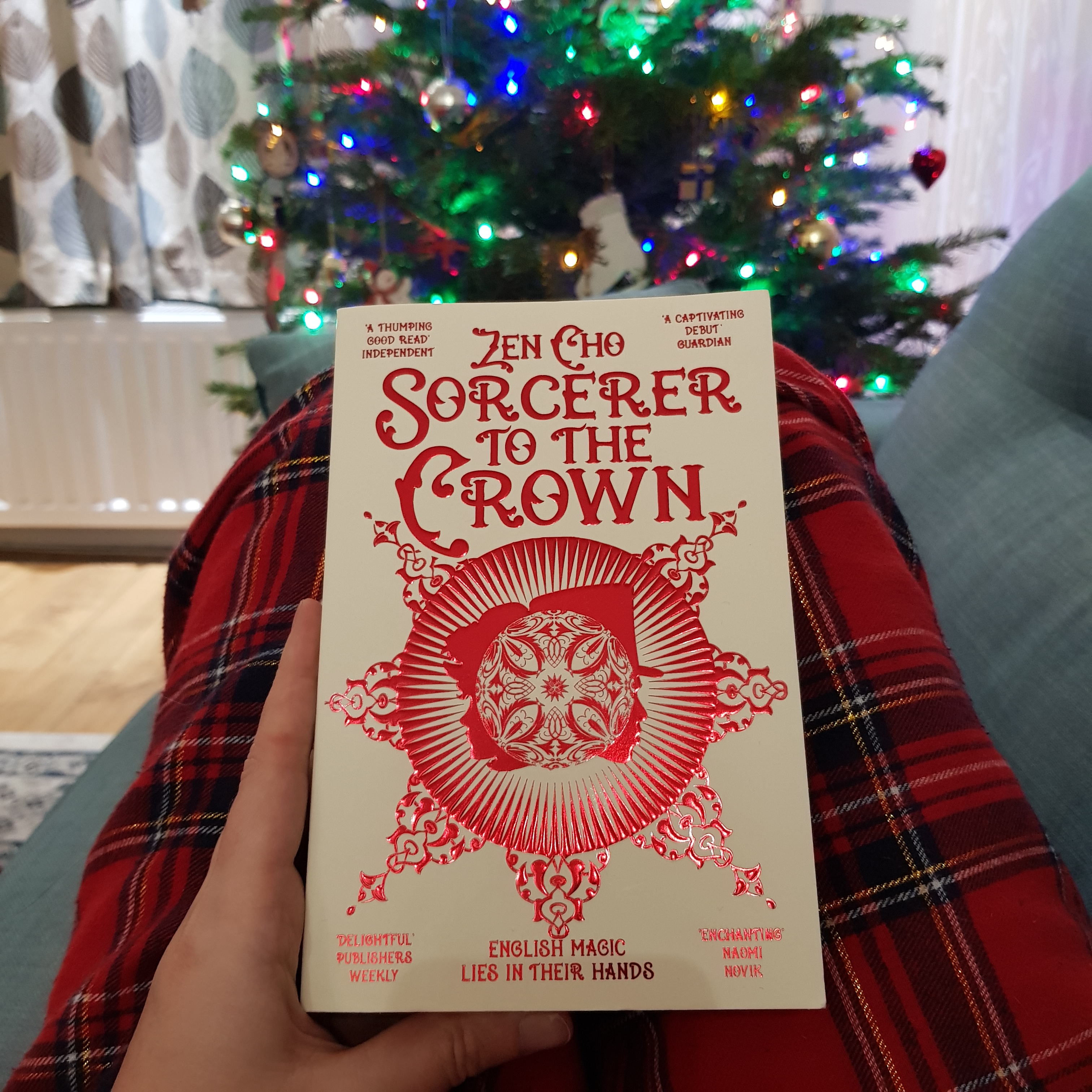
Sorcerer to the Crown by Zen Cho

Sorcerer to the Crown

Sorcerer to the Crown follows Zacharias Wythe, who has recently been appointed Sorcerer Royal after the sudden death of his foster father who previously held the position, and Prunella Gentleman, a mysterious servant girl with great magical potential whom he agrees to take on as his apprentice. Along the way, they become mired in political turmoil and have to fend off several assassination attempts.

Magic is waning in England, but much to the displeasure of the highly stratified English society, magic does not discriminate and is as likely to manifest in the working classes and women as it is well-educated, English gentlemen from the aristocracy. Racism and sexism are at the forefront of this story as Zacharias is a freed African slave, while Prunella is mixed-race.

It took me a while to get into this as there’s a lot of exposition, it’s written in the style of Regency-era novels, and the plot didn’t really get going until about halfway through. This had some interesting ideas, likable characters and good dose of humour but it wasn’t what I expected and overall I found it disappointing.

Have a lovely week. X

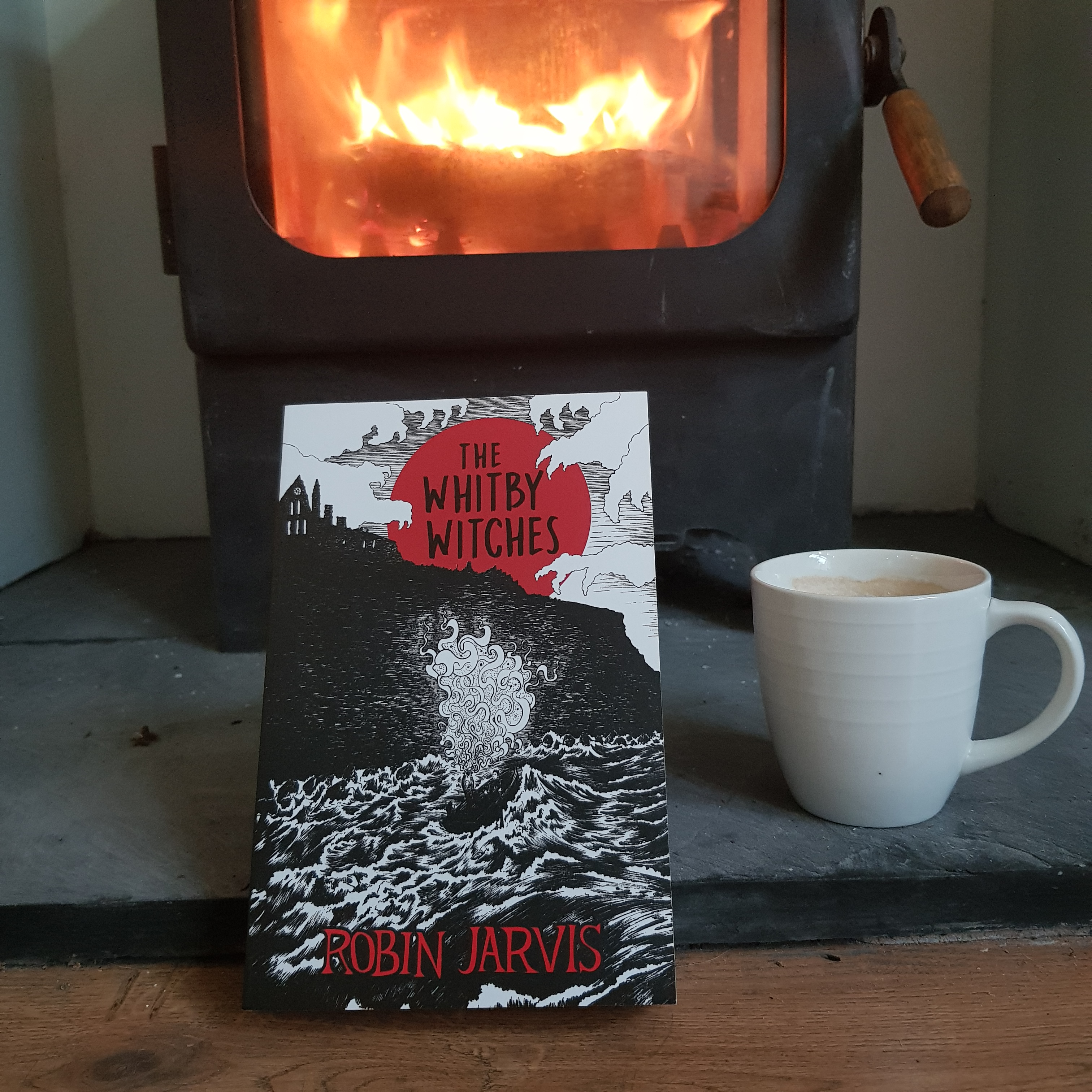
The Whitby Witches by Robin Jarvis

The Whitby Witches

Jennet and Ben are orphaned siblings who have been shunted from one foster home to another since their parents died because of Ben’s ability to see ghosts, until they’re taken in by an eccentric, old lady, Alice Boston, who lives in the Yorkshire town of Whitby. Not long after the children arrive, the mysterious Rowena Cooper moves into a dilapidated old house nearby and strange, sinister events start to occur.

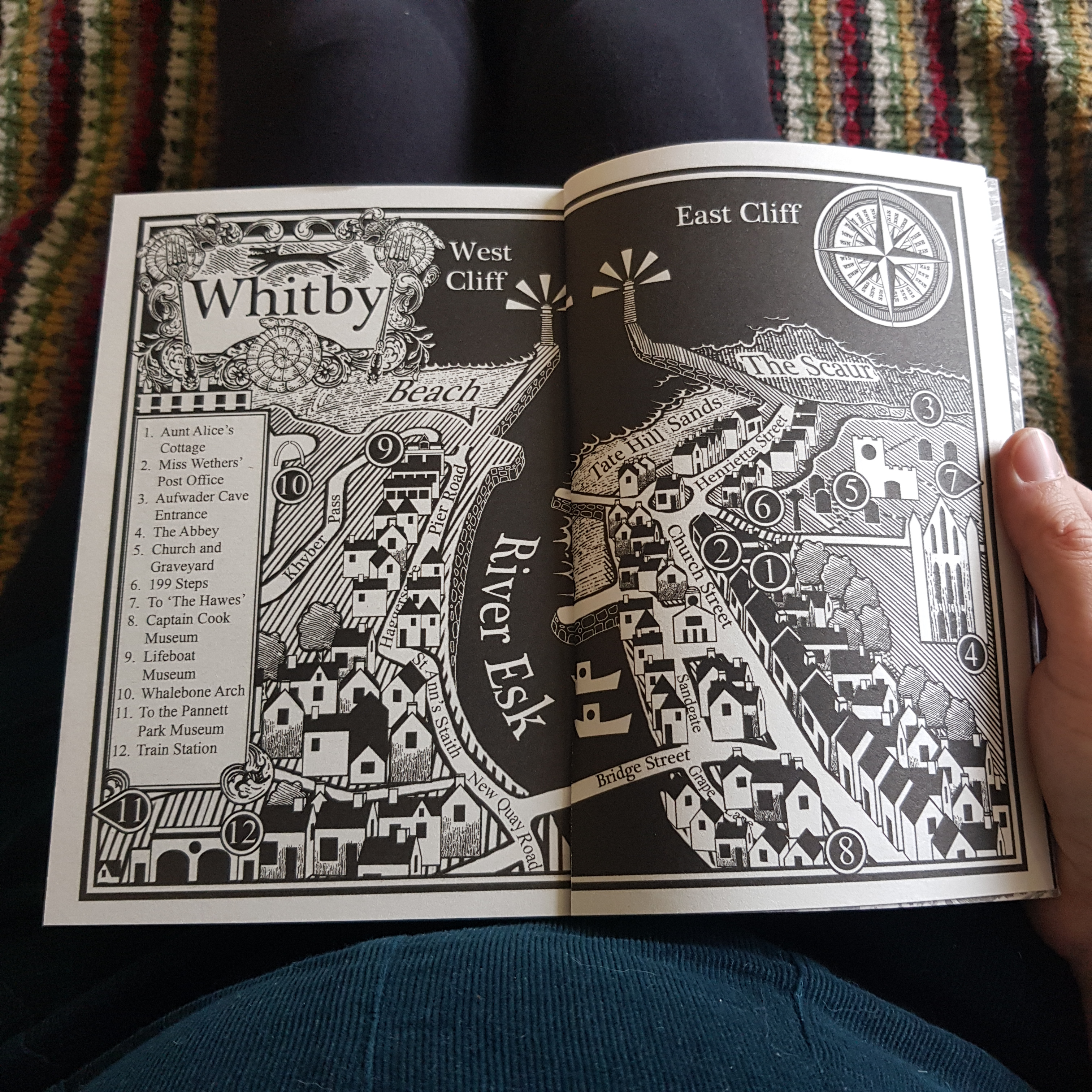
Whitby is a wonderful setting with descriptions of the ruined abbey overlooking the town and the infamous 199 steps featuring prominently in the story, and I really appreciated how well Robin Jarvis foreshadowed events and cleverly interspersed local history and folklore from the Barguest from Bram Stoker’s Dracula and St Hilda to the collapse of the central tower of the abbey in 1830 into the story.

The Whitby Witches2

The Whitby Witches is full of supernatural elements from witches and ghosts to demonic hounds and other fantastic creatures, and this was a lot more thrilling, atmospheric and scary than I expected a children’s book to be – it managed to give me goosebumps and it’s a perfect tale for a dark and stormy night. My only criticism is that the story never fully explained who Rowena Cooper (or her husband) was or where she came from.

The story works well as a standalone but The Whitby Witches is actually the first in a trilogy following Miss Boston, Jennet and Ben, though only the first book seems to have been re-issued so I’ll have to track down second hand copies of the sequels because I enjoyed this so much. Have a lovely week. X

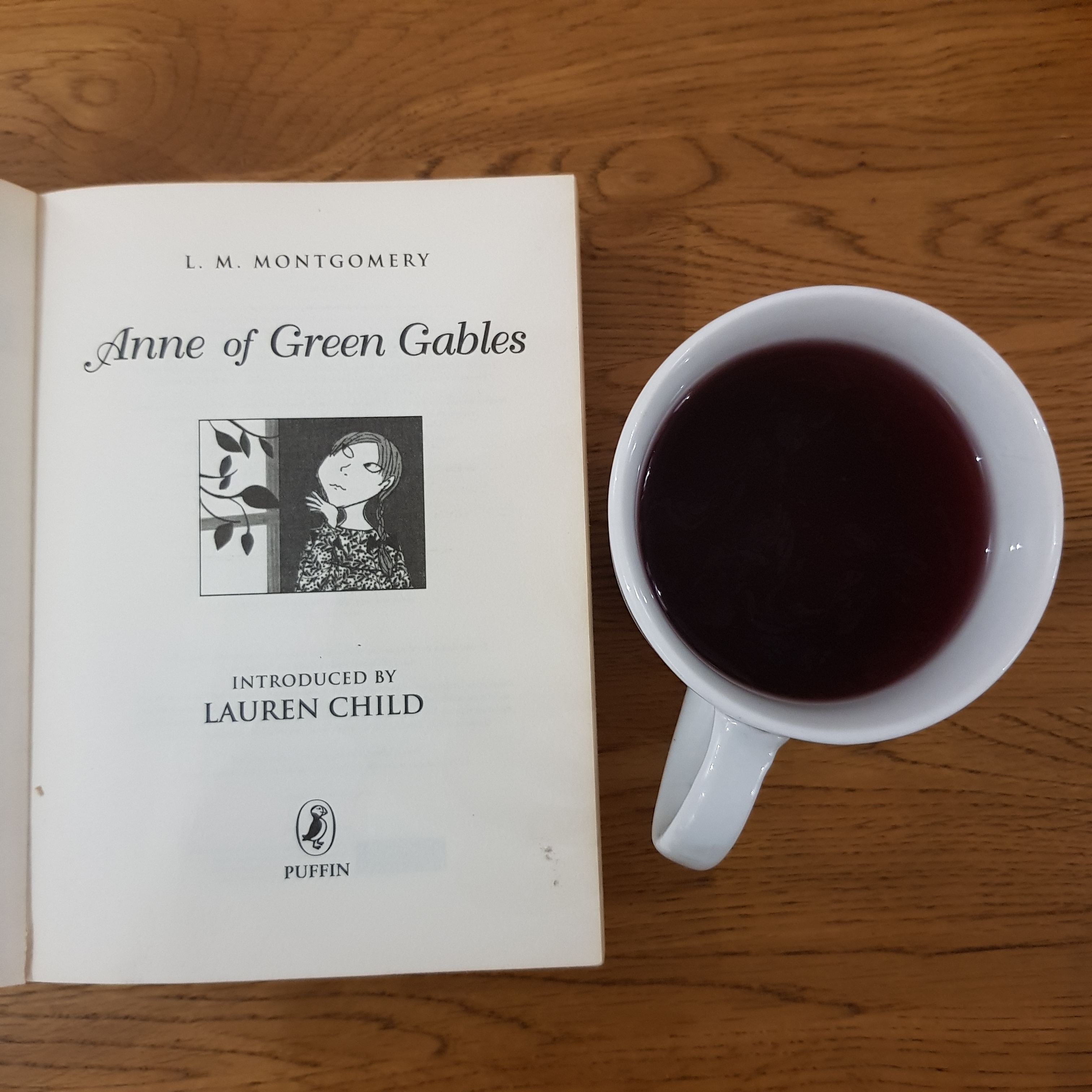
Anne of Green Gables by L.M. Montgomery

It’s always slightly intimidating to review a well-known and well-loved story but Anne of Green Gables is one of those books I’ve been meaning to read for ages, having somehow skipped over it as a child, and I recently borrowed a copy from the library.

Anne of Green Gables

Anne of Green Gables is the story of a young orphan who goes to live on a farm with the aging siblings, Matthew and Marilla Cuthbert, after a mix-up at the orphanage. Written as a series of chronological vignettes, the story follows Anne settling into life at Green Gables, through her school days, all her adventures, hijinks and (many, many) mishaps, making friends and finding “kindred spirits” along the way.

Anne is imaginative, absent-minded, fiery-tempered, relentlessly optimistic and prone to fits of melodrama, but it’s hard not to feel sympathy for her when her background of loneliness and domestic drudgery is revealed, with only her daydreams to keep her company until she moved to Green Gables. One aspect of Anne’s character that resonated with me was her reverence for nature, and how she always noticed the beauty of the changing seasons that so many of us take for granted. I also have a soft-spot for sensible, dry-humoured, calm and collected Marilla, and I loved the exchanges between Anne and Marilla, who seem like such opposites most of the time but are fiercely devoted to each other.

Anne of Green Gables2

This is such a gentle, comfort-read and reminded me of other childhood favourites like Heidi, The Secret Garden and Little Women that transport the reader to simpler times and capture all the trials, tribulations and triumphs of childhood and growing up. Have a lovely week. X

The City of Brass by S.A. Chakraborty

CityofBrass

The story begins in Cairo where a young woman called Nahri is working as a thief and con-artist, though she dreams of becoming a physician. During a ceremony to exorcise a demon possessing a young girl, she accidentally summons a warrior Djinn (or rather a Daeva) called Dara, and is pulled into a world of flying carpets, mythical beasts and simmering tensions between the different races of Ifrit, Djinn, Daeva and half-human Shafit. One of the things I loved most about The City of Brass was that it drew from Arabian folklore and mythology which was such a refreshing contrast to the countless medieval European inspired fantasy stories that dominate the genre.

The narrative switches between two perspectives, Nahri, and Ali, a Djinn Prince in the city of Daevabad. The three main characters, Nahri, Dara and Ali are all flawed and victims of circumstance in their own way: Independent and used to fending for herself, Nahri finds herself caught between feuding factions all plotting her future with little consideration for what she wants; Dara was enslaved by the Ifrit to serve human masters and is weighed down by the guilt and shame of all the lives he’s taken and the things he did while enthralled; while Ali – as the second son of King Ghassan – has been trained as a warrior, when he longs to become a scholar and end the injustice and hypocrisy he witnesses.

CityofBrass2

The City of Brass is probably the best book I’ve read this year, though it’s not perfect as there are some pacing issues and a few slightly predictable twists, but I was still captivated by this tense, political and character-driven drama as Nahri and Ali discover just how ruthless King Ghassan is and how far he has gone to hold on to his throne and maintain order in the city of Daevabad. This is the first book in The Daevabad Trilogy and I’m looking forward to finding what happens next. Have a lovely week. X