February reading wrap

Life lately has been hectic but still very much enjoying escaping into a book at the end of a busy day.
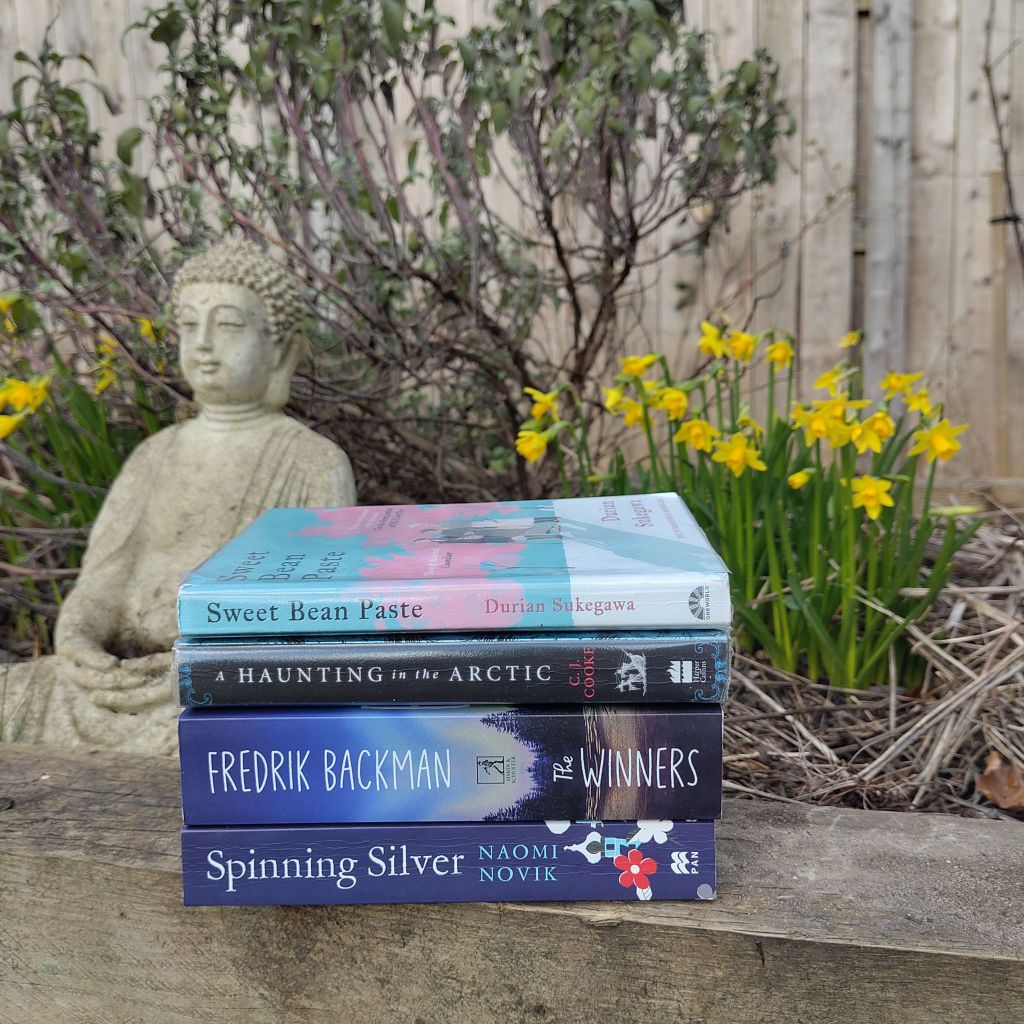
Spinning Silver by Naomi Novik

I started reading this back in December 2023 and finally finished it in February 2025. I adored the Scholomance trilogy but I’ve been underwhelmed by Naomi Novik’s other works, and came very close to giving up on this because it was so slow paced and the story is narrated by too many characters. Spinning Silver is an intriguing story about a Jewish money lender who can turn silver to gold and a Duke’s plain daughter, a winter king and a fire demon, peasants and a Tsar, and how we are all pawns in someone else’s games.

The Winners by Fredrik Backman

The final part of the Beartown trilogy really brings the story full circle with a parallel to another family from the same town dealing with a similar tragedy to the first book. This had a slow start, and is full of parallels, but I loved catching up with characters from the first two books and getting to know some new characters too. As ever small town politics, family relationships and community are at the centre of this story about ice hockey. This is such a bittersweet ending to the trilogy (an ending foreshadowed right from the start of Beartown) with a little bit of romance, conflict and rivalry, grief, bravery and heroism.

A Haunting in the Arctic by C. J. Cooke

An eerie and atmospheric story that follows the daughter of a whaling ship owner travelling through the Arctic in 1901 and an explorer who visits the shipwreck beached in Iceland in 2023. There’s a twist at the end, but the ending itself seemed rushed and anti-climatic as having been pitched as a tale of trauma and revenge, it switches to one of healing, which while worthy felt a bit dissatisfying. Nevertheless, this was gripping, atmospheric and haunting.
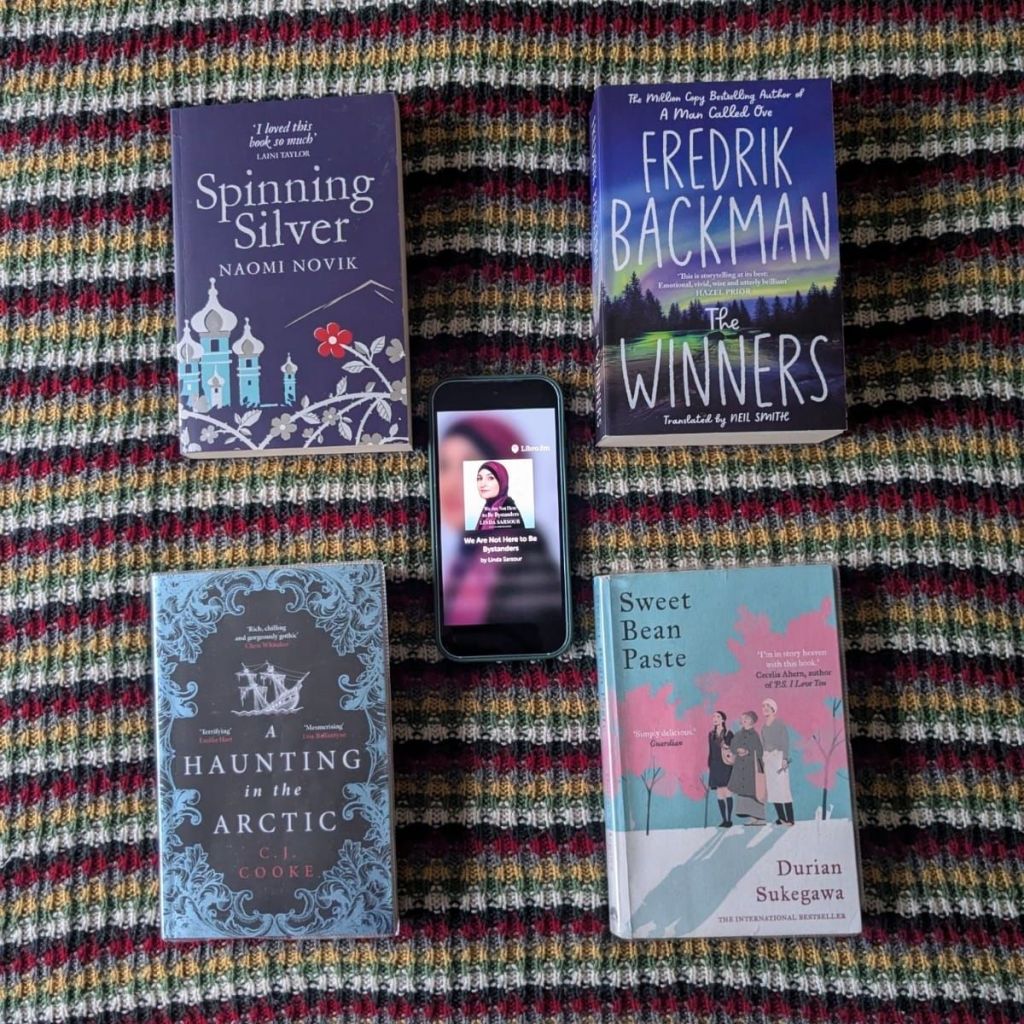
We Are Not Here to be Bystanders by Linda Larsour

A thoroughly engaging memoir of a Muslim Palestinian-American Community organiser. This describes the formative personal experiences and socio-political context that shaped Linda Larsour from growing up in multicultural Brooklyn and spending summers visiting her family in the West Bank, to being Muslim in America after 9/11, racial profiling of Arab, black and Latinx men, and police brutality. A fascinating insight into the immigrant/ethnic minority experience in the USA, including accessing heath care and education, motherhood, racism, and building community. This was on par with Michelle Obama’s Becoming, and as someone feeling a bit burned out after a decade in social care, I really appreciated the reminder about how much can be achieved at a local level, and how to build resilience and community.

Sweet Bean Paste by Durian Sukegawa

A short but poignant Japanese story of a pancake chef trying to pay off a debt who meets an old woman who makes the best sweet bean paste filling he’s ever tasted. This is a story about the intrinsic value of life, and about second chances, lost chances and last chances.

Have a lovely week. X
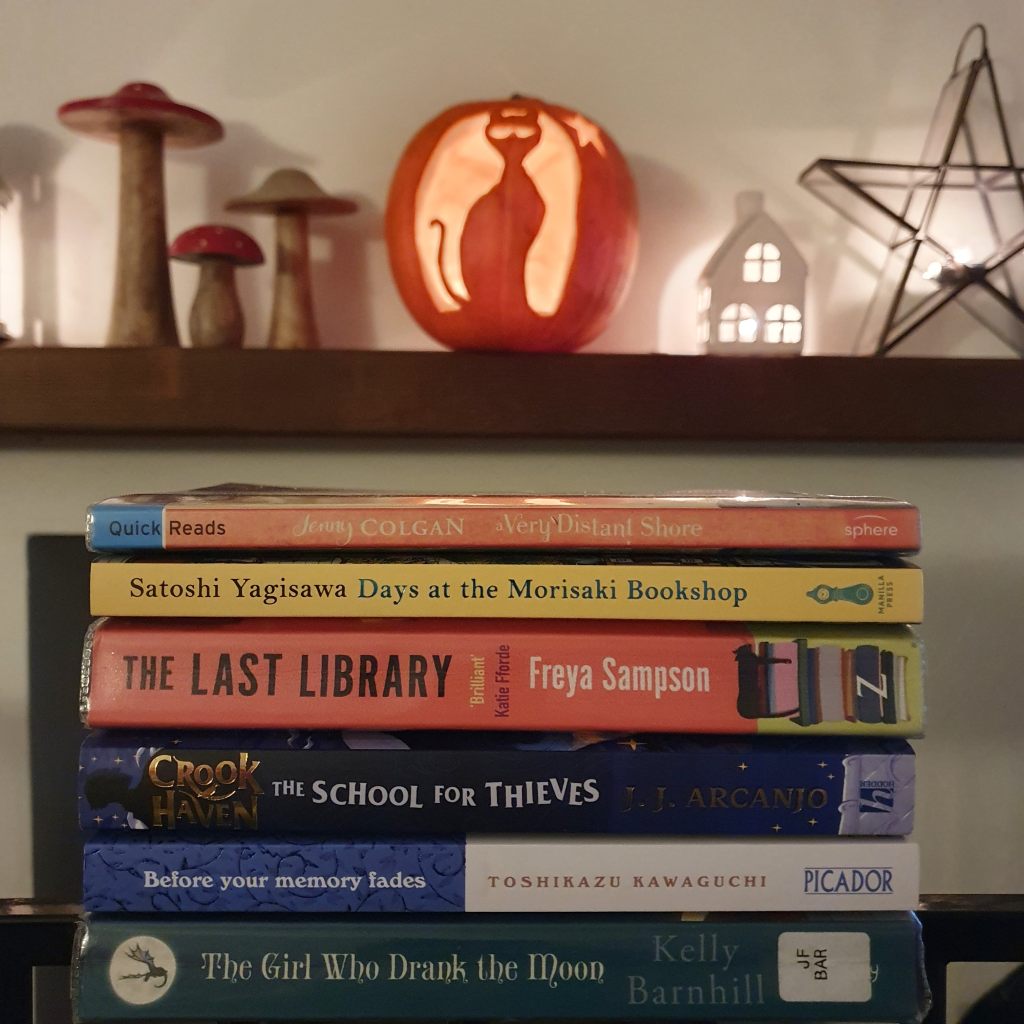
October Reading Wrapup

I read a real mix last month with two children’s books, two Japanese novellas and two contemporary women’s fiction.

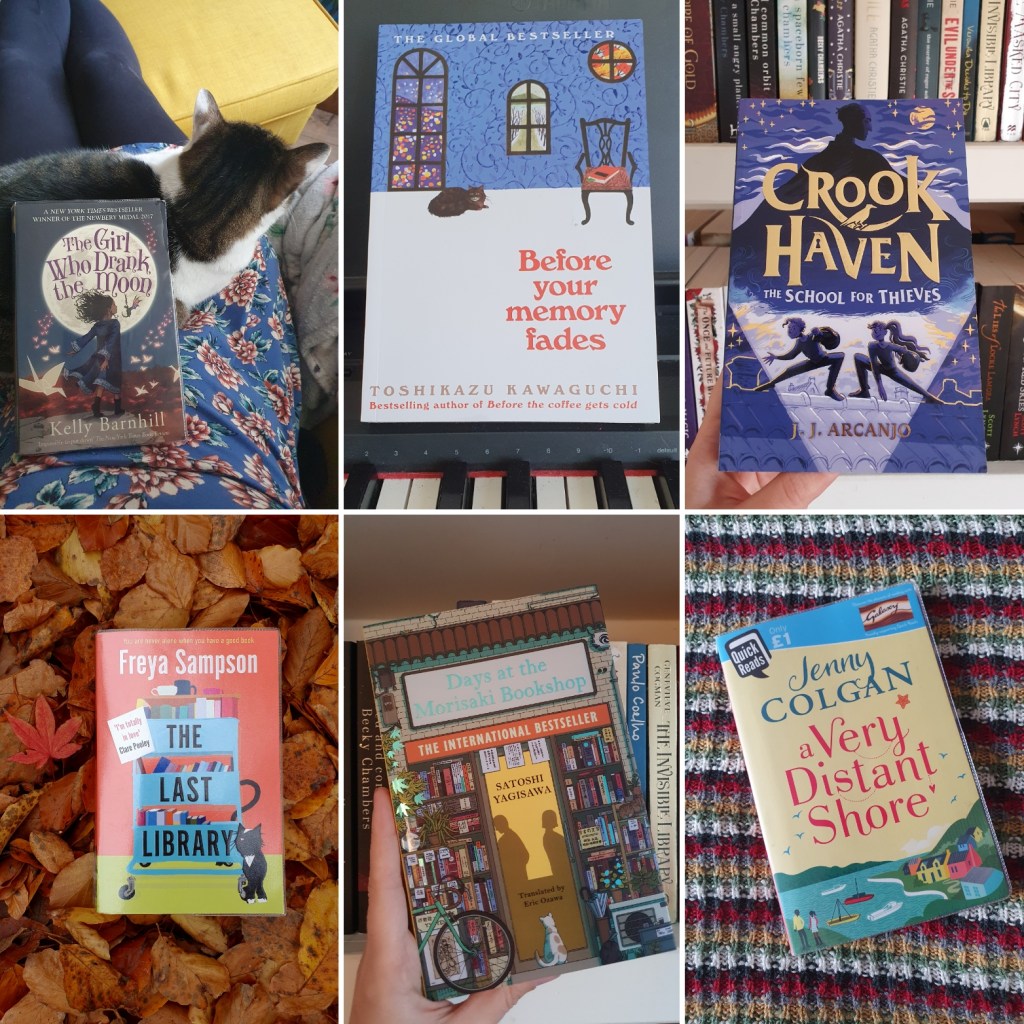
The Girl Who Drank the Moon by Kelly Barnhill

This is the story of a town that sacrifices the youngest baby every year to a witch that lives in a forest, and the witch accidentally feeds one of the baby’s moonlight which gives her magical powers. The Girl Who Drank the Moon is a story about sorrow and grief, and of how we can close off and harden our hearts to protect ourselves from heartache, or we can open them because love expands and can heal all our hurts. I found the back story told in bits a bit hard to piece together, but this is a gentle fairytale that gave me a warm fuzzy feeling, though I didn’t love it quite as much as The Ogress And The Orphans.

Before Your Memory Fades by Toshikazu Kawaguchi

This is the third book in this series, and this one changes locations from a cafe in Tokyo to the coastal city of Hakodate, but this cafe also has a particular seat that allows the customer to return to a moment in the past (or future) to meet someone who has also visited the cafe for the time it takes a cup of coffee to cool. These books are interesting explorations of grief and learning to live with the past it, and I really appreciated the new location with its descriptions of view of the marina and the hustle and bustle of the cafe, but it did require a bit of suspension of belief about how easy it is to become a comedian in Japan and how many young women die suddenly from obscure illnesses.

Crookhaven: School for Thieves by J. J. Arcanjo

This was an impulse purchase, but one that turned out to be a hit. Crookhaven: School for Thieves follows an orphan called Gabe who lives with his gran and happens to be a talented pickpocket. Gabe is eventually invited to Crookhaven, a boarding school that trains the students in the art of forgery, lock picking, pick pocketing, parkour, hacking and other skills they’ll need to know become the next generation of Robin Hoods. Along the way, Gabe starts to search for the parents that abandoned him and disappeared without a trace. This was a very refreshing take on a boarding school story full of friendship, found family, adventure and mystery that I thoroughly enjoyed and I can’t wait to read the next one.

The Last Library by Freya Sampson

I don’t read a lot of contemporary fiction, but I found this completely captivating and heartwarming. This is the story of June Jones, a socially awkward and reclusive library assistant, who has been lost in her grief for ten years after her mother died. When the council threatens to close the library where she works, she finds herself pulled into the protests and campaign to save it, finding friends, community and romance along the way. I was absolutely rooting for June from the start, a really lovely story about grief, friendship, community and libraries.

Days at the Morisaki Bookshop by Satoshi Yagisawa

I was a little underwhelmed by the second Japanese novella I read last month. Days at the Morisaki Bookshop follows a broken hearted woman who quits her job after finding out her boyfriend is engaged to someone else, and goes to live with her uncle who runs a secondhand bookshop. The book is split into two parts, the first is about the narrator learning to love to read, while the second part is more of a slice of life as she gets to know her aunt better and finds a new love interest. I felt like this book couldn’t decide what it wanted to be and was too short to really try to follow two different story lines.

A Very Distant Shore by Jenny Colgan

This was another impulse pick from the library. I don’t read a lot of contemporary fiction but I’ve been craving heartwarming stories to counter the increasingly bleak news reports. A Very Distant Shore follows a woman caring for her father who lives on the distant island of Mure that is struggling to recruit a new GP and a Syrian refugee who is offered a fresh start on the island. This is a short book but I felt it handled the issues of asylum seekers sensitively, and while the details are deliberately vague it doesn’t gloss over his trauma. I really enjoyed this short, poignant story and I’ll definitely be reading more by Jenny Colgan.

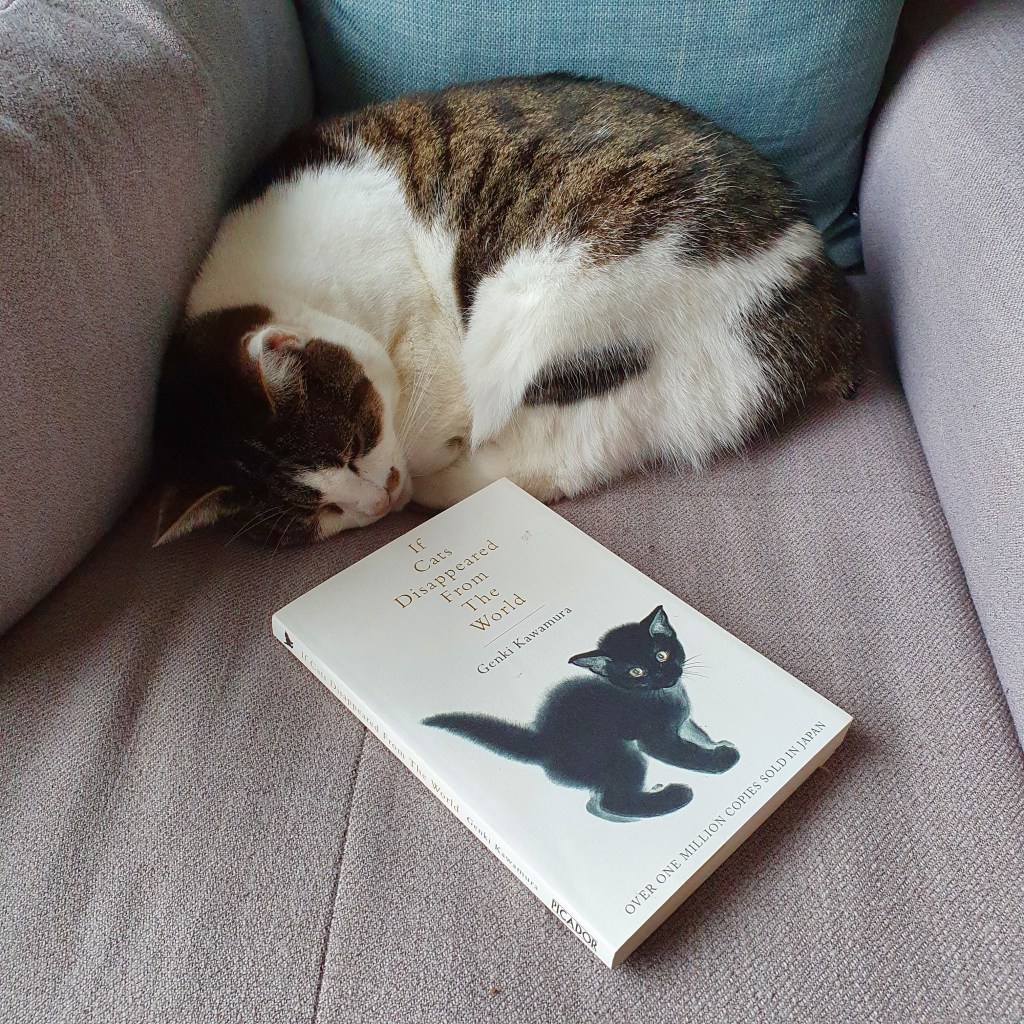
If Cats Disappeared from the World by Genki Kawamura

This had been sitting on my shelf for a while, and I started reading it when I wanted a comfort read while my own cat Mara was unwell (though thankfully she has recovered).

When the 30 year old narrator finds out he has a terminal illness and only days to live, he receives a visit from the devil who offers to trade one extra day of life for everything the narrator is willing to live without. It seems like an easy trade but the story considers what life would be like without mobile phones, films and cats to name just a few things the devil makes disappear in order to extend the narrator’s life – though apparently even the devil draws the line at a world without chocolate. Every time the devil removes something from the world, the narrator is left considering the impact it had on his life and how much we take for granted everyday.

If Cats Disappeared From the World is a short, strange but poignant and thought-provoking story about love, grief, family, regrets, dying and cats. Unfortunately I found it hard to connect with the narrator, and I preferred The Travelling Cat Chronicles (reviewed here), which covers similar themes, though this is still worth reading. Take Care, and have a lovely week. X

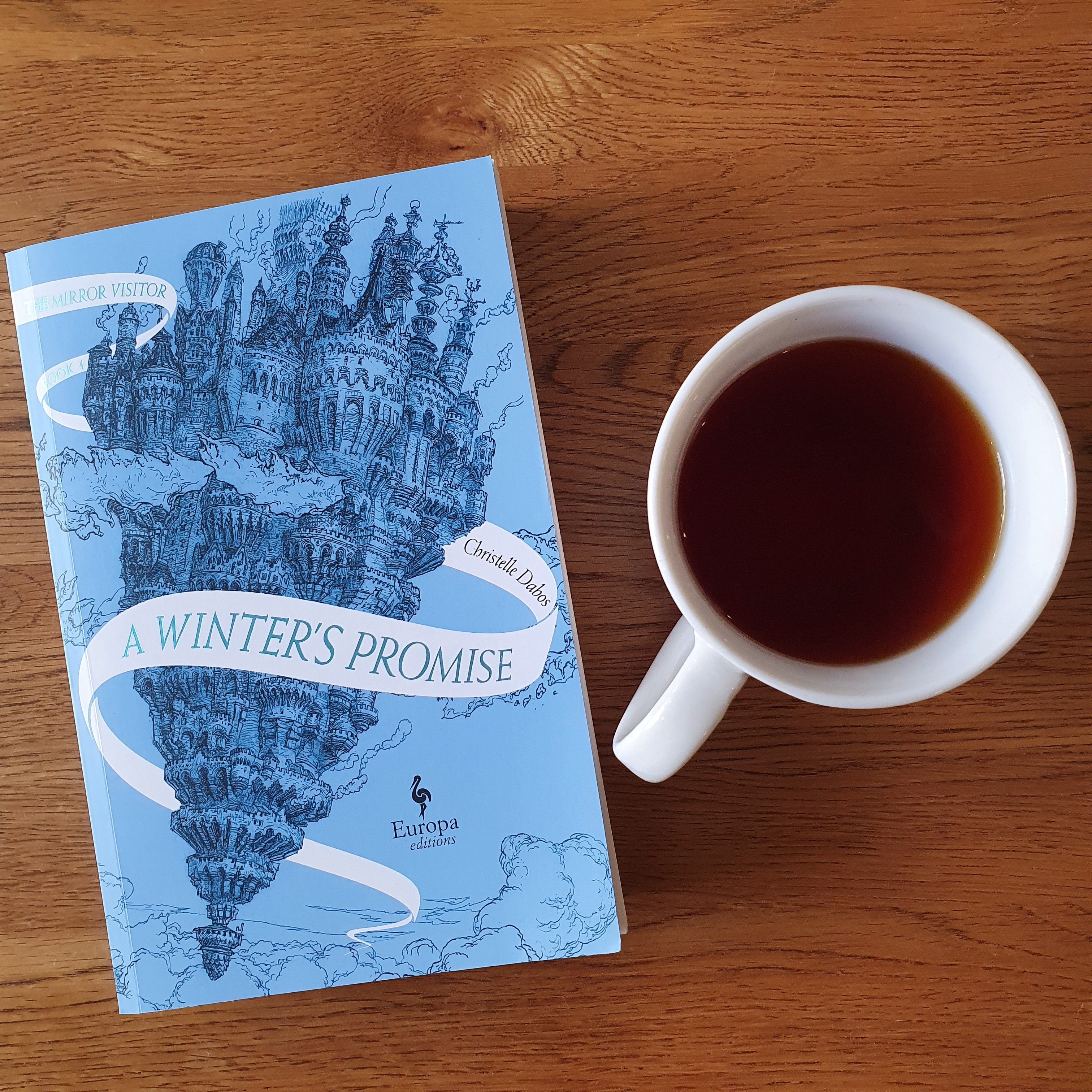
A Winter’s Promise by Christelle Dabos

AWintersPromise

A Winter’s Promise is the first in ‘The Mirror Visitor Quartet’ and follows Ophelia, a member of the Animist clan who is betrothed against her wishes to Thorn, a stranger from another clan on a different Arc (one of the floating islands featured on the cover). No sooner does Ophelia arrive on Thorn’s Arc than she finds herself caught in the midst of political intrigues between feuding clans, with her future in-laws proving to be every bit as devious and vicious as their enemies.

Ophelia has the unusual abilities of being able to read the history of an object by touching it and to travel through mirrors. Despite her abilities, Ophelia is such an unlikely heroine, a mumbling, clumsy and socially awkward slip of a girl, but she proves to be brave, determined, resourceful and honest, and I’m looking forward to seeing how she develops through the series.

TheMirrorVisitor

This was originally written in French, and the translation is generally very smooth with a few exceptions where the author used terms like trompe l’oeil that don’t have a clear translation and remain in French, which felt slightly jarring.

A Winter’s Promise is such a strange and whimsical story that it’s hard to describe; it’s not typical fantasy, there aren’t any great battles or epic quests, yet the plot trots along and there were enough twists to keep me hooked until the end. This quirky story is populated with such eccentric and scheming characters that it reminded me of a cross between Jane Austen and Gormenghast. I wasn’t really sure what to expect, but I thoroughly enjoyed A Winter’s Promise and I’m very much looking forward to seeing what happens next. Have a lovely week. X

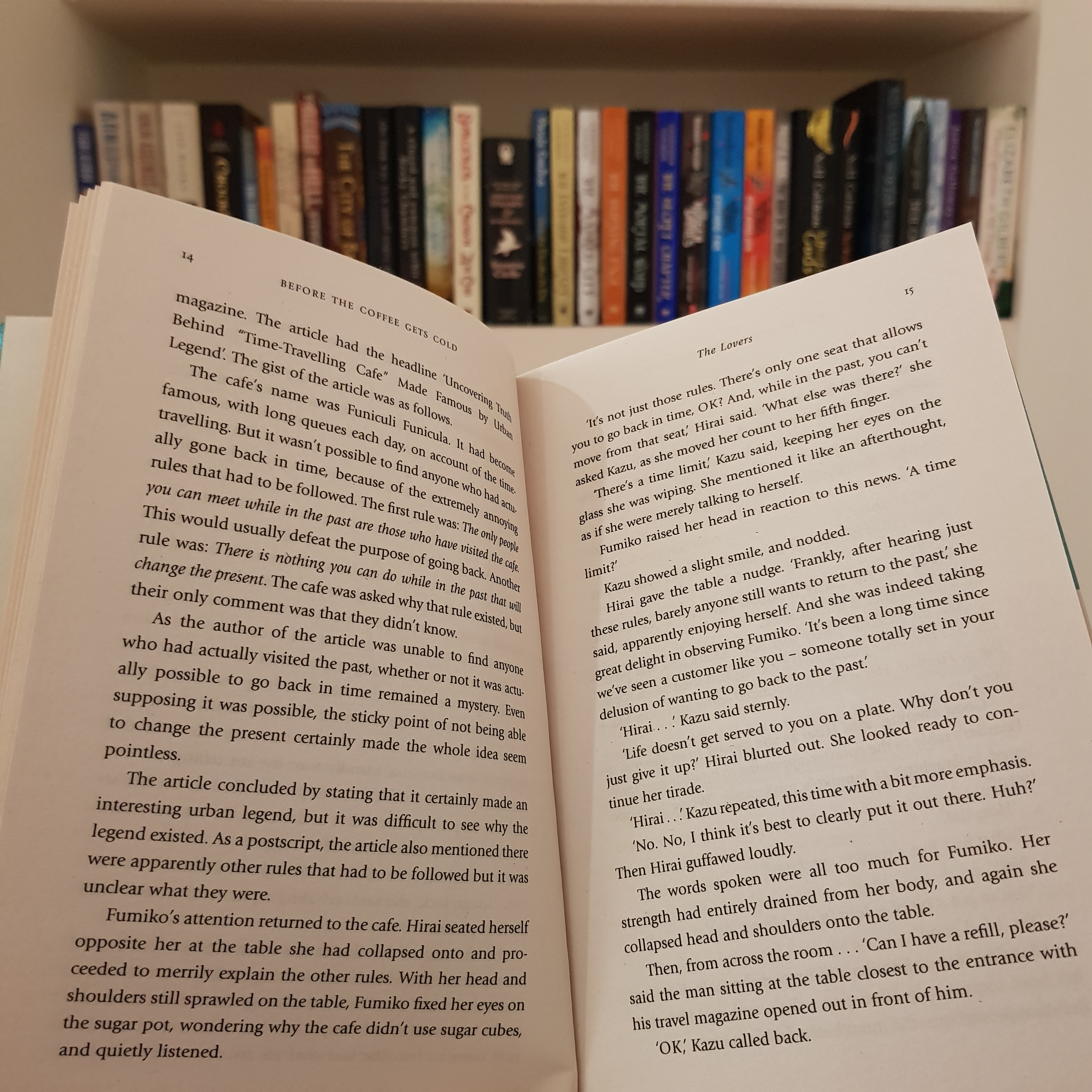
Before the Coffee Gets Cold by Toshikazu Kawaguchi

Before the Coffee Gets Cold

Set in an old-fashioned cafe off the beaten path in Tokyo, Before the Coffee Gets Cold is a quirky, Japanese novel about time travel. In the Funiculi Funicula Cafe, there is a particular chair that allows the person sitting in it the once in a lifetime chance to travel back or forward in time to speak to someone they know who has visited the cafe. There are several rules regarding time-travel, the most important of which is that the traveller must return to the present before their cup of coffee gets cold.

Before the Coffee Gets Cold is split into four parts, each following a different relationship from a broken-hearted woman whose lover moved to the U.S.A., a nurse whose husband has forgotten her due to Alzheimer’s Disease, a grieving sister who ran away from her family to escape her obligations and responsibilities, and a mother and daughter who never had the chance to know each other. There’s also a ghostly woman who haunts the cafe and failed to return to the present in time, but regrettably her story isn’t elaborated on. Visiting the past and future helps the time travelers to make sense of events and find a way forward in the present.

Before the Coffee Gets Cold is a short but thought-provoking and poignant story of regret and hope. Have a lovely week. X

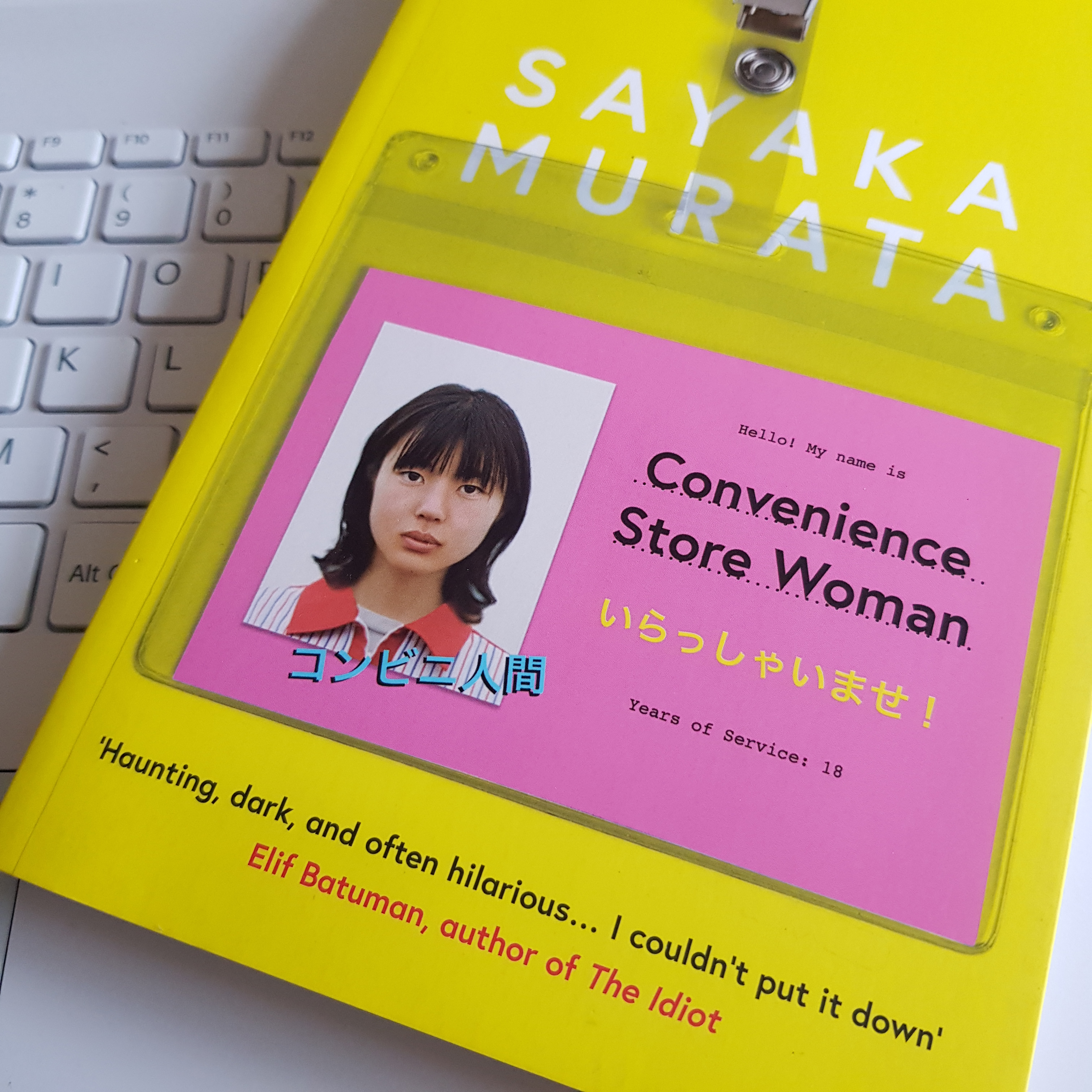
Convenience Store Woman by Sayaka Murata

Convenience Store Woman

Convenience Store Woman is narrated by Keiko Furukara and right from the start it’s clear that she’s a little bit odd and doesn’t fit in, but Keiko is frequently as baffled by other people as they are by her. At times Keiko is hard to relate to as she questions her humanity and there are moments when her lack of empathy and violent impulses add a sinister edge to the story.

As a university student Keiko takes a part-time job in a convenience store, where she finds a reassuring sense of routine, predictability and purpose, and she finally starts to feel like an ordinary, productive member of society. Eighteen years later, at the age of 36, Keiko is single, childless and still working part-time at the convenience store, and feeling pressure to conform as she realises that concerned family members and peers view her with a combination of curiosity and pity because they can’t imagine how she could be content when she’s deviated from the path of career, marriage and children that everyone else followed.

Convenience Store Woman2

Then, into Keiko’s orderly and predictable workplace, comes a new employee, Shiraha, a mid-30s slacker with a victim mentality who looks down on both the work and the other workers, but who is on the hunt for a marriage partner to support him. Shiraha is an interesting foil for Keiko, and he becomes the catalyst that pushes Keiko to choose between pretending to be normal and conforming to social expectations, or accepting herself for who she is and doing what makes her happy.

Convenience Store Woman is a short book and easy to read, but also a thought-provoking and powerful exploration of self-acceptance, conformity and societal pressure. Have a lovely week! X

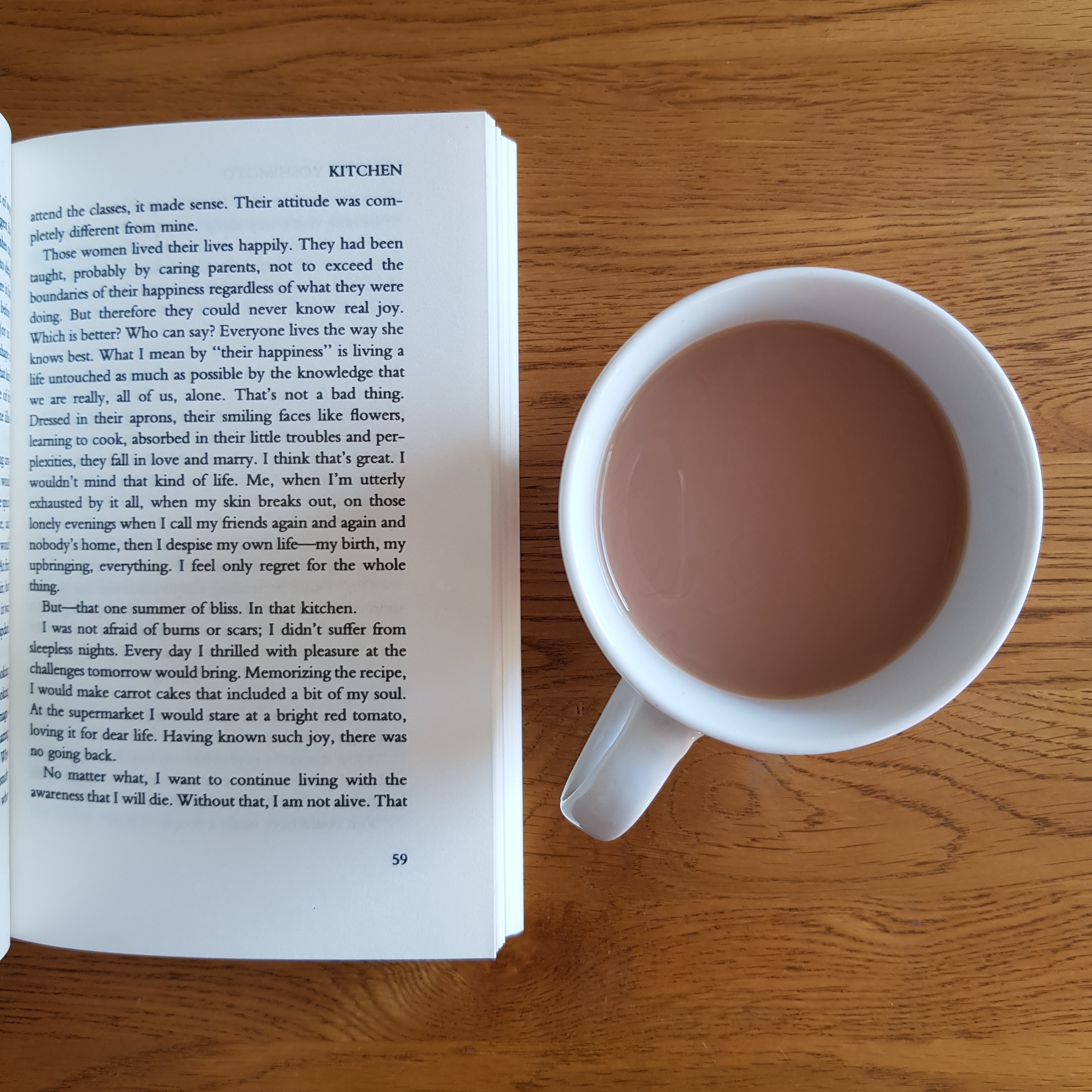
Kitchen by Banana Yoshimoto

Kitchen_Banana Yoshimoto

Let me preface this review by saying that Kitchen is a book that shouldn’t be judged by the cover, as aside from the garish colours, the description and synopsis on the back cover are downright misleading. This slim book compromises of two standalone stories covering similar themes of grief and loss, Kitchen and Moonlight Shadow.

The first story, Kitchen, is narrated by a young woman, Mikage Sakurai, following the death of her grandmother – and last remaining blood relative. After her grandmother’s funeral, Yuichi Tanabe, a young man who knew her grandmother invites Mikage to live with him and his transgender parent, Eriko; feeling cast adrift and at something of a crossroads in her life, Mikage gratefully accepts. The title of the story refers to Mikage’s favourite room in the home, where she finds a sense of comfort and purpose preparing food for the people she cares about or even just cleaning and setting things in order in the midst of her own turmoil and upheaval.

Kitchen_Banana Yoshimoto2

Kitchen explores the different ways that the three characters, Mikage, Yuichi and Eriko experience and react to grief. Rather than seeming macabre and depressing, Kitchen is an inspiring and thought-provoking reminder not to sleepwalk through life lost in our daily routines because our time is finite and every moment is precious. As the narrator wrestles with her own highs and lows, she also ponders if we can really appreciate joy and triumph without also experiencing sorrow and disappointment, and it is Mikage’s acceptance of her own loneliness and mortality that encourages her to consider new paths and possibilities.

Unfortunately, Moonlight Shadow is a bittersweet story with similar themes but it just didn’t resonate with me the way that Kitchen did.

This is a short book and so easy to slip into, yet it is one I savoured and will likely re-read. Have a lovely week. X

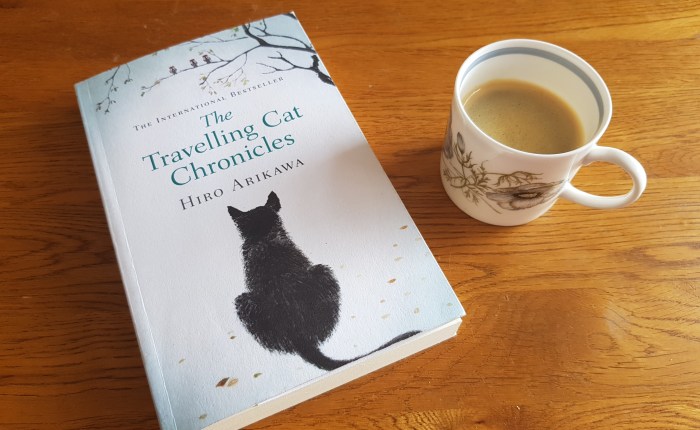
‘The Travelling Cat Chronicles’ by Hiro Arikawa

‘The Travelling Cat Chronicles’ by Hiro Arikawa

The Travelling Cat Chronicles is a Japanese novel that tells the tale of Satoru and a stray cat he rescues and names Nana. Satoru is kind, easy going and whimsical with a deep affinity for misfits and strays of both the human and feline variety, while Nana is proud and independent but the pair quickly become devoted to each other. A few years after adopting Nana, however, Satoru begins to contact old friends and relatives to ask if any of them could re-home his beloved cat.

The Travelling Cat Chronicles is as much about friendship and families as it is about cats, and each chapter focuses on one of Satoru’s closest friends and relatives, and through each chapter the reader learns more about Satoru and the lives he has touched. In a way, this story explores the regrets and hidden hurts that people often carry through life, and what happens when life seems to give us another chance to atone for our past mistakes and heal some of our old wounds.

Mara_and_TTCC

The Travelling Cat Chronicles is a bit predictable, and yet it is such a poignant story that I still enjoyed it and was moved by the ending. Have a lovely week. X

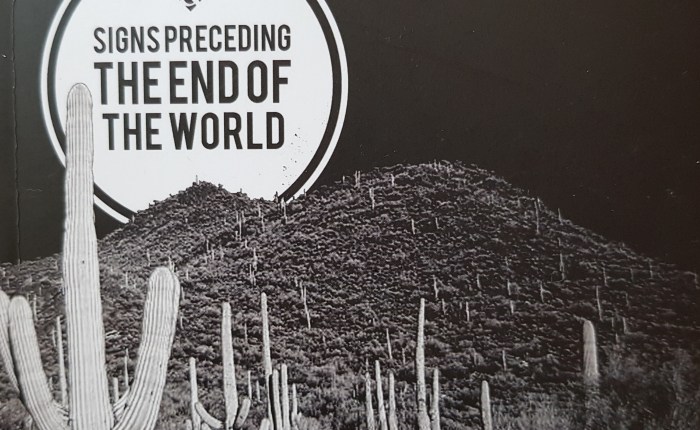
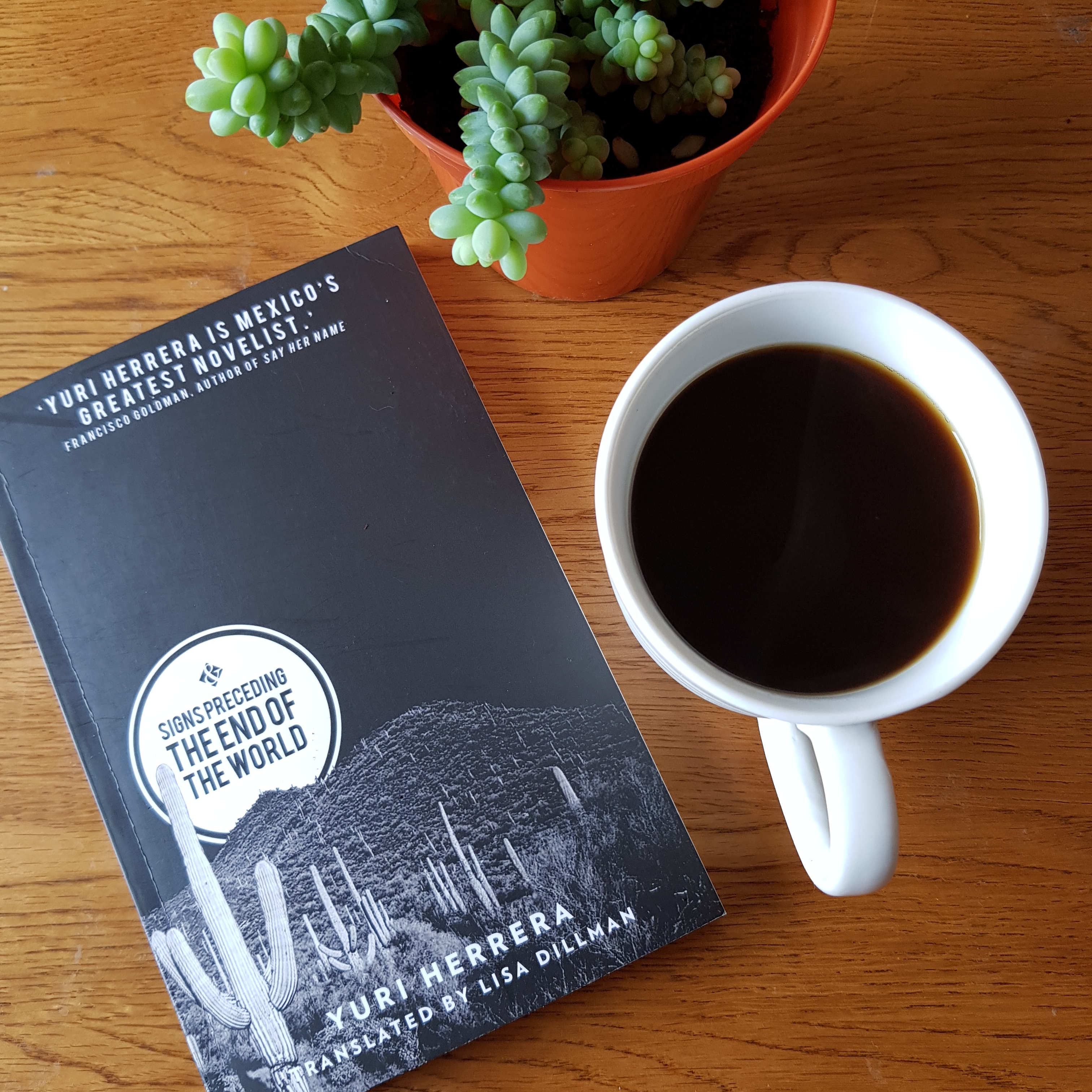
Review of ‘Signs Preceding the End of the World’ by Yuri Herrera

Review of ‘Signs Preceding the End of the World’ by Yuri Herrera

Inspired by Ann Morgan’s TED talk My Year Reading a Book from Every Country in the World, I’ve been trying to read more translated fiction over the last few years, and I picked up Signs Preceding the End of the World on a cold day while day-dreaming about sunnier climes.

Signs Preceding the End of the World is the tale of a young Mexican woman called Makina who embarks on a quest to deliver a message to her brother who crossed the border to make a new life for himself in the United States.

In some ways, this is a modern retelling of the hero’s quest, reminiscent of Orpheus’ journey through the underworld, except Makina’s underworld is one full of crimelords, thugs, border patrols, police officers and illegal immigrants. The writing is sparse and poetic, and at times the plot trots along so quickly that whole chapters pass in a blur adding to the surreal and sometimes nightmarish quality of the story.

YuriHerrera2

Makina is quite literally a messenger, working at a telephone exchange connecting people from “Little Town” where she lives to “the Big Chilango” (Mexico city) and beyond; Makina is resourceful, capable of crossing borders and languages, and able to defend herself in a machismo culture.

Signs Preceding the End of the World is a topical story concerning someone crossing the Mexico-US border illegally, describing how dangerous the crossing itself is as she relies on crimelords and smugglers to help her, evading border patrols and police along the way. Reaching the U.S.A she finds immigrants everywhere, and notices their influence on the culture from food to music and language, as well witnessing the daily prejudice and discrimination they face.

This is a short book – barely more than 100 pages – it ends almost as abruptly as it starts, but leaves the reader with much to ponder. Have a lovely week. X

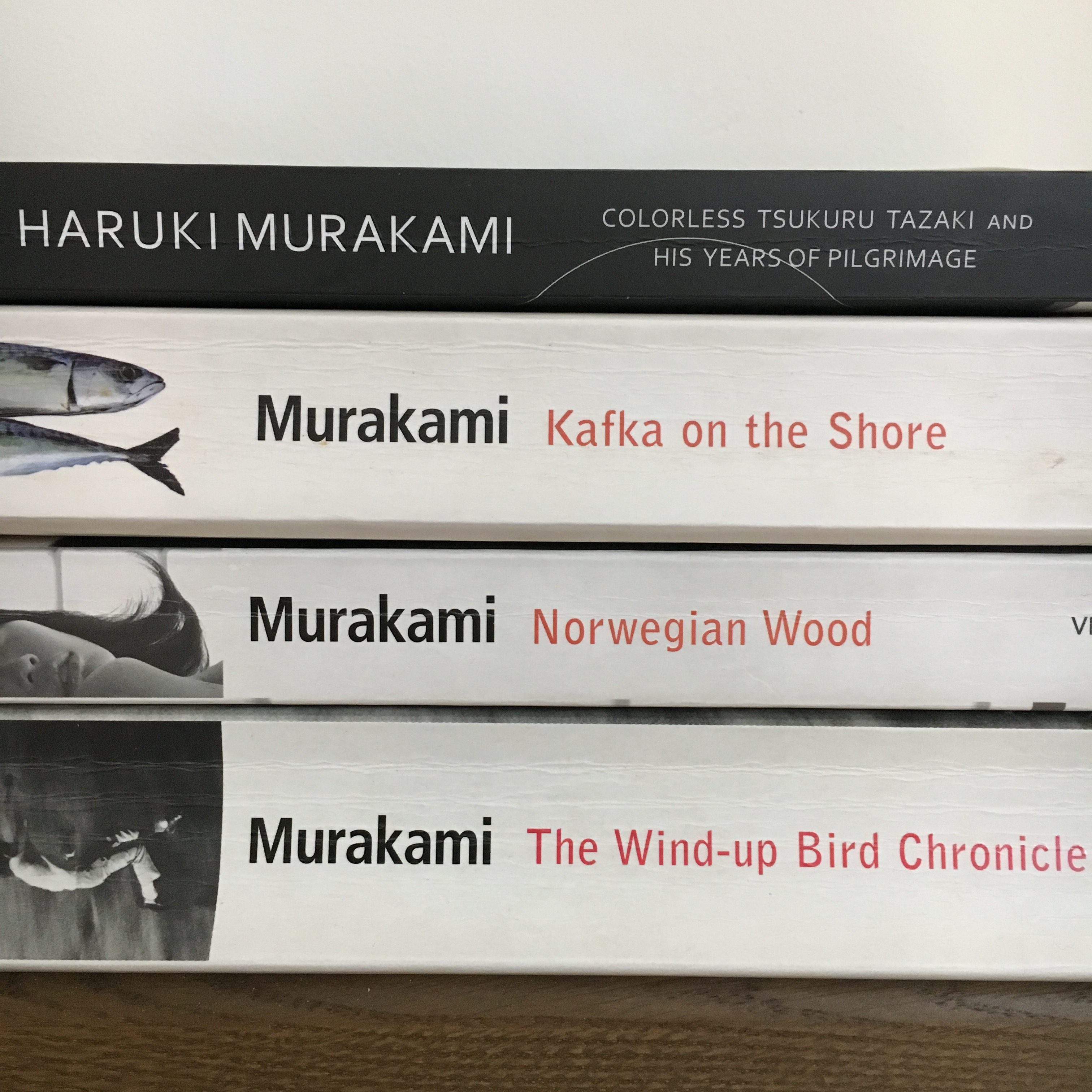
Review of ‘Colorless Tsukuru Tazaki and His Years of Pilgrimage’ by Haruki Murakami

Murakami1

I sometimes hesitate to recommend Haruki Murakami to other readers as his novels are often strange and surreal, and I often find it hard to describe what they’re about and even harder to explain why I enjoyed them.

Colorless Tsukuru Tazaki and His Years of Pilgrimage is easily one of Murakami’s most accessible novels and probably the one I’d recommend to anyone who’d never read anything by him before. However, Murakami is not for everyone, there are awkward sex scenes, some strands of the plot are frustratingly unresolved by the end and there is still a slightly surreal element to this novel with actions that occur in Tsukuru’s dreams seeming to have consequences in reality.

Murakami2

The story follows Tsukuru Tazaki who had four best friends at high school but was the only member of the group without a colour in his name leading him to view himself as colourless and empty; then one day Tsukuru was rejected by the group suddenly and without any explanation. For the next sixteen years, Tsukuru drifts through life unable to form deep or meaningful relationships with others until he meets Sara, his would-be girlfriend, who pushes him to find out why his friends ostracised him all those years ago, sensing that until he heals those wounds he’ll never be able to connect with anyone else. Tsukuru’s quest takes him from Tokyo back to his hometown of Nagoya and all the way to Finland in search of answers to the questions that have haunted him for so long.

This is a story about friendship and belonging, rejection, loneliness, death and rebirth that allows Murakami to explore the difference between how we see ourselves and how others perceive us, the choices that define us and the ripple effects they create. Bittersweet, slightly surreal and even humorous in places, Colorless Tsukuru Tazaki and His Years of Pilgrimage is laced with a sense of regret about lost time and the ways things could have been, yet it very much ends with hope.