
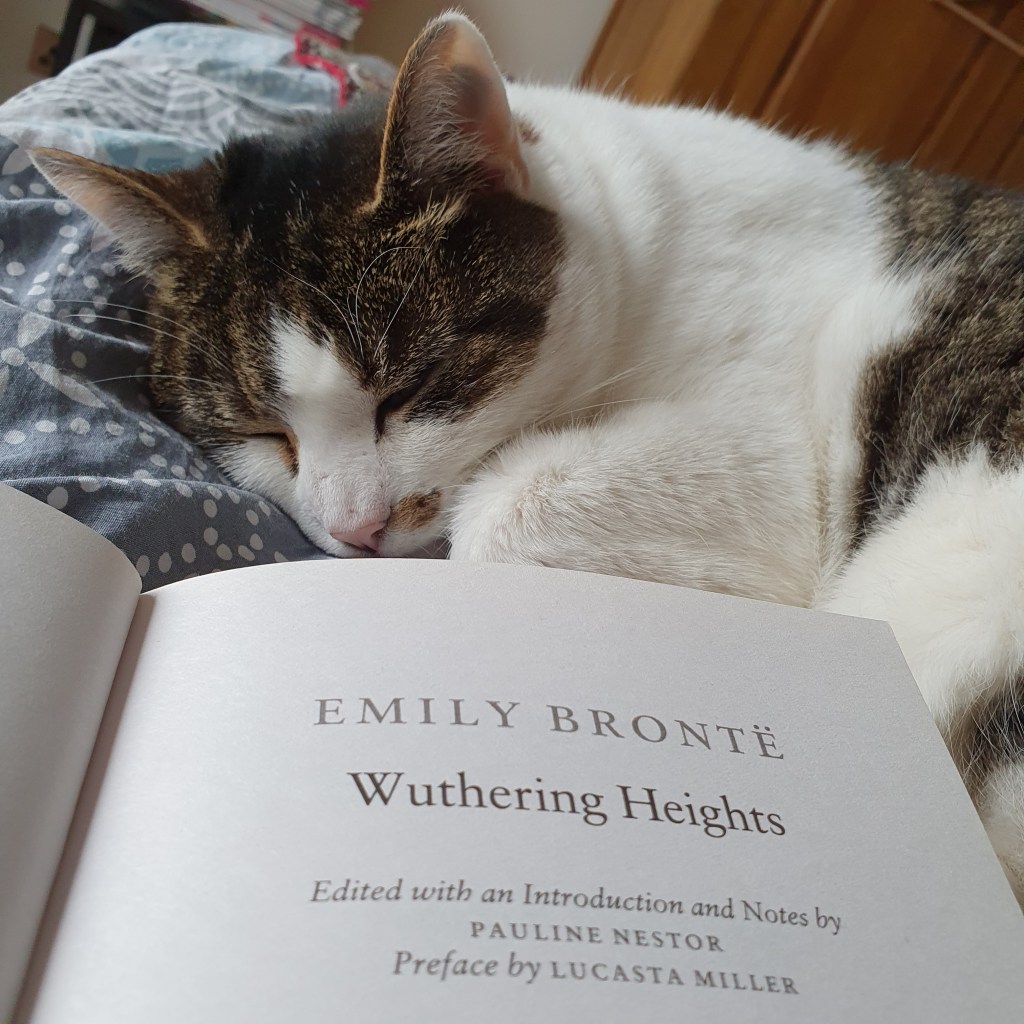
Wuthering Heights is such a devisive story, and I sometimes wonder if readers expecting a gothic romance (perhaps similar to Charlotte Bronte’s Jane Eyre) are shocked by Emily’s dark tale of obsession, madness and revenge.
I first read Wuthering Heights on the cusp of my teenager years, and have re-read it several times since. I picked it up most recently after reading ‘The Bronte Mysteries’ by Bella Ellis, and once again I was drawn back into the wild Yorkshire moors and the tangled web of the Earnshaw and Linton families.
Narrated by Heathcliff’s tennant, and the Earnshaw and Linton families’ long suffering servant, Nelly, both appear to be somewhat unreliable narrators allowing their prejudices and superstitions to influence their perceptions and memories. Nelly, in particular, is interesting in that she openly admits to prying, meddling and with-holding information from Heathcliff, Cathy, Edgar and their children, nevertheless she tells a gripping tale.
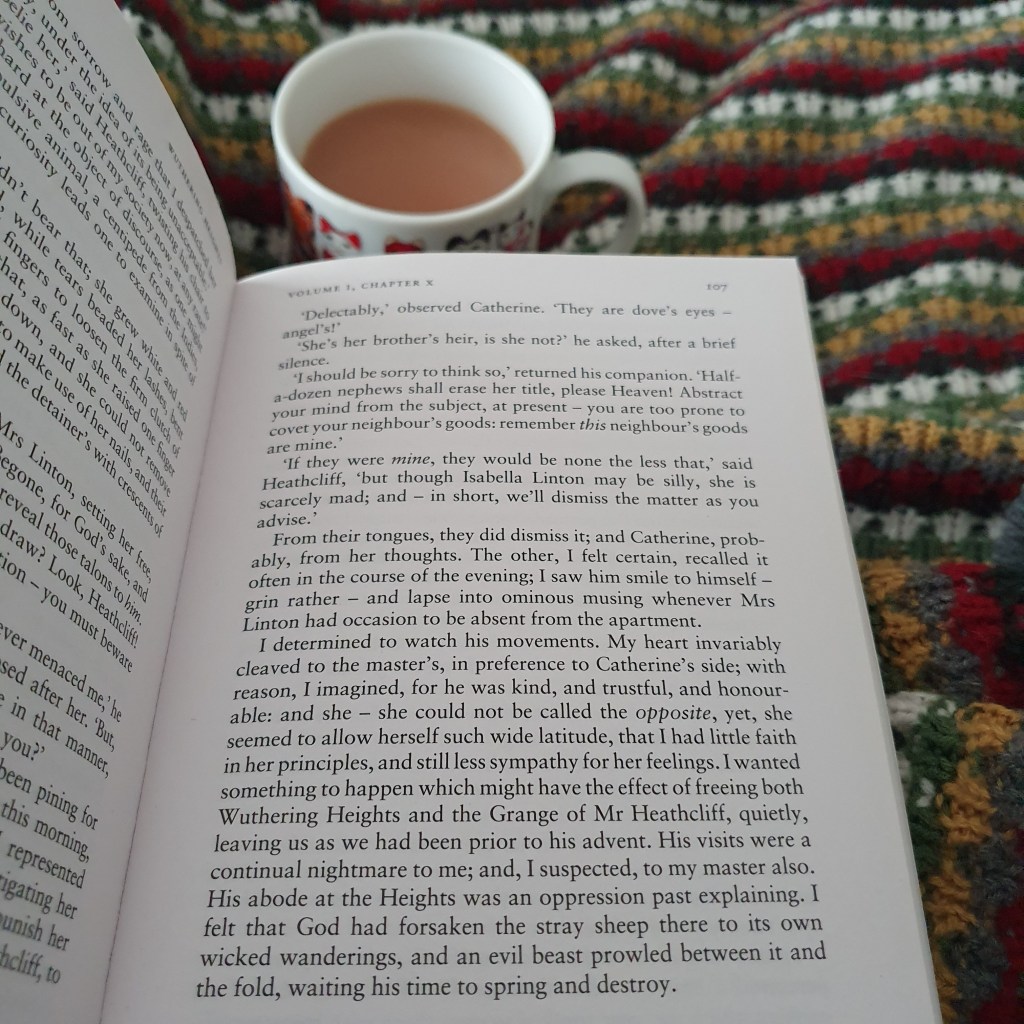
While the tempestuous, destructive love affair between Cathy and Heathcliff, and Heathcliff’s subsequent quest for revenge, dominate the story, it’s the slower, kinder romance betwen Cathy’s nephew, Hareton, and her own daughter (also called Catherine) that finally restores peace to Wuthering Heights, despite how badly Heathcliff mistreated and wronged them both. Hareton and Catherine arguably represent the lovers Heathcliff and Cathy could have been if only circumstances had been different, and they’d been able to temper their wild impulses and passions.
Wuthering Heights is not without its flaws, but it remains one of my favourites, a story I return to again and again, finding something new every time I read it, and I’m still impressed by the power and urgency of Emily Bronte’s writing. Have a lovely week. X
 Lovely and Grateful
You must be logged in to post a comment.